

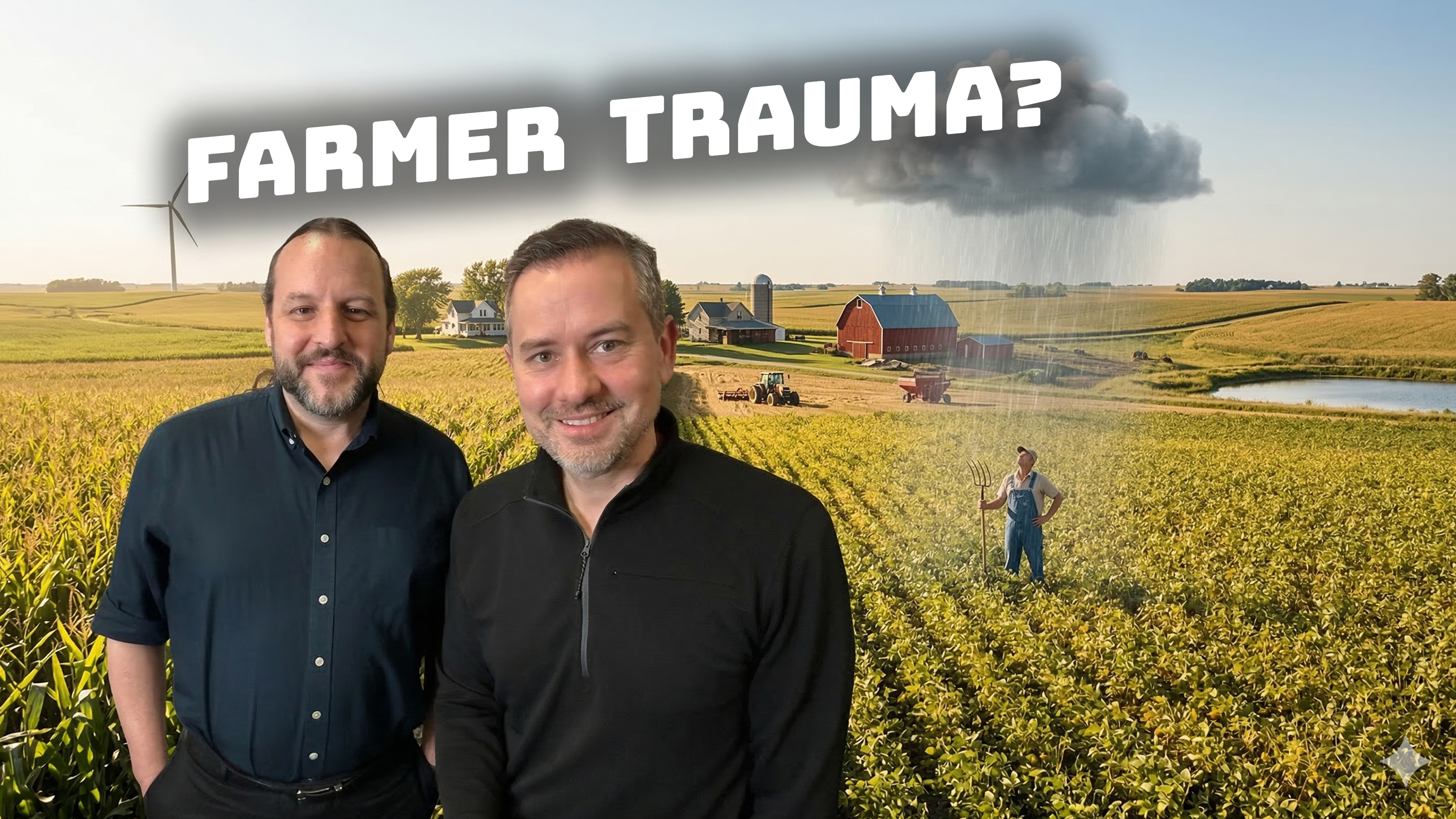


Have you heard Iowans are “risk averse” creatures? Research from Chris Morris, PhD at Iowa State University not only suggests this may be true, but its origin may be tied to farmer trauma, passed down to our children and grandchildren. Morris’ research shows stress from farming has a compounding effect over time and becomes mentally destructive. The resulting trauma not only results in risk averse behavior and higher than average suicide rates, but is passed down.
Dr. Morris has spoken with farmers across the entire state, and his stories are heartbreaking and shocking. The immense pressure farmer’s face of “feeding the world” and protecting their ancestors legacy are heavy burdens result in low-grade stress that builds. Making things more difficult, farmers rarely share these social pressures, and therefore lack the mental tools to reverse the trend.
The Roots of Iowa Risk Aversion?
Morris categorized farmer trauma into economic pressures, physical threats like natural disasters, and the community-level breakdown caused by rural depopulation. He noted that the 1980s farm crisis remains a foundational traumatic event that continues to influence the psychology of Iowa today. This persistent stress often manifests as extreme risk aversion, where farmers may forgo necessary land conservation or local spending out of a deep-seated fear of losing the family legacy.
Rage-free Iowa news for your inbox
Justin, David, & Kaylee cover Iowa news, agriculture, business and tech. No clickbait. No rage. No agenda. Support our vision and subscribe!
The Weight of Intergenerational Expectations
The research highlights a unique cultural pressure where farmers feel a profound responsibility to their ancestors. Morris explained that many are driven by the fear of being the specific generation that loses land held for decades. “I have my dad’s voice in the back of my mind saying, don’t spend any money that you don’t have to on cover crop seed, because you never know when that next crisis might hit,” Morris recalls hearing, illustrating how past financial scars dictate current agricultural practices. This internal struggle often results in isolation, as the “pull yourself up by your bootstraps” mentality prevents many from seeking mental health support.
Addressing the Mental Health Gap in Rural Iowa
Morris emphasized that the lack of specialized resources and the social stigma surrounding therapy create a dangerous environment, noting that farming has one of the highest occupational rates of suicide. To combat this, he advocates for “trauma-informed” behavioral health professionals who actually understand the unique nuances of agriculture and farming. “Something is traumatic if it is shaking the foundations of who you are,” Morris stated, distinguishing between everyday stress and the existential dread many farmers face. Fortunately, peer-to-peer networks and organizations like Practical Farmers of Iowa provide a vital “release valve” through strategic discussion and community building. Morris concluded by reflecting on the quiet desperation many feel, recalling a farmer who told him, “I’m looking forward to not having to worry about, just barely hanging on.”