


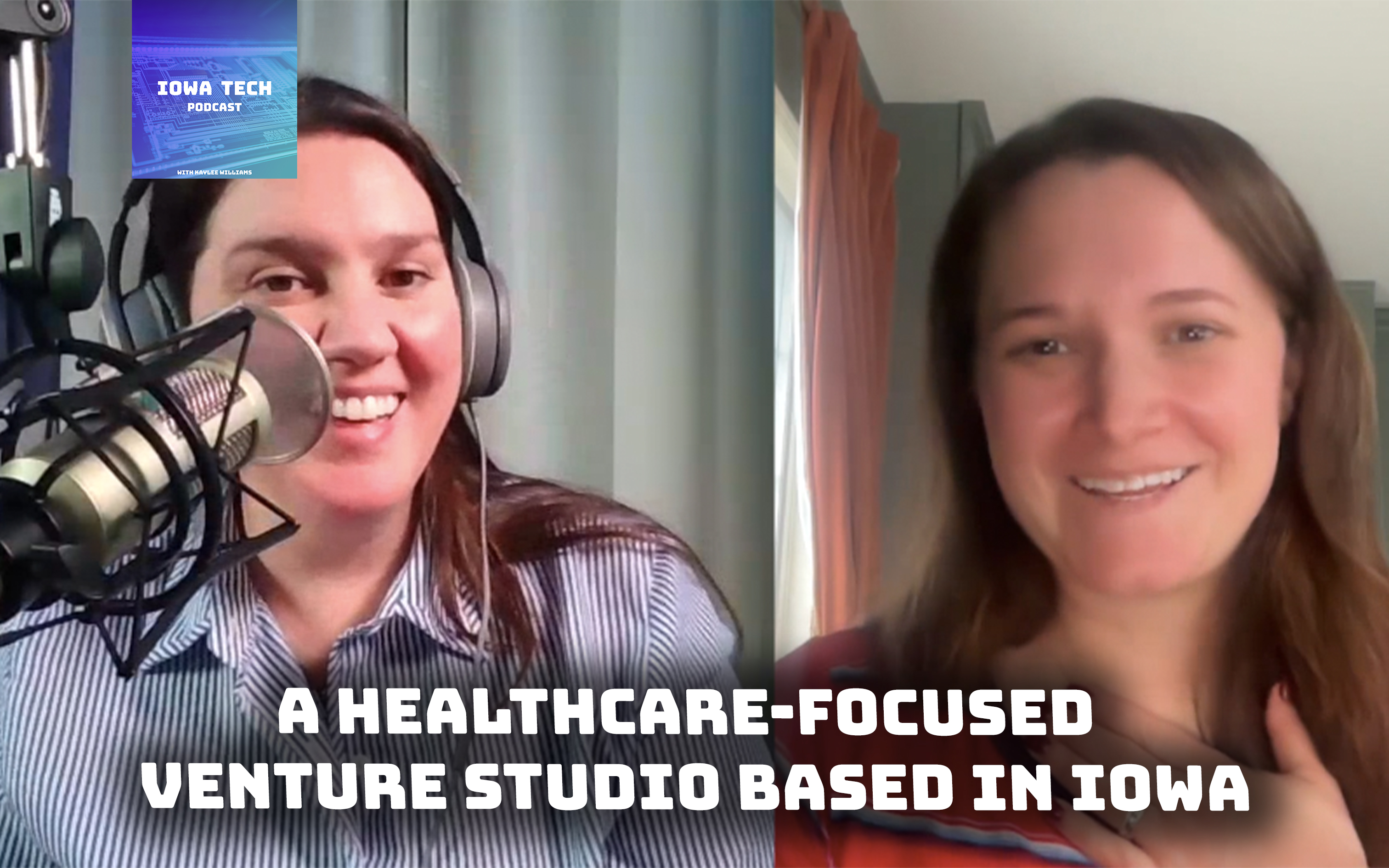


Host Kaylee welcomes Krista Martin, Partner at Novy (Novy Ventures), a healthcare-focused venture studio based in Iowa. Krista shares her path from product management and growth leadership in Iowa and Indianapolis to hands-on company building at a studio—crediting exposure to High Alpha’s model for inspiring Novy’s approach and community mindset.
Inside Novy’s model
- Focus: Healthcare software (not hardware) to fit the studio’s 18-month creation-to-growth timeline and regulatory realities.
- Process: Six stages—ideation, validation, creation, and growth are highlighted.
- Ideation/Validation: Start with a broad call for ideas, SME gut checks, and deep customer discovery. Founders co-create a Product-Market Fit Narrative covering problem, value prop, GTM, and business model. Novy is highly selective; rounds can end with zero companies.
- Creation/Growth: Build MVP, secure early partners, and drive initial revenue. Novy can co-found, operate, and invest (up to $1M), then tailor further capital strategy case by case.
Hear from Iowans directly. No algorithms.
Don’t let the algorithms choose your news. Enter your email address to hear directly from Iowans leading news in politics, community, agriculture and business. No editing. No clickbait. No rage. No agenda.
Company’s First Portfolio
Leadership: Krista currently serves as CEO; the original idea generator is an advisor. MVP built using modern assistive coding, with pilots and presales ahead. Broader applicability to other 24/7 shift environments is possible over time.
Domain: Emergency medicine scheduling—complex, 24/7 shift work across multiple hospital contracts, competing preferences, and coverage needs.
Why now: Rising ED volume, physician burnout, and logistics burden. The product blends AI with real-world constraints to deliver more equitable, flexible schedules.

A Good Reason Why:
Krista Martin has personal ties to healthcare; her spouse is an EM physician, caregiving experiences. This helps fuel her commitment to pragmatic innovation that improves clinician lives and system performance.
Get involved:
- Submit healthcare software ideas: novyventures.com (open application).
- Join Novy’s Subject Matter Expert network (form on the site).
- Emergency medicine contacts sought for pilots, feedback, and demos.
- Connect on LinkedIn: Krista Martin, and partners Eric Engelmann and Dave Tominsky.
Novy’s near-term: continue piloting its first company, restart ideation soon, and selectively grow the team as the portfolio expands.
Interview Transcript
This transcript was created with help from Ai. Please report errors to us and always refer to the video as your primary source.
Kaylee Williams: Hi everybody. Welcome back to the Iowa Tech Podcast. It’s your host, Kaylee. And today we have a virtual session, uh, with Krista Martin, who’s a partner at Novy. Krista, thank you so much for joining me on the Virtual Pod today.
Krista Martin: Thank you for having me.
Kaylee Williams: Uh, it’s a pleasure to get to learn a little bit more about Novy. I remember talking to Eric Engelmann probably a year, maybe a year and a half ago, when he was just starting out with this vision for what Novy could be. So I’m just, I’m so excited to learn from you, um, how things have changed, what you’ve learned and where, where the studio and the, the fund component of it are today. Um, but before we get too much into Novy. Why don’t you tell us a little bit about yourself and your role?
Krista Martin: Sure, I’d love to. So the Iowa Tech community, this is where my career was born. Um, I came outta school and I was at the Gazette Company for a couple of years and really cut my teeth on product management and in software. So, um, you know, in Iowa is where I started. I did have quite a bit of time in Indianapolis. Um, continued my product management. cutting my teeth on building growing teams. Um, eventually running growth teams, uh, and taking startups. Definitely from that one to 5 million revenue piece has been where I’ve spent a lot of my career. So, um, it’s been fantastic to come back to Iowa. I moved back in 2020 and. That’s kind of where I met up with Eric and Dave coming back and and trying to figure out how am I going to fit back at home? Um, how do I actually start building towards something that is going to kind of make my legacy here in Iowa and not so much in Indianapolis where I was before. So, um, yeah, big, big title of my career so far has been startups, product management, and now venture studios.
Kaylee Williams: Very cool. So you found your sweet spot with really early stage ventures.
Krista Martin: I, think so I, I’ve worked with businesses. I, I was a consultant for a while. I had own, um, consulting business and I found that sweet spot of about one to 5 million in ARR. needed my expertise in ways that they couldn’t hire yet. Um, so that was a really great experience getting to kind of. into packaging and pricing and distribution and really figuring out how you get that actual product market fit. You know, it’s great to validate a business and know you should build it, but then really getting traction and revenue is where a lot of startups need so much help. And I love the work. I am, I am much more an operator than I am. Kind of like that vision piece if you’re looking at all of those, you know, your, your working geniuses. I, I like being in the work and, and working alongside founders.
Kaylee Williams: Well, that’s good. That’s a good thing. I would imagine, uh, given the nature of your role now with Novy, um, my understanding is you’re really, um, sleeves rolled up, Boots on the ground helping, um, founders really establish, uh, from idea back of napkin idea to actual business with hopefully paying customers, um, coming out of the studio part of what it is you’ve built. So tell us a little bit about the nature of your role to, and how has it evolved since you started?
Krista Martin: Yes. that’s so it’s, we’re a startup ourselves, so that’s a great way of saying we have evolved over the last couple of Yeah. having AI really take a front seat into so many operations across all industries, um, that’s kind of changed how we think. Novy is a venture studio and, um, that is a little bit of a different model but than your traditional venture funds or your accelerators and where it’s really trying to bring everything under one team. So we’re looking to co-found with founders, um, provide capital. Expertise. Uh, we do have subject matter experts that help surround our portfolio companies, but really in that core team, we are working in those businesses. And my role is creation and growth. So we have a six stage process. We have ideation and validation, and that’s before any company has been created. Um, you’re doing a lot of vetting of. How is this idea? Um, we go through a product market fit narrative, which really looks at six dimensions of business and figures out where would we need to spend time? Do we have the right people for this? Um, is it the right time in the market? We’re kind of figuring all that out and then down on that and validation. So that is all ran by Dave Toky, uh, and he has ran. Accelerators and he’s so great at that early stage of really working with founders and help, helping them sharpen was an idea into like how can we think about this into a validated MVP. And um, after that it goes into creation. So that’s when it becomes a, a company. And that’s where I take over after creation, we establish the company, we get that initial built and some initial. Partners, and then we go into growth and that’s when we really start bringing in that revenue and gaining traction. And right now where we’re at in our process is we launched our first business. So we entered creation Q3 this year, and now looking in Q1, or sorry, of last year, of 2025. And now in 2026, we’re gonna be entering that growth stage.
Kaylee Williams: Wow, that is really exciting. Congratulations.
Krista Martin: It’s, it’s where, you know, that idea feels so um, but you start putting together plans and, you know, we have a working product and, and we’re entering that go to market stage here in the next couple months.
Kaylee Williams: Cool. And so tell me a little bit about the funnel and what it took to get here to this, you know, first company entering creation and now spinning up into growth. Um, how many ideas did you whittle that down from at the very top of the funnel?
Krista Martin: thing at Novy, which is an interesting piece, is we said from the very start. After an ideation, um, round, you could end up with zero or one company. So really our reps are small. Um, some venture studios, you can see maybe they’re creating six, eight businesses, 10 businesses a year. one to three, that gives us the opportunity to say no quite a bit. And we did the first round, we went through about 50 ideas and we ended up at zero. Uh, we the whole process. We learned so much being a startup. We also got to sharpen how we were working with founders and getting our processes really dialed in to make sure. know, evaluating 50 ideas, how do we make our own internal process one approachable, collaborative, all of the things that you want. Um, so we tried again. We did another round beginning of 2025, and we did a little bit of a smaller idea submission. we had about 25 and we got down to three and then to one. And that is what we took into creation.
Kaylee Williams: And so, uh, that sort of, um, idea stage, are you doing like a public call for curiosity sort of thing, or how specific are you when you make that ask to get the ideas in the door?
Krista Martin: We do, we have an application anyone can apply. What we’re really looking for is we are healthcare. Studio, software. timeline of a venture studio hardware is very difficult to get significant traction product being built and in market by 18 months. And that’s really what that creation and growth stage we, we are really targeting, getting that up and built in, in targeting a market that would have the ability to buy in that time.
Kaylee Williams: Got it.
Krista Martin: and then also with healthcare, it’s very tricky. It depends on, you know, we can’t go through too much of, if you have hardware of all of the and, and so it really
Kaylee Williams: Yeah. Five 10 Ks and your medical device, regulatory pathway. Yeah. Yeah,
Krista Martin: And those are great ideas. It’s just not quite the model that we have right now to those type of founders,
Kaylee Williams: Now, um, once a company spins out of the creation stage and into that growth stage, are, is the team at Novy still the operators of the business at that point? Or when and if, do you bring outside people to come in and take it from there and run with it?
Krista Martin: This is one of those answers where it kind of depends.
Kaylee Williams: Sir.
Krista Martin: each business is different, and as you. Spend time with your founder, or sometimes it’s just an idea generator. So, for example, with the company we’ve taken into creation, the idea generator is serving in an advisor role, but actually not in the day-to-day part of the business. So the beauty of our model is that if you’re a physician, if you’re a researcher, if you are maybe just someone who’s not willing to leave their full-time job, but you have a hair on fire idea you wanna see come to light. We can work with you. Um, so in that scenario, I am actually stepping in or have stepped in as CEO of our first portfolio company. So right now we are all hands is now essentially just focused on this one portfolio company. Um, we will be opening our ideation phase soon, but it just depends. It really depends on what the company needs, where the product lives. product development is my sweet spot. and I happen to have. Quite a bit of subject matter, adjacent life experience to where we’re creating this first, um, product in emergency medicine. So it kind of was a great fit. that being said, we would absolutely hire the right people if we did not have them on staff to make sure that these companies become successful companies.
Kaylee Williams: So what is the thesis behind a studio? Why, why a studio model? And I, I guess I kind of wanna hear like the Krista hot take of why were you drawn to this model? You could have gone to work at an accelerator, you could have gone into venture. What was it about the studio approach that resonated with you? And, and tell me a little bit, and I know it’s not been very long, but. At least with this very first company, how much of that hypothesis has borne out to be true for you so far?
Krista Martin: So I, I would say I never had a goal or line into becoming a part of a venture fund or an accelerator. like I said, I really like the operational work and being in a business and really. Actually being on the ground floor and not just popping in and out. so the Venture Studio model, it allows you to do those things. Um, I don’t wanna use the word control because I don’t think that’s how we view working with a founder. It’s really that shared ownership. It’s if you fail, we fail. If we win, you, you know, it’s, we are working together. Um, and I think that cross functionality of someone who’s deep in. that they’re bringing in. So they live that problem every day. just help our team who’s been in this stage several times. and so I like that. I also saw, I was in Indianapolis and, and I was working at a startup and one of our biggest capital investors was High Alpha. So I got Yeah. how High Alpha. I brought so much talent, uh, the community that they’re able to through starting these companies. And then the, the sharing that happened in those ecosystems was just incredible. And so when I was really thinking about those things, um, back to Iowa. And trying to piece all these things together, your capital and your talent, and even me, myself, I had lived here before, but plugging back in kind of difficult for me. You mom now. I, I worked remotely. Like how do I fit into this ecosystem? and and I really felt like a venture studio model had a chance at bridging some of those complications and making that timeline from I wanna be an entrepreneur to actually pursuing something a little bit
Kaylee Williams: Yeah. Yeah. I was gonna ask you about High Alpha, um, because of course they’re such a well known. Studio in Indianapolis. And Scott Dorsey is a very successful and also very well known, uh, founder who did incredible things in Indianapolis. Um, I, so once upon a time I actually helped a High Alpha company and I got to meet some of the people who worked there as well. And it. I agree with you, the culture and the way that they were able to iterate, and it was like the team, the whole team was just quick on their feet. They were willing to learn and grow and most importantly fail. And uh, I love that you aspire to bring some of that into Novy and into Iowa, into the Iowa ecosystem. Um, what does the future look like for Novy?
Krista Martin: We are moving along. I think with any startup, you know, we’ve had to reset a little bit of just how we’re running our processes with AI coming into the picture. that’s been really cool. Even our creation process, um, like I got to vibe code, our first version of our product,
Kaylee Williams: Fine.
Krista Martin: I’ve been in product forever, but my engineering partner is like, they are so important to me. And so it was kind of like this unnatural state of starting something without that person me and. I think it’s an incredible thing because in technology you’re just always gonna be so humbled about what there is to learn and how you’re gonna change with what’s coming. Um, so we have absolutely taken a look at ourselves and how do we fit in this ecosystem and how do we make sure that we’re still serving healthcare idea generators in a. Successful way because healthcare is changing too. it’s just, it’s kind of a, a little bit of a whirlwind out there. And so we’re really trying to figure out exactly where we fit. And with this first creation company, we’ve made a lot of progress. Um, but coming up, we’re gonna start ideation again. So we’re gonna be looking for that next big healthcare idea. then that means we’re looking to then create our next company later, our second company later this year. So all good things. Um, we are a small mighty team, and as we. Add on a portfolio company. We would also want to kind of grow our own internal team as well.
Kaylee Williams: I was just gonna ask you how you’re gonna think about, um, allocating your time commitment now between this first company of which you are the, the CEO for the moment, and then bringing on a new I, you know, doing a new call for ideas and going through that process. And if another one were to enter your part of the pipeline, which is the creation phase, how you might think about. Allocating your time between the two, but if you’re looking to expand your team internally, maybe that’s not really a, a question that you’ll need to grapple with, at least not anytime soon.
Krista Martin: Yeah, I think we’re okay right My, my main focus really is getting this company off the ground. Um, obviously our product is successful companies as a venture studio, as a product manager, like that is my main focus. Um, but we have, we have a small but mighty team. And then as I said, we’re looking at our processes and in that, those first two stages, I absolutely have. Pardon? I, I contribute and, and, but Dave is really running those, and so about that timeline where I’m still focused on the portfolio company. It gives us time to make good decisions in
Kaylee Williams: Absolutely. And it’s no guarantee, as you’ve already said, a company could come out of the idea stage and into the creation part of the funnel. I mean, that, that may not happen until your second or third call for ideas. So yeah, that makes total sense. Um, how much can you share with us about the company that has officially kind of entered into your purview of the Novy pipeline? I mean, I, I know you haven’t named it yet, and I don’t think there’s been a public announcement quite yet, or at least not a formal one, so I wanna be Of that, but um, to the extent that you can share, what can we know about this company?
Krista Martin: We. We’re working with a physician from the University of Iowa and a problem with emergency medicine scheduling. and it very interesting, the medical community, especially in emergency medicine, it’s a, it’s a hard problem to solve. Um, so you think about emergency medicine is shift work, and then often there are groups called independent emergency medicine groups and they’re contracting out to several different hospitals
Kaylee Williams: Oh, okay. And rotating around kind of.
Krista Martin: the And that could be at different contract levels. Maybe they fully staff that er, maybe they just send there for. So you can see how all these things become very complex. than ever, emergency medicine work is hard. Um, I think all medical positions are incredibly hard, emergency medicine, you’re still working nights and weekends. Um, often some groups have no end date. Some you stop doing that maybe when you’re 55 or older. But the little lifestyle has its advantages, but often it’s, it’s trying to manage your real preferences. So say I am an emergency medicine doctor and I’m at this time in my life, I have small children. And my partner at, you know, our emergency medicine group is in their fifties and their kids are maybe off at college or not at home. So you start thinking about the different things that may matter to these two people. But often scheduling is just seen everyone’s equal. you have to fill shifts and you have to make sure 24 7 coverage is happening. So really take how people want to work as much as possible and using technology to create a more equitable and honestly more fulfilling lifestyle for these doctors. Um, and it’s, it’s a really fun problem to tackle. It’s also to talk to so many physicians who are just so used to having. To work overtime, and, and pick up where they have to pick up. um, so yeah, that’s where we’re at. We’re building scheduling, we’re using AI for parts of it. Um, and then we’re using, you know, uh, a, a, a process that is using new technology and then solving a really hard math problem all while using the context of real life scenarios. So
Kaylee Williams: Gosh.
Krista Martin: super fun. We’re working directly with physicians.
Kaylee Williams: I, I think this is a fascinating problem and I can absolutely see how the complexity would start to layer in as you think about, you know, one field shift is not equal to another field shift. Maybe you need some type of training or specialized experience and, um, I could, I could totally see how. There’s the human element too, where if I could claim my shifts and I could build my schedule around what, when I wanna work, that might look very different from, you know, Tim and Jerry, uh, in the emergency department. So I, I think that’s fascinating. I also, you mentioned earlier that, um. Now in this moment, emergency room work is, is very challenging and it probably always has been. But with, um, I, my mom recently took a fall and we took her to the emergency room and we were in Waterloo of all places. ’cause she was speaking at an event there and. There were so many people in the emergency room. I, I couldn’t believe it. It was like so packed. And we went back there and I was talking to one of the nurses and I said, is it always this busy? I mean, it was like three o’clock on a Tuesday, and she said, yes, there are a lot of people who don’t have insurance who come to the emergency room. and they treat that as just. That’s how they get care, that’s how they get healthcare. And I kind of had this like, oh my gosh moment of, I had never even, it had never occurred to me that, that that might be how some people ha get access to healthcare, which is a shame and probably a whole different problem to be solved in and of itself. But it creates, I, it seemed to me a pretty heavy volume. Um, and and workload on the people who are there, the doctors and the physicians and the nurses who are there.
Krista Martin: Yeah, it is. And and often in that same shift, you may be dealing with a patient. Maybe their needs aren’t that high, but. In the next room over, you know, you could be dealing with a patient that is very complex and needs to be transferred and now it’s on you to manage all of these a hospital who can maybe take an inpatient, they can be admitted, and that’s then causing more. So
Kaylee Williams: Yeah. medicine, it is your front door. So emergency medicine physicians are doing triage. They’re often having to call several different hospitals while they’re treating patients
Krista Martin: to just do the logistics of getting them to where they need to go. So there’s just of hidden
Kaylee Williams: And that’s not even healthcare. That’s not administering care. Right. That’s like, yeah, that’s logistics.
Krista Martin: but they have to, I mean,
Kaylee Williams: They have to do it.
Krista Martin: of where they have to do it. They have to get con. So I think too, so often it’s easy to. Emergency medicine visits to you is such a, it’s a one time and then you’re gone. these doctors, it’s, it’s a, a daily thing. And, Yeah. it can be any, any basically breathing room we can give these physicians means a lot. Um, because it’s been, I think it, the, the industry has changed. Healthcare has changed a little bit and, and, um, yeah, I’m, I’m excited to help solve problems. So my husband is an emergency medicine physician,
Kaylee Williams: Okay. I was gonna ask, you said that you had a personal tie in here and some experience, so there it is. Okay. So you.
Krista Martin: if, if my husband has a really crazy week, that means my week so, yeah.
Kaylee Williams: Um, so, okay, so this is fun, Krista. I feel like we, you and I just did maybe like phase one of the Novy process where we both agreed that this problem exists. So I would imagine that, you know, moving, moving through the motions here, if you will, um, you guys would probably then start to look at the size of the market, So how many emergency rooms are out there? And, and then I would imagine is, is customer discovery a part of your process? So I would imagine you talk to your husband, did you, do you do calls then with other hospitals? How does Novy approach the process of not just identifying the problem, but validating that the problem is this and that potentially people are willing to pay money to solve it?
Krista Martin: We do it in a couple of different ways. So in that ideation phase, out to our SME network. We have a subject matter expert network that we have. Just basically always ready. And if you have expertise in the area we are focusing on, we will ask you basically just at first blush, do you feel this problem? Have you seen this problem? What’s your initial take? Kind And that is our first step. And then after that, absolutely we are doing customer discovery calls on every single idea that moves past that. for this particular idea we did. 25 calls with physicians even way before we even got to got through validation. So that was Okay. saying And then past that, since we’ve been in creation, um, we continue to talk to potential customers every other day. we’re really keeping up and um, I think that’s what makes building this so powerful is because we get to kind of hear the. the. changes in the industry, or even just in their personal lives, because this is very much a personal scheduling tool and, um, that helps us keep us grounded in our roadmap. Really clear?
Kaylee Williams: Okay. Now, um, this company is through that early idea validation. Now in the create and scale phase, will this company be raising venture capital? Is that part of the plan?
Krista Martin: model is that Novy does invest up to a million dollars in our portfolio companies, and then also with the expertise that we have on our
Kaylee Williams: Mm-hmm. Depending on what that portfolio company needs, maybe they need more capital, maybe they need a different way of looking at how they are going to finance their
Krista Martin: business. Yeah. there are different ways we can work with founders or in this case we would look at what’s right for this
Kaylee Williams: Mm-hmm. what
Krista Martin: partners should we go start looking for, um, and finding just mutually beneficial relationships that get the right people behind in the right capital to take it to where it needs to go. So.
Kaylee Williams: So it’s really bespoke. This is really case by case.
Krista Martin: Right now. Yeah. maybe we’ll find that sweet spot where we kind of know more exactly the right path. But I think every startup is a little bit different. I think too, you look at the market size, the potential contract value, how far, how long it’ll take to get to market. So you look at any investment, you wanna make sure you’re putting the right capital with the right team at the right time.
Kaylee Williams: Uh, very exciting. Um, and from the standpoint of a venture fund that can only invest in Iowa based companies, it’s so neat to have almost like a, you know, greenfield opportunity of startups that are coming out of Novy that have been, and I don’t wanna say de-risked because I know, and you know, that there’s still risk involved in an investment like that. But I mean, this has gone through. Multiple stages of validation, vetting, um, I’m, you know, you’re, you’re pressure testing it. You know, I, I would imagine that there’s a lot of, uh, devil’s advocacy work going on where you’re challenging yourselves and one another. Um, I, I just think that this is such a fascinating concept and wouldn’t it be cool if, if one of these or more companies really popped and it ended up becoming a, a huge disruptor in the healthcare industry?
Krista Martin: absolutely. Well, that’s definitely our goal
Kaylee Williams: That’s the goal. Yeah. Yeah. Um, so Krista, tell me why you care about innovation in healthcare. What is it that drives you every day?
Krista Martin: I do think it is, uh, that personal piece of just being married to someone in healthcare. Um, I have three children and just experiencing what it’s um, them going through the healthcare system. I have two parents who have had health issues in the, the last year, um, that have been really. Eyeopening. Um, so I think there’s just so much room innovation on, a system that is already so overwhelmed by so many uncontrollable and unknown things that will be thrown at it. everyone’s health, great one day and just like. At Disney with my family, we were going great, know, day four, and then my son gets sick, and then
Kaylee Williams: Ugh.
Krista Martin: plans just change. that is, then times that by how many people are in the world and, and, the, the stress it puts on a system that’s already. It has to be a business, but also has to care so much for people. getting closer to those two things, being more transparent and known just benefit everyone because I, I think often it feels like sometimes you’re fighting against it or it’s me versus them. And, and I hope, just like with this scheduling problem, you’re trying to take something that feels impersonal, like scheduling and make it so it’s more well-rounded in suiting the people who are actually living it.
Kaylee Williams: Uh, can I ask a bit of a weird question? Is it possible that what you’re building for this company could be applied in other domains?
Krista Martin: it could. Scheduling is a really interesting problem where maybe a lot of the context on the front end, um, could be really specific. Like emergency medicine schedule’s very different than say radiology, the problem set has a lot of overlap, with the advancements in technology now with like and, and really even just the ability to understand the core of the problem, it can be applied to other, other specialties. Even even think about any other shift work. So 24 7 shift work is really where we’re priming, um, in starting In emergency
Kaylee Williams: Yeah. 24 7 shift works. So, uh, airport controllers, I would imagine. Um, I’m trying to think of other 24 7 shift. I mean, there’s so many, right? There’s so many. Yeah.
Krista Martin: a lot where you’re always trying to look at shift work is hard. sick, they’re gonna need time off. You know, there’s just these systems you have to put in place that you don’t have to if, if someone can be off. Mm-hmm. know, if they can’t take a stick day and they, no one has to cover their spot. is a, it’s a unique set of problems.
Kaylee Williams: Would Novy ever consider a call for ideas in, um, aviation innovation or, um, I mean anything FinTech, anything outside of healthcare, or are you very focused on healthcare for now?
Krista Martin: Right now we are focused on healthcare. I think with the size of our team and the subject matter expertise, that network we built up, Mm-hmm. skewed towards healthcare. Um, it’s kinda one of those things. We’re a startup too. We don’t wanna boil the whole whole ocean. make sure we’re focused and learn. But in terms of like where we’re going with, um, fundraising. Raising another fund in Iowa that can also go to other industries is, is very important as well. I can see that happening. And then the model as we prove it out with healthcare could very much be applied to different industries with the staged process and Yeah. you’re recruiting talent and surrounding it everything it needs.
Kaylee Williams: You’re creating a playbook. Um, I think this is fantastic and it’s important work that you’re doing. Um, Krista, if somebody has an idea for a health tech startup and they wanna submit it to Novy, or just maybe before they give you their brilliant idea, if they just wanna learn a little bit more about what that process would look like, how can they contact you or how should they get in touch with Novy, the team?
Krista Martin: We are, we have a website, novyventures.com. So there’s a open application you can submit at any time. It’s very simple and that really just kind of. Puts your name and idea in front of us and then we have a, a process that comes after that. So, uh, we try to make it pretty lightweight with a lot of value at the end of it, um, because we know often founders could have a full-time job and wanna take a chance here, so. I mean, just take a chance and, and submit that I’m on LinkedIn. That’s my number one go to. So please connect with me on LinkedIn. You can connect with my partners, Eric and Dave Tominsky, or Eric Engelmann and Dave Tominsky. But we’re very open to talking and if you wanna nerd out about venture studio models, I’d love that too. So.
Kaylee Williams: And, And, I wanna just second the follow Krista on LinkedIn. She’s very active and I, I love. Reading your posts when you give updates about the work that you’re doing and what you’re seeing in the ecosystem. Um, if I’m a founder and I submit, or maybe I’m not a founder, maybe I’m just a, an individual in healthcare, or I have an idea for a health tech startup and I submit it, if Novy rejects my idea or just doesn’t decide to move forward with it into the create and scale process. Do I get feedback on that? Are you, have you provided, uh, feedback for these folks to be like, Hey, we called X number of people and it doesn’t really sound like this is something that they’re interested in? Or, I mean, how far do you go with that? ’cause I could definitely see, see it being difficult. People are, they can fall in love with their ideas sometimes, and it’s hard to hear, uh, negative feedback. So tell, tell me how you manage that and what do you owe or what do you promise to those folks who give you their ideas?
Krista Martin: So in that ideation. What we do is we sit down with that founder for 90 minutes and we, we create together a product market fit narrative. And what that does is just goes over what’s your problem to solve, what’s the value proposition? Um, you know, growth strategy, everything you really need to look at. And, and that just identifies one, how far along is the idea. If you don’t have all these answers, that’s okay too, but it gives us a little bit of a working relationship. Started. Um, and what we do is, is if it is a little bit light, we continue to work on that produce that for you. So first of all, you’re going to walk out with a product market fit narrative, which is essentially your business plan. And, then also what we do as an internal group, as we’re going through all those product market fit narratives, we look and score each section and then we do provide feedback of why it wasn’t a fit. Um, and sometimes. As, as we work together, we’ve had founders that are actually just not interested in the Venture Studio model. You know, it is, it is giving a, a co-founding relationship is very different than if you’re working with a venture fund and you’re looking for maybe mentorship versus really hands in the business Mm-hmm. some people say they want that. And then when you really get there, maybe your idea is your baby. But what we see is that it’s not quite for what we found in this time period for our model. if we say, but what if we approached it like this? And maybe that’s not how you wanna take your business, or you don’t actually wanna scale it one day, Mm-hmm. to keep it smaller and a lifestyle was this. So all those things you discover and we, we absolutely do keep an open conversation and, and try to provide feedback to each founder.
Kaylee Williams: Wow. So they’ll get 90 full minutes with your team and all your combined years of expertise to go through almost, I’m hearing like a business model canvas for each idea.
Krista Martin: So we, the fun part about building this, we, we talked about a business model canvas. We a job. There’s so many ways of doing this. We ended up on the product market fit narrative, um, because it translates so well, uh, across so many different healthcare ideas some of Those Those pieces. But yes, so you’re gonna take that you have it, any conversations you have I hope that it would help you the totally. the right funding resource. Um, so yeah, it’s, it’s a great way for us to learn as a team too. No conversation about an idea is wasted time. Now, love that. We do say no
Kaylee Williams: Well, that’s fair. Yeah. Not quite what you’re
Krista Martin: that are
Kaylee Williams: Yeah. I’m sure. I’m sure. Yeah. I’m sure you get probably at least a few that are way outside what, what you would typically want. But, um, I, I love that because it’s really not wasted effort on either side. And look, you know, if the Novy team rejects your idea and they don’t wanna move forward with it, you’ve got your playbook to go out there and try it on your own and look, make yourself the one that got away. And that’s Absolutely. the name of the game. We live that in venture too. You know, we turn down ideas all the time, and I, I often wonder, gosh, was that the one that got away? You know, they’re, they’re going in their building and
Krista Martin: I’ve thought about a few, that’s for Yeah, yeah, you do. They, they stick with you. Um, and it’s, it’s hard to know, right?
Kaylee Williams: It’s all subjective, it’s all a little bit monopoly money in conjecture. So, um, it’s sort of like a pitch competition, you know? Yeah.
Krista Martin: maybe we weren’t the right fit and we can point them in the direction of maybe a better avenue that would be better for their business, um, and cheer ’em on from the
Kaylee Williams: Yeah. Yeah. very Uh, um. It feels to me very additive to the ecosystem and very pro founder, very supportive of entrepreneurship generally. You know, there’s so many people who are on the sidelines who could have incredible ideas, and this is an on-ramp to innovation and an on-ramp to entrepreneurship for, for folks who don’t really know where to start. I think this is a, a wonderful thing to have in our ecosystem. Thank you for your good work, Krista, on this. We can’t wait to see and hear about the company that you are currently working on. Um, what can we do to be supportive at this time? Anything you need from us?
Krista Martin: We are continuing to build our subject matter expert network.
Kaylee Williams: Okay. I.
Krista Martin: you are interested in joining and you are a part of healthcare, um, please, we have an application on our website as well to fill that out. And then we are also looking for more contacts in emergency medicine. So if you who’s close to this problem, I never say no to a call. Um, and as we we’re going through a pilot stage right now our product and you know, we’ll be going into presales soon too. So if wanna check it out and take a peek at emergency medicine scheduling software, I would be happy to give a product demo here in a few weeks.
Kaylee Williams: Okay, excellent. Um, and we will link to the subject matter expert, uh, form in our show notes. And, um, for anyone who’s interested in learning more about Novy, you wanna submit an idea or you would like a demo of the emergency medicine scheduling tool, um, don’t hesitate to reach out to Krista at Novy and, uh, and certainly the rest of the team at Novy with any other, any other questions that you might have about. Studios and entrepreneurship and innovation in healthcare in Iowa. So Krista, thank you so much for being on the podcast today. It’s a real pleasure to have you here.
Krista Martin: Thank you so much for having me.