

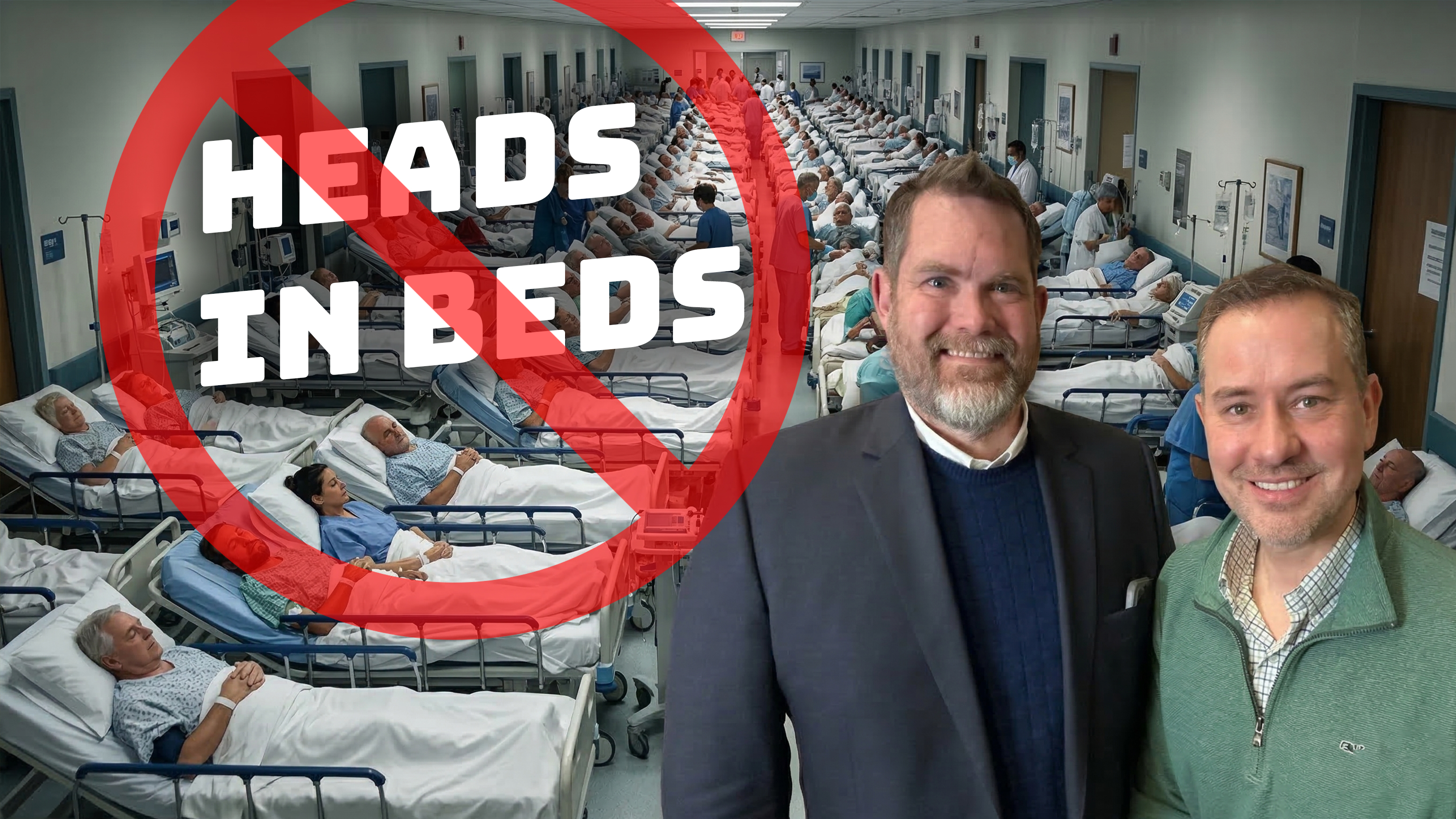
Iowans are sick of “sick care.” As much as you may hate the system however, Dr. Jon Van Der Veer, founder and CEO of Hy-Vee Health Exemplar Care, says it’s working exactly as designed. The present healthcare system profits from your illness, but he believes the direct primary care model can disrupt it and prioritize health.
What is direct primary care?

Van Der Veer explains the current “heads in beds” model is a product of a medical-industrial complex where revenue is generated by the severity and frequency of illness. He argues the system prioritizes high-cost hospitalizations and surgeries over the foundational relationship between a doctor and a patient, designed to prevent serious illness. To counter this, Van Der Veer has developed a no-limit, primary care membership subscription designed to align the incentives of the the healthcare provider with the health of the consumer.
In other words, the healthier you are, the more sustainable their business model becomes.
“In a direct primary care or a subscription membership based model, the goal is that you are getting what you’re paying for, which is time with the physician or the provider you’re with,” Van Der Veer stated. He explains his clinicians are incentivized to keep patients healthy and out of the clinic rather than waiting for injury or illness to occur.
It sounds obvious, but Hy-Vee Health Exemplar Care’s primary care membership model is opposite what most Iowans currently experience.
The Return of Direct Primary Care
A significant portion of the discussion centered on the “functionally uninsured” status of many Americans who, despite having insurance, face massive deductibles. This discourage them from seeking care. Van Der Veer’s model offers memberships—such as the $89 a month “full tilt” direct primary care price. Access price for urgent care is $49.
This model eliminate’s the fear of surprise $500 bills after a routine visit, bills from multiple entities, and hard-to-understand pricing confusion. By removing the insurance middleman for routine needs, the model restores the physician-patient bond.
Van Der Veer noted the administrative bloat in the traditional system, stating, “There’s a chart that shows the amount of administrators in healthcare over the last 25, 30 years is astronomically higher than the people who are actually providing care and the cost matches their curve.”
Primary care membership for Iowa employers
Beyond individual primary care memberships, the model is gaining traction among employers as a talent retention tool as well.
With fifty five groups across five states already signed on, Van Der Veer sees the subscription model as a “fixed defined contribution” that allows employees to engage with healthcare without financial fear. This proactive approach reduces absenteeism and ensures a more focused, productive workforce. Healthy, happy, employees are better workers!
With rising healthcare and insurance costs, and increasing uncertainty, employers are opting to provide this as a benefit and retention tool for key employees.
“We may see some of those people more frequently if they are sicker, but we’re doing a better job of keeping them out of the high end care model,” Van Der Veer explained, reinforcing that the ultimate goal is to return insurance to its original purpose: a safety net for catastrophic events, not a barrier to everyday wellness.
Thank you to Hy-Vee Health Exemplar Care for collaborating on this exclusive episode! Our community partners compensate our hosts directly for their time creating unique, high-value for our wide Iowa audience.
Interview Transcript
This transcript was created with help from Ai. Please report errors to us and always refer to the video as your primary source.
Justin Brady: I’m Justin Brady from Iowa podcast.com. Do you know how healthcare makes its money? heads in beds? If That sounds problematic it’s because it is, and we’re seeing the results of that play out in the economy right now. Maybe there’s a fix, a homegrown fix right here from Iowa. today, we’re joined with the CEO and founder of Hy-Vee Health Exemplar Care. Dr. John Vanderveer. Dr. John, good to see you Again, Same.
Dr. Jon Van Der Veer: same to you Justin. Thanks for having
Justin Brady: One of the big travesties or models I should say in healthcare that is kind of maybe causing problems is this whole head’s in beds scenario. right?
Dr. Jon Van Der Veer: Yes. So, um, well, I mean, it’s one of those frustrating things that, uh, a lot of the healthcare dollars get spent in hospital care, uh, major surgeries, kind of the, the last place you wanna be as a, as a patient. You don’t want to be in a hospital, you don’t want to be sick enough to be in an ICU. Um, but that’s where the dollars from a business structure exist. And so, um, we work really out in the primary care space trying to keep. People healthy and away from those things.
Justin Brady: Yeah. So this is interesting. because the model you’ve built is, and we’ll get into this, but is seemingly opposed to or, or in conflict with, the traditional models. And so I have quite a lot of questions on how is this even sustainable. How does this work, But basically, you’ve moved away from this model. and You have a big announcement in this as as well, which is you’re basically moving. To a subscription. model Is this exclusively, this is the direction you’re heading.
Dr. Jon Van Der Veer: That is the direction we’re heading. So we’ve historically had primary care membership, um, at a monthly fee and all the services that we can talk about later. But, uh, we are getting ready to transition into having a. Uh, all of our points of care be, uh, membership related or one-time cash pay. Um, it’s really interesting when you start looking at how functionally uninsured society is as an individual. You may have, um, a really good health plan, but you have a $4,000 deductible. So you go get care and, uh, and you’re spending lots of money out of your paycheck to have this insurance. Um, but then you go get care and you pay a $10 copay and you’re like, oh, this is pretty cheap. This isn’t bad. And then you get off. $500 bill on the backend, uh, from that visit because, uh, you have the deductible, so you’re on the hook for the first part, and I, I don’t know the exact numbers, but it’s close to 90% of people never hit their deductible. Oh. That means for the entire year, the things you’re paying for. You’re paying out of your pocket and the insurance is never getting there and it’s not, it’s not really getting used unless you are someone who’s really sick or you have that once or twice a decade, um, appendix that bursts or you end up hospitalized for a surgery or gallbladder goes bad or, or you’re in a crash on 2 35 or another interstate and you end up in an ICU somewhere.
Justin Brady: So there are like two levels to this that are confusing for everybody, um, that we’ll talk about today I’m sure there are 3, 4, 5, maybe six. other layers that are even more confusing. You talk about PBMs, you talk about insur. everything gets really, you talk about pharmaceutical companies and you talk about the grants they receive to get this stuff gets really, really confusing. So we’ll keep it pretty surface level today as it applies to consumers and employers and, um, things that actually give them value. But one of the interesting things is how, how is the model. You have this subscription model completely different because. I’m Guessing here, but the heads in beds model, you basically pay when you’re injured. Um, but you’re subscription model you’re paying when you’re you’re not so are, are you kind of incentivized. to be Preventative. Is this the whole
Dr. Jon Van Der Veer: model? Yes. So, um, your heads and beds, I call the sick care system of the medical industrial, uh, complex, where the sicker you are, the more frequent you need seen, the more revenue that’s generated, um, in that model and in a direct primary care or a subscription membership based model, uh, the goal is that you are getting what you’re paying for, which is, uh, time with the physician or the provider you’re with. Um, you’re getting the preventive care, uh, review that you should be getting, making sure that you are healthy. And I’ve never had a problem telling patients like, if this relationship works really well, you’re gonna be really healthy. You’re not gonna have to see me very often. You’re going to, from a financial model, you’re going to keep paying so that when you do need it, we’re there and we have more time and we know you and the relationship is there. ’cause the relationship has been squished down to a transaction in the traditional model. Um, and. You’re going to be healthier and happier, which is what you’re paying for. And from our standpoint, we can practice medicine the way it’s supposed to be practiced with time and with those relationships being built. So it’s, it’s supposed to align the incentives of the patient or consumer or listener, um, with the team that’s providing the care so that we’re looking at the same direction and how do we get you healthy? How do we keep you healthy? Um, that’s the ideal for everybody.
Justin Brady: Yeah. I’m So ’cause right now, what is the average amount of time that a doctor actually sees a patient? when they’re in there? Do
Dr. Jon Van Der Veer: Oh, the data’s kind of all over the place, right? You’ll see anywhere from, uh, seven minutes in a really, really busy family medicine clinic to 15 minutes. Um, and again, how much of that time is face to face with a, uh, clinician who isn’t typing away at a keyboard off the side and, and really, uh, paying attention and spending time with you and. Doing a physical exam and really looking for things that, that they might be missing.
Justin Brady: Now your, your model is essentially, you’re spending a lot more time with people because it, it sounds obvious, but you need to spend more time with people to diagnose and to actually understand what’s going on with them because the body is complex and sometimes symptoms um. Sometimes we’re thrown off by symptoms, because this, oh, this, this is a symptom of x, Y. And. Z. But if you
Dr. Jon Van Der Veer: it’s not relevant.
Justin Brady: Yeah. if you just spend a few more minutes with them, you’d figure out that’s, you’re, you’re sending ’em a. wild goose chase.
Dr. Jon Van Der Veer: So, uh, you hit on a couple things. One, there is old, uh, data out there to show that time spent, uh, with the physician getting an accurate history and physical, uh, decreases downstream costs. It’s a more accurate diagnosis, a more prompt treatment plan, and less shotgun approach to getting the diagnosis correct. It’s weird. We wanna practice evidence-based medicine, but. That evidence is never part of the discussion of, Hey, we should slow things down in healthcare. Um, because that’s not how the model has, I mean, healthcare is broken, but it works exactly how it’s designed.
Justin Brady: Exactly. And this is the big question, is because people are like, oh my gosh, these healthcare people are just dumb. They can’t figure this stuff out. Actually, they have figured it out. Like you said, it’s for many of these organizations, it’s working exactly the way they want it to. Correct.
Dr. Jon Van Der Veer: And that’s from the federal payers. And then all of the insurance kind of pegs themselves off of the federal payers. So I’ve always described healthcare as a, as a maze. I used to say mice, but now I say rats. The rats get put in the, in the maze, and they’re going around in the. The payer’s job. So the insurance company’s job is to put big chunks of cheese to incentivize behavior. Let’s say it’s colorectal, uh, screenings with colonoscopies. One year, all the rats find that cheese. They make a bunch of money, move that metric up. Then the payer comes in, takes the cheese and moves it over to another part of the maze, and the rats all scurry away. And those colorectal cancer screening numbers kind of go back to where they were. But now breast cancer screening goes up. They go get those dollars. And so there’s, there’s always this perverse game of like, how do we find the money? And there’s, there’s a chart that shows the amount of administrators in healthcare over the last 25, 30 years, uh, is astronomically higher than the people who are actually providing care and the cost matches their curve.
Justin Brady: I think the Big question, is people naturally would assume that, you know, if healthcare is working. as intended and some of these medical companies are making money hand over fist and they’re happy campers, how do you build a sustainable model at Hy-Vee Health Exemplar Care? How is this even possible? So
Dr. Jon Van Der Veer: So that’s where we’ve kind of extracted ourselves out of that. And by having a membership model, it’s a relationship between an individual who’s signing up for our Exemplar Access membership, which is urgent care, come in, be seen 24 7, um, have access to somebody around the clock, get. Strep test, uh, flu test, whatever, and not have to pay anything more than what your membership already has. Um, by doing that, that relationship is between us and there is no insurance company built in. We don’t own a hospital system. We don’t have a, or we’re not part of a hospital system, so we don’t have an incentive to have those heads in beds And, um. You know, we send you to the highest quality person, not someone who’s just aligned with us. Uh, we wanna send you to the most cost effective provider and the best provider, uh, at the same time. So then on the direct primary care model, we have a piece where we, uh. Um, we’re doing the primary care plus that access to acute sick care for cough, colds, lacerations, those types of things. And then, um, the last thing that we’ve just added is something called Exemplar diagnostics. And this is for those people and you know, the consumers. Have become more educated. They want different things now than, than the relationship I had. I’m not old enough to be Norman Rockwell, but it was hanging in my, my primary care doctor’s office. I always saw the Norman Rockwell pictures and, and the consumers changed over that time period. And so we have this diagnostics piece, which is a much deeper dive into blood work, um, and the possibility to go on to additional testing for those people who are really trying to get their health in order. Um, and it’s a deeper dive that insurance typically wouldn’t pay for, and it’s a, it’s a trial with our membership plus extensive testing to then go through those results and, and really make sure you have a plan in place for yourself.
Justin Brady: A lot of people are like I don’t understand why my insurance or my healthcare company doesn’t cover this thing because this is preventative. and isn’t that Good for them in the, long run. And of course the answer is no, it’s not actually good for them. in the long run. So with this model, you’re in basically the. un. Less healthy, the more unhealthy your patients get, the more revenue you stand to lose and your model becomes less and less sustainable. So you, it sounds like, correct me if I’m wrong, but it sounds like you are incentivized then to keep people out of your clinics. We are.
Dr. Jon Van Der Veer: and I’m not gonna say there’s any physician or clinician in town who’s not trying to keep people healthy individually, but the system puts pressure on and compresses those time spots and makes it harder to do so. But in our model, we’re aligning our incentive with the. Patient or consumer incentive. Um, and yes, people have said, well, you’re trying to cherry pick really healthy people and you, you don’t, so people will accuse the model of, of targeting really healthy people. But we have, we have taken care of really sick Medicaid, uh, patients, homeless patients, um, at Central Iowa shelters and services. We work there and by having no barrier and they can come in and get more access. So yeah, we see ’em more. We keep them out of those ERs and hospital stays and, and uh, rehab facilities. So yeah, we may see some of those people more frequently, uh, if they are sicker, but we’re doing a better job of keeping them out of, uh, the high end care model.
Justin Brady: So from a top, from a 30,000 foot view, this healthcare model, some people may not be familiar with it, right? And, and well actually not Some people, may be most people aren’t familiar with this model of healthcare. which Is we’ll charge you a subscription and our goal is to keep you healthy. Like that sounds foreign to most, but to People who are a little bit more, healthcare savvy, there are some terms floating around that. It might be helpful for you to break this stuff down. Like there’s direct primary, care, there’s concierge care, there’s traditional care, and then there’s what you’re calling subscription model. care. Like What, what is this? for a really like layman, what does this stuff? mean?
Dr. Jon Van Der Veer: Um, so we’ll start with the traditional, that’s you go in, you hand over your insurance card, you get the care, you go back, uh, you get the bill later on, and you don’t really know what care costs until after it’s already been
Justin Brady: True. Yeah.
Dr. Jon Van Der Veer: Um, the concierge version, uh, takes that model and they add a monthly or annual fee on top of that, and they still bill the insurance. So they’re kind of, um. They’re kind of getting paid twice. Uh, it’s really about access and convenience. And then Direct Primary Care is a subscription based model, which is what we started on. We’ve just added some nuance to it to expand it out. Um. It is outside of the insurance. So we are, we are charging $89 is our full tilt price, uh, less for the employer groups that we partner with off of volume. Um, and then our access for just the urgent care is at $49. And you pay that once a month and you come in, you get care and you don’t have to, you don’t have to worry about some bill coming back later, everything. That we provide, whether it’s labs that we do onsite or send out, uh, medications we dispense, which is something the, uh, board of medicine allows in the state of Iowa. Um, as well as, uh, plain imaging, we do x-rays in, in house as well. Uh, those services are all included, so you don’t get a surprise at the end, you know, okay, I’m gonna spend $89 a month, um, and I’m gonna get all this care instead of going and getting the care and waiting to see what it costs you.
Justin Brady: Are there any Scenarios when people don’t know what they’re going to pay? Like, uh, at, at Hy-Vee health exemplar care someone comes in for a scratch or a minor rash, they’re gonna still pay that subscription. per month. But What if they get smashed into by 80 semis? and They come in in 20 pieces, Is it still gonna be the same price per
Dr. Jon Van Der Veer: Well, so that person, hopefully, if they’re smashed like that, EMS goes right past our door and takes them to an emergency room. Yeah. Well, good point. Okay. And, and we talk to everybody about like. There are people who have no insurance and we are a safety net that allows people to pay to get care that they otherwise can’t predict what the cost is gonna be. They budget and they get the care from us. They keep themselves up to date on
Justin Brady: Mm-hmm. Flu
Dr. Jon Van Der Veer: shots, things like that. Um. We still encourage people and we work with employers to say, yes, you need insurance. Um, you should have insurance because you could be hit on 2 35 or on 80, um, and spend a half million dollars in an ICU for a month. And so you really have to, you have to have that layer. But I like it. I liken it to, um, car insurance. So, um, from all your posts, for those who don’t know, you have a Tesla, right? Mm-hmm. And, um. You don’t have to pay for gas. That’s you. You picked the outside model and you have a difference that you benefit from. But if you take someone who has a combustible engine, uh, and they put gas in their car and they get their oil changed and they rotate their tires, uh, state Farm. Uh, progressive, whoever their insurance is, you’re not sending those costs to the insurance company, right? So all of the preventive maintenance you’re doing on your car, you’re paying for out of pocket insurance is there for when someone sideswipes you, uh, and totals your car and replaces it. Well, if you go back 40 years, that’s what health insurance was, right? People paid for their primary care, just like they would a, a fill up on your gas or, uh, an oil change. And over time, insurance started to pay for all of that. And what that did is that bloats the cost. So if, if every tank of gas that someone who needs gas, uh, if that was billed off to, uh, yeah, it’s. If that went off to the insurance company, suddenly you’re, we’ll say, a hundred dollars a quarter or whatever I’m terrible at, at what car insurance costs, but it would be exponentially higher if they were footing the bill on every bit of gas that you were putting in. So that’s, that’s what this is doing. This is putting insurance back where it’s supposed to be,
Justin Brady: Yeah. You’re, you’re dialing the clock.
Dr. Jon Van Der Veer: Yeah, catastrophic care. Uh, routine preventive stuff shouldn’t be hard.
Justin Brady: Right, because you’re, you’re dialing the clock back about almost 60, 70 years, at this point to reset things to the way they were originally intended to work. And like you mentioned, if you’re relying on your insurance, and this is another layer that gets people super confused ’cause people have conflated insurance and healthcare, they’re almost the same discussion these days. they have totally different functions. And those, uh, the conflation of those two functions, it’s what is what’s led to a lot of confusion with how healthcare is billed. but basically you’re rolling the clock back. about 60, 70 years And you’re saying, look, insur health insurance, which you’re saying, people should still have it, but it should function like insurance is supposed to function Which is if you have the catastrophic event, that is when health insurance kicks in. it’s not to cover all the little things that are, happening all the time. ’cause that’s what’s driving everyone’s rates. up. And that is what’s making healthcare more expensive. So this absolutely this makes it more manageable. And understandable. And like you said, you’re not getting sneaky bills. from the doctor, the Facility, the insurance company, and then whatever, whatever. Other people are in
Dr. Jon Van Der Veer: Well it, it’s funny ’cause we’ve had people at employer groups that we work with and they’ll be like, well, why is our insurance going up this year? And they’re like, I didn’t spend anything. No, but Sally sued down the hall. Right. And. Joey spent astronomical amounts in healthcare this year and you are now going to pay for next year to make up for that. And, and so everyone’s kind of stuck in the same boat and this is a chance to kind of break it out and, and employer groups can use it as a cost control to help prevent some of those big spikes in premiums. Yeah.
Justin Brady: Side note, one of the things my, my brother is in healthcare and one of the things he talks about is like, due to all the insurance and regulatory layers, sometimes it’s actually cheaper. to Pay cash than to go through your insurance. But despite that fact, a lot of people still say, well, if my insurance doesn’t cover it, I’m not interested, and he’s like, If you run it through your insurance. you will pay more. But it’s just like the insurance discussion has, uh, well, people’s understanding of insurance has stopped any meaningful discussions in healthcare. As a side note, but you you have mentioned this a few times. and I think this is a good note to end on, Which is you’ve said employers, so people are like. Oh, okay. I get it. I pay a subscription. Everything’s manageable My entire family knows what we’re paying per month. We can go see you whenever we want. your, your clinicians are incentivized to keep us out and keep us healthy all the time. Great. Dr. John sounds great. I don’t Well, how does the employer, my employer, like is this a benefit? that some employees are, or excuse me, is this a benefit that some employers are offering their workforce? So like um. CEOs, CHROs are saying, Hey everybody, if you work here, uh, hyvee Health Exemplar Care. you just Get that service.
Dr. Jon Van Der Veer: Yes. So we have 55 current groups that we are working with across the five states that we’re in. Um, and absolutely that’s it. And we’ve gotten comments back from employees who say, this is the only real benefit my employer gives me. And they’re saying it as a, this is the only benefit because it doesn’t cost them. Yeah, so the employer chooses to do this, and again, we already started the conversation with you being functionally uninsured because you have this big deductible, right? You’re going to pay, but if they sign you up for this membership and you come into hyvee Health Exemplar Care, you get the care you need. It doesn’t cost you anything. As the employee. You go about your business and you don’t avoid care because you’re scared of the cost. You actually engage more and you get. Healthier and you’re a healthier workforce force for the employer. And the employer knows here’s a fixed defined contribution I’m paying on this piece and I now don’t have to worry about my employees avoiding care, being scared to, to go to the doctor to get diagnosed with something and cost money. So, so it is a true benefit in that they come in, they get care, they charge, they’re charged nothing else to see us. And if they need EL elevated levels of care, we then send them. To the appropriate resources there, but they have someone walking with them in that journey. And so it’s a, it’s a real win for employees when their employer picks it.
Justin Brady: When I started working with an HR brand years ago, I had zero visibility into how health and even mental health the negative effects they have on, workplaces. I didn’t even make that connection. But when people are out all the time ’cause they’re sick and that, that is such a drain on the organization cause you hired them ’cause they have a beautiful brain and you want ’em doing Beautiful work and if they’re sick all the time, even if they’re in the workplace. they can’t focus on good work. And So it is an incredible benefit. especially, I mean, are you seeing, I guess this is the last question. Are
Dr. Jon Van Der Veer: Sorry.
Justin Brady: Are you, are you seeing then a lot of organizations use Hy-Vee Health Exemplar Care is kind of a ta, a talent acquisition and a talent retention tool to keep great talent. in their organizations?
Dr. Jon Van Der Veer: we are. And it’s, it’s actually kind of funny. We’ve had a couple employer groups who actually, one of our very first ones was a, a larger employer, said, Hey, we’re thinking of switching. And the employees went back to the employer and said, don’t you dare, we love this benefit.
Justin Brady: And
Dr. Jon Van Der Veer: They said, oh, okay. Well, yeah, we’ll keep it then. Um, because it really is something that can, can differentiate you as an employer, uh, with your employees,
Justin Brady: Dr. John Vanderveer, the CEO and founder of Hy-Vee, Health Exemplar Care. If people like what they’re hearing, whether they want, to, they’re an individual or family that wanna sign up, or whether they’re A-C-H-R-O or CEO that wants to sign up. what’s the most direct path for them to reach out to the company, in the organization,
Dr. Jon Van Der Veer: Go to exemplar.care, CARE. Um, there’s all sorts of information on our website. Um, and otherwise you can email me@jnatexemplar.care
Justin Brady: CEOs giving out his contact information. That’s crazy. I appreciate that. And I’d also like to say@iopodcast.com, we are absolutely thrilled to be collaborating with you to get great information out to our audience. So thank you for That as
Dr. Jon Van Der Veer: well. Thank you. We’re excited.