




Audio version:
Where did WHO TV anchor Elias Johnson go? The lifelong newsman has been a fixture in Des Moines news. Before filling the evening news position vacated by Dan Winters September of 2022, Johnson was on WOI, Channel 5. But in August of 2024 just short of two years at Channel 13 he left to lead communications at Fareway. But why?
“It was a personal life issue of missing my family and not being able to do my number one job, which is being a dad,” he said. “There is quite a long time where the only thing I could do to get ready for bed is pour a whiskey, or pour a drink, and then just kind of chill out… But that’s not healthy.” Johnson decided it was time to make healthier decisions.
Hear from Iowans directly. No algorithms.
Don’t let the algorithms choose your news. Enter your email address to hear directly from Iowans leading news in politics, community, agriculture and business. No editing. No clickbait. No rage. No agenda.
Where did Elias Johnson Go?
Johnson spent 15 years in journalism as a multimedia journalist and anchor. Despite achieving professional success, winning awards, and working with colleagues he admired, Johnson found himself questioning his career’s sustainability. The demanding schedule of evening news meant he was missing key moments with his family, unable to coach his children’s sports teams, and losing personal time for hobbies like golf. Over time, the strain took a toll on his well-being. He recognized that media, as an industry, was evolving, but not necessarily in a way that provided stability or improved work-life balance.
Feeling the impact of burnout, Johnson made the decision to leave before the industry forced his hand. He describes how reaching out to Reynolds Cramer, CEO of Fareway, was the beginning of an unexpected opportunity. He wasn’t actively seeking a new job but instead looking for guidance on what could come next. That conversation led to a role in corporate communications, allowing him to use his media skills in a way that better fit his life.
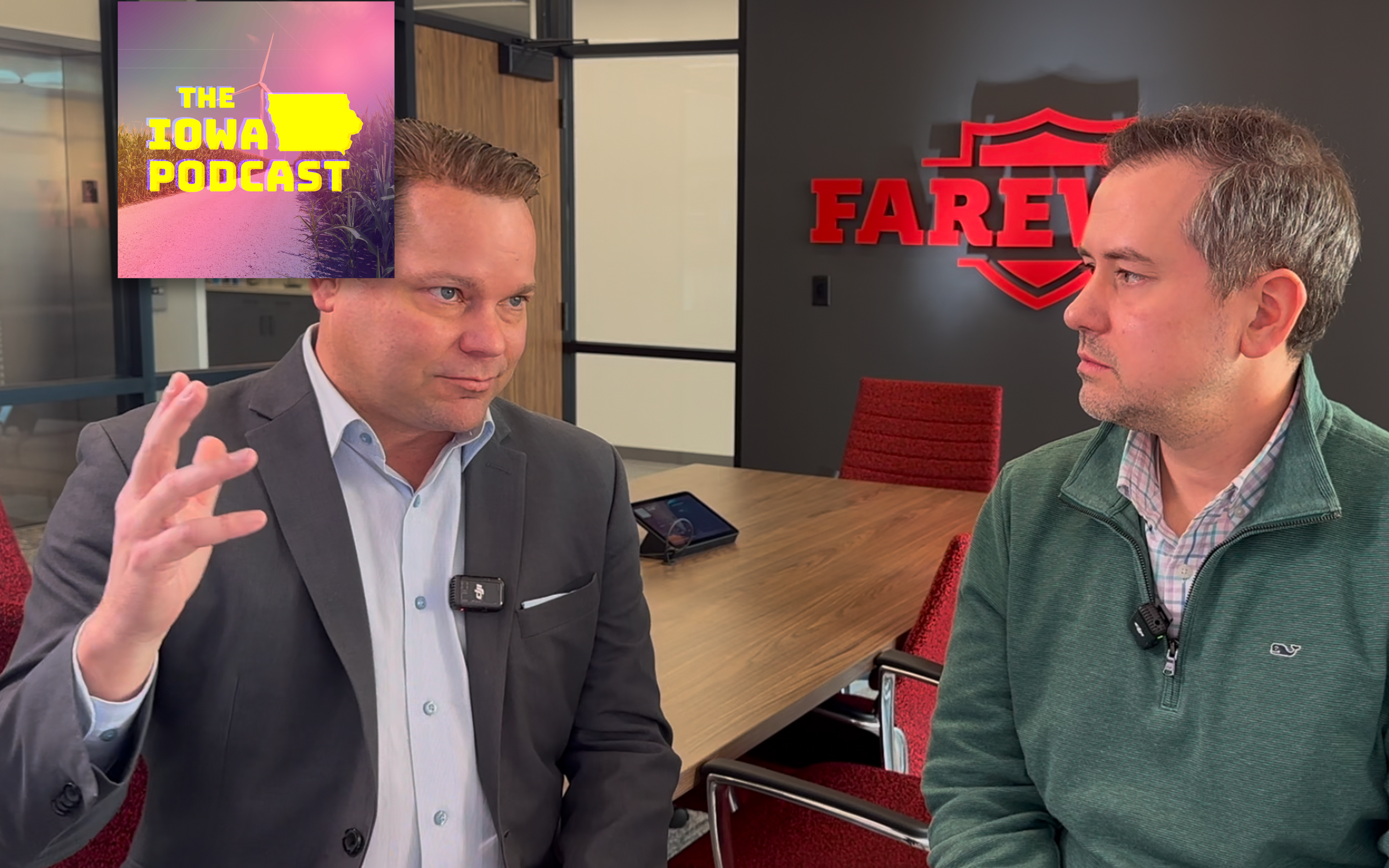
Elias Johnson heads up communications at Fareway
At Fareway, Johnson now serves as Vice President of Corporate Outreach and Communications. His job involves working with media rather than for it, producing high-quality video content for internal communications, corporate outreach, and press releases. He has also restructured how Fareway engages with the press, ensuring that news outlets receive well-produced content, increasing the likelihood of coverage.
In addition to media relations, Johnson oversees Fareway’s corporate giving initiatives, supporting local charities and ensuring donations make a tangible impact within Iowa communities. This aspect of the job brings fulfillment, as he plays a role in helping families, students, and local organizations thrive.
Prioritizing Health and a New Lifestyle
Stepping away from the newsroom also allowed Johnson to focus on his health, both physically and mentally. He candidly discusses how poor habits had developed over time—late nights, stress-related routines, and neglecting fitness. Now, with a more manageable schedule, he is actively making healthier choices, participating in fitness challenges, and embracing a balanced lifestyle.
Johnson’s journey serves as an example of how professionals can pivot successfully, leveraging their skills in new ways while prioritizing personal well-being. His story is one of reinvention, proving that leaving a career—especially one as demanding as journalism—does not mean starting over, but rather, finding a better fit for the next chapter. And sometimes, the best stories are the ones you create for yourself.
Interview Transcript
This transcript was created with help from Ai. Please report errors to us and always refer to the video as your primary source.
Justin Brady: Come with me to a magical place where being labeled the pork queen is a compliment. Where being nice is just a way of life and where all leaders of the free world must pass through. Welcome to Iowa. Whether you’re a current Iowan, an Iowa expat, or an Iowan at heart, this show is for you. This is the Iowa Podcast, real Iowans, real talk. No. I’m Justin Brady, I’m at Fairway. Because I’ve seen some web traffic on the site. Where did Elias go? Because we, we look at search stuff. Like SEO, tech, digital junk. Don’t you people
Elias Johnson: have something
Justin Brady: better to do? They have nothing better to do because they’re very curious where you went. And so, we were going to schedule an update. It got pushed back. I’m like, I’m gonna go. To where you’re at, which is Fairway, and find out what happens. So why are we at Fairway, and why are you here, and what, what, what just happened?
Elias Johnson: Uh, well, I got lost one day, and this was the first place I turned into, and I, no, I um, I, I had a 15 year career in, in journalism, whether it was being a multimedia journalist or I’m a news anchor, most recently an evening news anchor with Channel 13, and I mean, I love the people. I love Ed Wilson, Erin Kiernan, Keith Murphy, Janae Towne, Ed, I mean, you name it, I love the people I worked with, but even though things were going well, we were told, you know, ratings were great, you know, the awards were coming in. At the end of the day, every night, I would just feel like what, I just felt this overwhelming weight of what am I missing, right? I felt like I didn’t have a life. I didn’t have a social life. I didn’t see my friends anymore because I go out at two o’clock in the afternoon. Yeah. I didn’t spend time with my kids. I couldn’t coach my kids anymore. Um, couldn’t play my golf. I love playing golf. And the Wednesday night men’s golf league was like, My reset, right? Being around my guy friends and playing golf. Couldn’t do that anymore And these things just kept adding up and I didn’t see I didn’t see that ever changing, right? Because the the shifts never gonna change I think it probably should given where I think media’s heading needs to reinvent itself But it wasn’t gonna happen in time for me to I didn’t want to stick around and see How things are gonna change I wanted to make a change and kind of go out while things were going well if that makes sense and so I I’d gotten to know Reynolds Kramer, the CEO here at Fairway over the years through charity work and, you know, it’s just, it’s what you do when, you know, you’re, you’re looking for something else, you look into your network, you know, you lean into your network of people and I don’t know anybody that is as connected and, um, respected as, as Reynolds is, he’s just one of those guys and so I, I just texted him and said, hey, you know, I’m thinking about what the next phase of my life looks like and, I don’t think it’s going to be in broadcasting anymore. And he was shocked, you know, he was like, What’s wrong? Did something happen? Did you get arrested or something? You know, no, thankfully, no, I did not. It was just, I was looking for something different. And so he said, well, let’s have, let’s go get a drink. So we went and got a drink. And, and I didn’t go looking for a job. I was just genuinely wondering, like, you know, I don’t want to do this anymore, but I could do a lot of other things. Do you know anybody that could use a guy like me? And that’s kind of how the whole process started.
Justin Brady: You, you mentioned reinventing yourself. Or, excuse me, you, you invention media needing to reinvent itself. Mm hmm. Is that part of the reason you left looking for other things?
Elias Johnson: It’s definitely, I could see, and I have seen the transition of traditional legacy media evolving. And I wouldn’t say evolving and growing. It’s been evolving and And contracting, right? You could even see at the beginning of this year, towards the end of last year, mass layoffs in the industry. I mean, we’re talking good quality people. And, you know, I just, even though I’m a little different because I can shoot video, I can produce, I can edit, I can kind of do everything. Yeah, you actually helped
Justin Brady: me set the lights and everything in here. Looks good, right?
Elias Johnson: I always felt safe, but that still, to me, I didn’t like doing everything all the time. And I could see that that was going to be something that was going to be expected, is that you’re going to have to do everything all the time. And then you worry about burnout. And I know what burnout feels like. When, when I was an MMJ, and that’s a multimedia journalist, where you are a reporter literally going out and turning a story every day, you’re by yourself, you get burnout. It doesn’t matter what type of beat you’re on, whether it’s crime and politics, it’s school, it’s fluff stories, you know, at some point you will burn out. And the older you get The more you feel the burnout,
Justin Brady: yeah, is a part of the media needing to reinvent itself. Is that related to like Gallup? This isn’t just my opinion, but Gallup is recorded media trust. Is it an all time low? Like, is that part of the reason you left? Is that part of the whole mix that got you out of the industry? Not
Elias Johnson: so much with me because I, I always loved hearing from viewers and I think my connection wasn’t so much in the content that we were showcasing on our newscast or even the stories I was doing. It was those moments you get with your colleagues on the desk, right? Those moments to kind of get away from whatever it is we’re talking about and to kind of lighten the mood, make, have a memorable moment or maybe a sincere special moment coming out reacting out of a story. I mean, I got, I, I still miss those, those interactions with our viewers to this day because, you know, they, they would have watched the whole newscast and couldn’t remember hardly any stories they saw, but they remember those moments you had, where somebody made, they made, we made each other laugh, you know, those, those are the things I do miss, but, um, I left just more so because I kind of saw where, So where this was going, but on a bigger scale for me, it was, it was a personal life issue of missing my family and not being able to do my number one job, which is being a dad.
Justin Brady: Yeah. Do you have that? So you, cause you went from, just to give people an idea, the hours. You were working over at NBC affiliate, uh, Channel 13. What is that? Is it like, get there at like 11 and then leave at 10? You have like a, almost like a split shift? How does that work? Because I don’t think people really process how that schedule works. It’s a little
Elias Johnson: nutty. It, it is nutty. It’s, it’s imagine, imagine starting your day at 2 o’clock in the afternoon. And, in fact, you’re starting it more like at 1 because you’re Getting ready, you know, get your workouts in in the morning, and then you, and all your stuff, and then you get ready for work, you go in, you have an editorial meeting at 2. 30. And then you’re shooting promos, you’re anchoring newscasts, and then you have this, this dead time, which I hated. It was, I get home at 7 o’clock at night, because we get done with the 6. 30, at 6. 30 for that 6 o’clock newscast, and then you get home at 7, and then you grab a dinner break with your, your family, and then it’s like, oh, it’s like, I wish I could just stay home. Just be home and read the stories to my kindergartner, and, but I gotta go back. And a lot of it was, I gotta go read the same stories you’ve already read. Um, and that was tough and then even just that, you know, you have one hour, you know, it’s not like, you know, you can, you know, you can spend more time if you want because I was, I’d found out, you know, the hard way that was like, hey. You know, you got one hour, well, it takes me 15 minutes to get home. So, half that one hour is on the road, so I really have 30 minutes at home with my family for quality time. And then you go back, you know, and you’re kind of prepping, you’re reading through your scripts for the show, and then you do the show at 10, you’re done at 10. 30, usually out of the station by 10. 45, and then you get home, and maybe you think like, ah, you know, your day’s over, like most people go to bed by, you know, maybe 10. 30, 11 o’clock. You can’t like you’re you just got done performing, right? Yeah, that’s exactly right. Yeah, so you’re juiced up Yeah, you all amped up and so, you know There’s there is quite a long time where it’s like the only thing I could do to to hear everybody is like, you know Or a pour a whiskey or pour a drink and then just kind of chill out get that But that’s not healthy, you know And after a while like and my wife would be the one because she’d be in bed already She’d come downstairs the next morning and see the glass, you know and say, you know I think, I think you might be developing a problem here if you, you know, and it’s something I was like, well, I just need one, you know, I just need one. And then, and then it turned into, yeah, but that one, that poor is like a triple, you know. And so, and this is just, just to be open. It was just a. That was part of it too, was, you know, I was developing poor habits. I wasn’t working out, wasn’t taking care of myself, and so that was the other push too, was like, I’m over 40 now, I’m not gonna, I’m losing body mass, I’m like, muscle mass, I’m losing everything, right? And you can’t get it back. You’re just trying to hold on to what you have as long as you can. And, you know, I wrestled in college. I used to be in fantastic shape. My wife brings up pictures of me, like, remember what you used to look like? And I’m like, well, thank you very much, love of my life. And so, that’s been part of kind of my reinventing myself, too. You know, I’m doing that, that, uh, barrels 10 week challenge. Right now? I’m doing it right now. I’ve done it in three days, and I feel like I’ve been in three car accidents. And, uh, just body wise, it just feels like, you just, you just feel worn out, but, um, I’m so inspired to, like,
Justin Brady: It explains why you carried me, you wanted to carry me up the stairs. Yeah, I wanted to carry you. I thought it was weird, but that’s what I wanted to do.
Elias Johnson: But, uh, you know, I’m not drinking, I’m not, I’m eating healthy, which I hate, I don’t like. I feel like I’m eating like a farmer. You don’t
Justin Brady: like eating healthy?
Elias Johnson: I don’t. I don’t. I don’t. You will. I miss my chips, I miss my, my burgers, my fries, and so, wife saw me about that, but it’s, it’s part of, it’s part of this new me, with this new job, new schedule. Yeah. I can find time now to do things, you know. I’m busy, and there’s a different type of busy and stressed now, but I can, I can find time to do certain things, and I can turn it off, too, when I want to. If I’ve had enough, I’m like, you know what, I’m gonna go home, pick it back up tomorrow, I’m gonna be coming a little early or something.
Justin Brady: Well, was there a point where you realized, like, Like, you know, you said a single, to a double, to a triple. Was there a point you realized the stress, the health, was reaching this point where like, I gotta do something about it? Is it your wife who said something? Is it a friend who said something? Or did you just have this realization that This pattern, like doing the late nights, is simply not going to work anymore. I got to make a change. Is there a point that happened or do you just have a realization on your own? I could feel it.
Elias Johnson: I recognized it first and then it was reinforced when my wife would start. Sure. Kind of like, you know, Hey. Yeah. What’s going on? You know. And then just, I just, that’s an awesome spouse. It is. It is. Good job. We get along and we are best friends and she can, she, she knows when I’m full of crap. Yep. And she’s the first one to point it out and I’m grateful for that. And it was just that combination of like, I knew, I didn’t feel good. I was depressed. Guarantee I was depressed. Wow. And I just, I wasn’t, I wasn’t the best dad. I wasn’t the best husband. I wasn’t the best friend to people, you know, I would, I would avoid even on the weekends. Yeah. And I was wanting to hang out with people. So, I was so used to not hanging out with people. And then you go out in public and it’s tough to go to a bar or a restaurant because people recognize you too. Yep. Not to say that it’s like, oh, you know, look at me. I never wanted to do that job for that. In fact, I don’t like it. I know. Yeah. If you talk to people that know me personally. I always have reluctancy to go out in social settings because sometimes you’ll see people take pictures of you while you’re having a drink at a bar. You’ll see people pointing, you know, and most of the time it’s like, you’re like, oh, hey, look who it is. But sometimes it’s, you can tell people are like, should I go mess with them, you know. I’ve had that experience and so, um, I just, I always just was reluctant to even go out and do things. I, I still run into people that say, you know, hey, you’re Elias, and now I tell them, well, I used to be. And it’s amazing. It was like three months after, this is three months in, and like up to like two months ago, people would still say, like, I love watching you on the news. Yes, yeah, I’m
Justin Brady: like, I still get that, by the way, because I was at WHO for a while. People are like, oh man. I love the show and I’m like, well, I mean, it hasn’t been there for two, like over years, but you know, how much podcasting are you listening to because this isn’t,
Elias Johnson: yeah, I haven’t been, I haven’t been a part of this for a while for years guys. And so, but their interactions are, are sweet. Now people, I can promise you this, people miss me being on the news a lot more than I miss it. Sure. No. And it’s, it’s a compliment, I think, to some of the work that we did and I miss, I miss it for that reason.
Justin Brady: But that’s about it. That was the nice thing about classic radio is no one knew what we look like You know, so when I was on whl, uh, I would get looked sometimes or people would hear the voice Yeah, and you could I I would assume that they were like do I know that voice from somewhere? But no one ever had a clue 100. My dad always said I had a face for radio. So In a loving way, in a loving way. Uh, so before we go, what’s the role here? What are you doing here at Fairway? I don’t think we established that fully, but what do you do at Fairway? They don’t have a news department the last time I checked, so what are you doing here? I did see your desk. His Emmys are down there. See where he placed that? So, what, you’re not producing films out
Elias Johnson: of here, what are you doing here? I’m still producing videos, you know, some of them are corporate videos, training videos, uh, internal. But, I’m the Vice President of Corporate Outreach and Communications, so I still work in the media, but it’s with the media. And, I’ve kind of changed how Fairway does things with press releases, because we’ll write press releases on new stores, right, exciting things, positive things. And then I will accompany all of that with a video component as well.
Justin Brady: Yes.
Elias Johnson: So if you think about it. That’s so great. A store is not going to come to your groundbreaking. They’re just not. It’s just not. They’ve got other things to do. And plus they just don’t have the people. A
Justin Brady: journalist is not going to come to your groundbreaking? They’re not. Yeah,
Elias Johnson: yeah, yeah. And so what the thought process is, is what if we gather the content and put it together As a new station would be roll video
Justin Brady: hand over the b roll. Yep And then we have
Elias Johnson: we have separate bites where we’ll have you know, somebody giving an interview and we’ll chop it up and edit it So it’s just literally all they have to do is bring it into their system It’s transcoded and you know 50 50 chance whether they run it or not Most of your play is in like the morning show where it’s just kind of light. They want content It’s like a two hour show Um, but you’re giving them everything that they would need to, as if they would have gone to your event. And usually it’s pretty quality stuff. You know, the equipment we’re using is, I think, a little above what a lot of the news stations are using now. We have DSLR cameras, we have lighting, we have, you know, we just, I just hired, uh, a former now, Channel 13 photojournalist, Kobe Gaines. And he’s, he’s better than I am at some things, which is great. And so our department is growing in the communication side. And the corporate outreach is when you think about Variety or MDA or, uh, Americans with Alzheimer’s Disease Association. I manage those, those connections and the charities and the amount of monies that we give to them. And then I kind of help with the events that they have that we’re visible at. But mainly it’s, you know, how can we, you know, And so we, with, with the revenue that we make because we set aside a certain amount, just like every business does that, you know, does, does well, it’s, what, what can we do to give back? And so we give back millions of dollars every year to, we try to keep it here in the state. We’re not big on national. And then we want to see, we want to see the impact that those dollars are having. How many kids is that helping graduate? How many families is that helping to feed? How many mobility bikes is that giving to kids that otherwise wouldn’t have a mobility bike, you know, medical equipment, you know, things like that. And so. Kind of a, it’s a very fulfilling job because those are some of the greatest phone calls you can make is when you call and say, Hey, we’ve granted your, your, your request for donation and sponsorship this year. And you know, you have people that cry on the phone to you, you know, thanking you and, and I’m just the messenger, but it comes from at the corporate level with, you know, Reynolds Kramer, our CEO and Garrett, our president. And it’s a combined effort of, you know, what. What, what, what is in line with our values here at Fairway and how can we put those dollars to work to do good outside of our stores and outside of this office?
Justin Brady: Elias, thanks for updating everybody. And on a personal note, I’m really glad that you’re prioritizing health. Now, finally, I think we’re seeing kind of a national conversation, regardless of your politics, but we’re seeing a national conversation that even as a country, a lot of us have let these things go for way too long. And so that’s awesome. And thanks for giving all the iowapodcast. com and listeners of the Iowa podcast an update. Really appreciate it.
Elias Johnson: You bet. It’s never too late to do some gifts for yourself.
Justin Brady: And to my fellow Iowans, Iowa expats and Iowans at heart. Thanks for listening and subscribing to the Iowa podcast.