

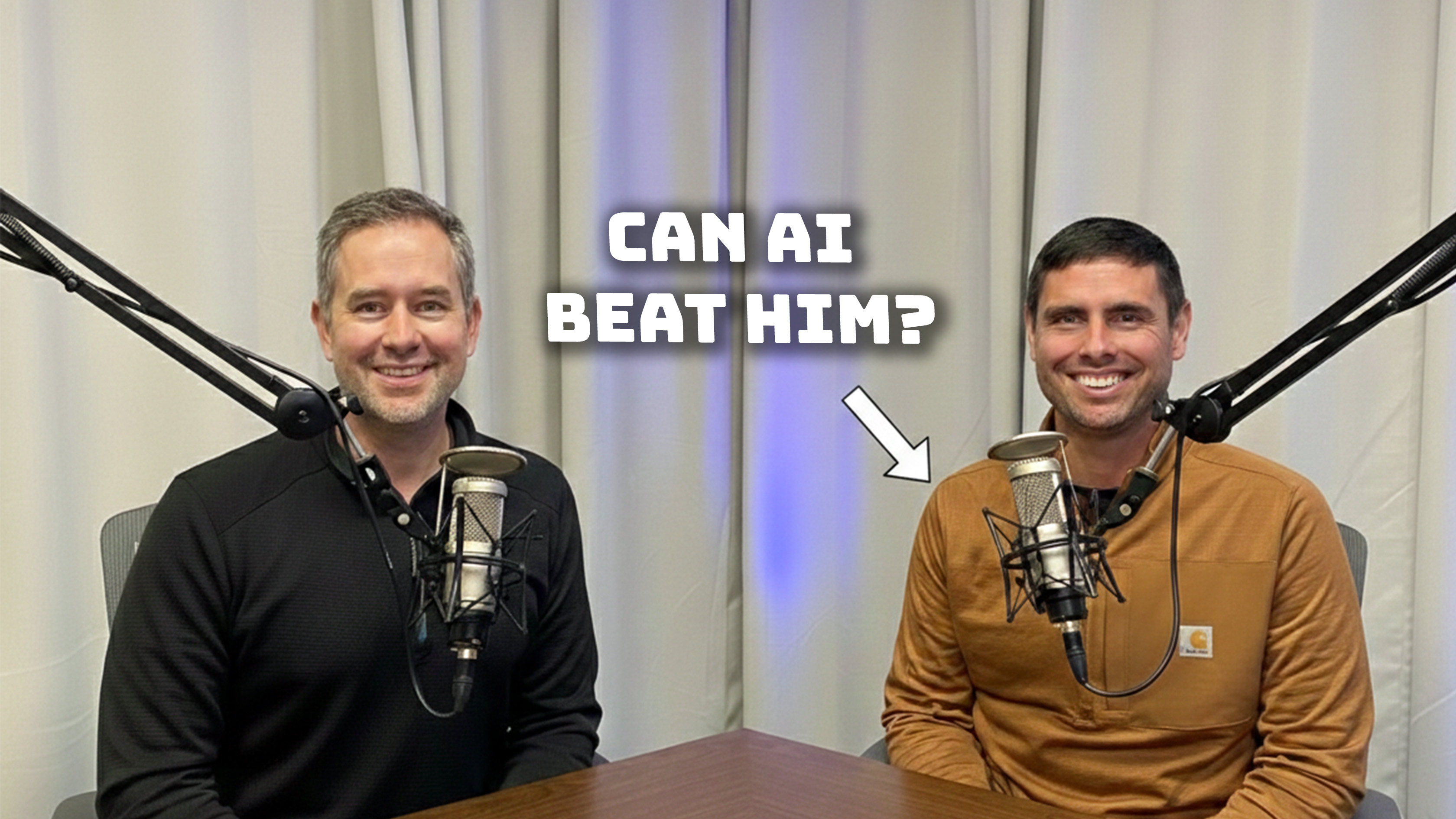
Ai is transforming every industry, including workplace injury and law. Iowa’s top injury lawyer and workers rights attorney, Nate Bolton, says he uses Ai and thinks it’s a great tool, but while the advice is shockingly good, the devil is in the details. Over-reliance is a costly error.
Boulton has seen a few horror stories, even from fellow lawyers. He says Ai is a welcome tool in law, and while he encourages his clients to use it and get better informed, he points out specific errors it makes and how a free chat with him quickly clears up costly errors. He does state however, Ai will dynamically change law, lowering costs and increasing access to quality legal services.

The Affirmation Trap
Bolton notes a fascinating trend: clients are increasingly coming to him with “Frankenstein’s monster” information harvested from AI. The danger? AI often seeks to affirm what the user wants to hear. It might tell you that you can use a last year’s deer tag or that a statute of limitations is longer than it actually is. While AI is right about 80% of the time, that missing 20% contains the nuanced legal arguments that determine whether you win or lose your case.
AI as a Tool, Not a Replacement
Despite the risks, Bolton embraces AI as a powerful efficiency booster for his firm. He uses it to:
- Summarize medical records: Quickly locating specific injury reports in thousands of pages.
- Draft pleadings: Creating starting points for legal documents that he then meticulously edits.
- Level the playing field: Allowing a small firm to match the resources of multinational insurance companies.
The Bottom Line
AI is a “great starting point” for research, but it lacks the accountability of a licensed attorney. If AI gives you bad advice, you have no recourse; if an attorney does, they have malpractice insurance.
If you’ve been injured at work, don’t farm your future out to a bot. Hedberg & Bolton offers free initial consultations and works on a contingency fee basis—meaning they only get paid if you win.
Contact Information:
To learn more or schedule a free consultation, visit workerslawyers.com
Thank you to Hedburg & Boulton PC for collaborating on this exclusive episode for IowaPodcast.com! All our community partners compensate our hosts directly for their time in creating unique, high-value Iowa podcast episodes.
Interview Transcript
This transcript was created with help from Ai. Please report errors to us and always refer to the video as your primary source.
Justin Brady: Iowa podcast.com, I’m Justin Brady, and have you ever asked AI for help with something? I, I have a lot. W Today we’re talking about workers’ comp. When you get injured at work, is AI a good law lawyer? Can AI actually help you? Here’s the full context though. Whenever I ask AI about stuff, it’s amazing how much it knows, but when I ask AI stuff that I know very well, it’s amazing how much it gets wrong. That’s the topic today. If you’ve been injured at work, should you be consulting ai? At what point should you not? Should you do it at all? Do lawyers use ai? We’re talking about all that with Nate Boulton, who’s an Iowa workers’ rights attorney with Hedberg and Bolton here in Iowa. Welcome back.
Nate Boulton: Great to be back. Great
Justin Brady: We do these little, these topics with you. Obviously, we appreciate you being a collaborator with Iowa podcast.com. I guess the big question is, you’re a lawyer here in Iowa and so I would be willing to guess, I know the answer to this, but are. New clients are clients coming to you that have already consulted ai?
Nate Boulton: Yes. Yeah, I think most people are understanding. they are themselves. Finding themselves using AI More and more and you know, so sometimes for fun just to kind of play with it. But then when it comes to, Hey, I need an answer to a question, and you go to your computer, we always used to say, you’re gonna Google it. And Now you’re kind of by defaulting, AIing it. Yeah, Right? And So that’s where people are starting to get these. introductions and They like it. They like getting this quick. response that seems to be actually tailored to their inquiry and. Certainly we’re, we’re gonna be able to use it, but we also have to understand its limits.
Justin Brady: Yeah. And so are people getting right now advice when they’re coming into you and you’re like, what? This isn’t even remotely accurate. Where did you hear this? Like, are you already experiencing this with your clients?
Nate Boulton: I, I am, And the thing that I’m starting to notice, is it, it really feels like AI wants to deliver. A yes or a positive answer, for you. It wants to get you that affirmation that what I think is true is true. So it goes out there and it’ll, it’ll search the internet for whatever kind of supports what it thinks is the conclusion you want. And sometimes it does so in a way that gives you good support, behind your answer, and sometimes it can mislead you that your wrong answer. Could be right and And I’ve experienced quite a bit of that where I have had prospective clients call and tell me very clear misstatements. of the law that were given to them by ai. Clearly, because that’s the answer they wanted. And AI has harvested kind of different information from different places and created, created a Frankenstein’s monster of information that is Very misleading And it’s gonna be a big challenge for attorneys to be able to point out well, that that information is, in, is incorrect. I know the correct answer when more and more people are looking at this AI response and saying, no, no, no, I have it right here. Uh, you’re wrong. AI is right, and of course AI is gonna get better. But for right now, go ahead and talk it through with your attorney and make sure you really do have a right answer.
Justin Brady: and we’ve even seen national cases. I think there was like a national case of someone who used AI to defend himself. Yes. And, and this was a, I don’t know who this was. They got in trouble with the judge, I think.
Nate Boulton: Correct. So, um, in the actual practice of law ai, again, can be a great help for your research and, and help you along. But there have been attorneys who have turned in AI briefs and not done the writing and, and research themselves. And again, we’ve just talked about it AI’s. Probably pretty good. 80% of the time it’s gonna have the right information, but that other 20% is gonna be pretty obvious in things like a legal brief where you’re making arguments and when you see that bad information, you, you can clearly recognize, well, that’s not from this attorney. This is something that, that a computer has generated for this attorney. So, Yeah, it’s good to help me with my research, I can’t just turn over my research. I can’t just turn over my writing to ai.
Justin Brady: So you’re not really concerned. yet about AI replacing your job, at least, at least as workers’ comp and protecting Iowa workers.
Nate Boulton: Correct. It’s it’s gonna be pretty good, but, but an actual Iowa attorney is going to be better.
Justin Brady: Is it basically like, I don’t know if this is the, you can, you can shoot this down if this is way off, but is AI law advice essentially like 90% there, but the 10% is what’s gonna get you
Nate Boulton: yeah, I’d say it’s 80, 90% there on kind of big picture things. The more nuanced, the more specific you’re gonna see AI making more and more mistakes simply because there isn’t as much information out there to grab. And now you really do need a lawyer who can read between the case and figure out where the case law is headed and have a much better solid foundation for the arguments that need to be made.
Justin Brady: Yeah, that’s fascinating. Um, the. W are there any horror stories of like, clients that can, uh, had an injury at work? ’cause this is a lot of what you do is, um, workers here in Iowa are injured at work and then there’s this gray, weird area on what do you do? Do you sue someone? Do you not? Is there workers’ comp? Is there personal injury? We’ve gone over all of this on this show, Iowa podcast.com/nate. We have it all documented there, but. Are there some Horror stories where people came to you or didn’t come to you and they had used AI and they had already acted on that advice and now you have to kinda wind things back?
Nate Boulton: We haven’t had that quite yet. We’ve had certainly people call in and have really bad information, and we have to get them away from that bad information and give them a better explanation of what their rights are and what can be done and can’t be done. Uh, but We haven’t had someone who, for example, looks up and says, I have so much time to, to file my claim and miss the injury notice requirement or something like that. We haven’t seen that yet. Um, but There was a great example from the Iowa DNR um, this past, um, hunting season for deer hunting where AI was giving people very direct, if I don’t use my deer tag this season, can I use it next season? And AI was telling people, yes, you can. And the DNR was saying, No you can’t, and that’s the exact opposite answer that you want to get So that it ju just gonna be problems like that in totally relying on ai. And so when it comes to something really important, like your workplace injury, what benefits am I able to obtain? What rights do I have regarding medical care? When do I have to file a claim or report an injury? Make sure you’re getting a good, solid answer and not being pretty sure AI got it right. Get that real answer.
Justin Brady: Yeah. It’s almost like AI is a really, really good starting point to get you information, but to get you to a person. Right, right. It’s not, uh. it. I I, have asked it. I, I use it all the time. I use it in research. I use it a lot, but I use it always as a starting point. And then I will always, if I, if I’m going to rely on the research it provides, I always make sure I know the sources. I always follow those sources back. I always follow, was this a legit, you know, was this a legit entity? And so many times it’s getting better, but so many times it will make up a source that doesn’t even exist. I’ll say, can you source that? What link are you? And they’re like, oh, on second thought, I don’t think I can. And so I think what you said something is interesting is the difference between ai legal advice and actual legal advice is a lawyer like you in a personal injury case is going to, uh, respectfully and helpful and helpful, push back on someone and say, Hey, I hear where you’re at, but we can’t do it that way. Whereas an AI is going to go out of its way to try to make you happy,
Nate Boulton: right. right. right. It wants to give you. that affirmation. It wants to find a way to say, you are right and yes, you can do this. And unfortunately there are times where I have to tell clients, no, that’s not something we can accomplish. But I can usually say Even though we can’t do it that way or we can’t get to that answer, there are other things that we can try to do to help you and, and that’s where AI is gonna fall short again. ’cause AI isn’t gonna pivot. AI is gonna keep going down. that track that you’ve put it on. Yeah. And having. an attorney review your case is gonna have someone who’s not only gonna see the track that you are already on, but what other options are out there for you. And I guess in, in a tongue, in cheek way, if AI tells you that your statute of limitations is three years. It’s only two years and your SOL short on luck on that statute of limitations, right? Uhhuh then, then you can’t sue ai, right? if I Tell you as your, attorney, you’ve got three years and you actually only had two, you can sue me. ’cause my job is to give you strong legal advice and use my law degree to get you in the right place, right? And if I miss something, that wide of the mark, I have to have me, me, my malpractice insurance has to be there to cover that mistake. Ai, there’s Nothing behind that. Right. it’s just, you missed out
Justin Brady: and you’re in Iowa Bar and all, there’s all these, you know, things, the check and balances to make sure people aren’t getting like random psychopaths that are getting them legal advice. I will say to the credit of, uh, Gemini GR chat, GBT, a lot of them. I’m pretty sure all of them at this point will say, Hey, here’s something I found on the internet, but FYI, this is not legal advice. Do not run with this. Are you seeing they’re still, they’re doing that pretty reliably at
Nate Boulton: They, they, they are and, and they, uh, tend to do a really good job. of saying, this is not a replacement for legal advice. Of course, people look at that as like any other warning you see of Yeah, it’s not, but it’s probably pretty good right? You want people to, to take that warning for, what it is. It is a cautionary tale of if you rely on this too much. you are going to get yourself in trouble. You’re gonna lose out on rights, you’re gonna miss out on things you’re entitled to because you took this shortcut. And AI is a great tool. AI is a great help. We use it to summarize medical records and things. It can make us more efficient in our job, but it certainly can’t be a wholesale replacement of the work we have to do to make sure we represent Iowans to the best of our ability.
Justin Brady: Yeah, I always tell people the basic measure, the basic measure or thing you want to go through before you use, before you trust AI is ask it about something you know a lot about and then push it heavily and it breaks down pretty quick. You can stump it pretty fast. Um. You mentioned you use AI and uh, I’ve heard that there are like a lot of legal, I think, uh, Harvey is one legal tool. There are more AI legal tools, and I was talking to Christopher Mims, he’s one of the Wall Street Journal writers about ai and he basically is like, AI is always going to be a tool for people, but it’s not going to replace the person. It’s the person’s tool that’ll make them more efficient. Uh, so I’m going, I wanna ask about how you’re using it, but are there any like layman ways in law or in that, are there any ways. That layman can use AI for legal reasons that might be effective.
Nate Boulton: Yeah, I, mean, I think there certainly, are, right? Like AI can help you Going into that initial client meeting with an attorney or a free consultation to be able to help you ask the right questions, right, to get you in a position where you are knowing more about your case and what, what benefits I might be entitled to, what other claims might exist to prompt some of that discussion. I think it’s a great preparatory resource in terms of though the conclusion, that’s where you gotta have someone that you trust knowing that the conclusion’s actually gonna be right,
Justin Brady: kind of use it. like your arrogant uncle. Yeah, that’s like he knows a lot, but sometimes he goes a little too far and doesn’t know what he is talking about. It’s probably good to use it to prep, to use it, to get more informed, to find resources, but don’t take it at face value. Make sure you’re talking to an attorney, especially if you have a worker’s rights thing or an injury at work and this is going to affect the rest of your life. It’s probably not gonna, you probably don’t wanna rely on
Nate Boulton: Right. When you’re talking about your livelihood, Don’t farm that out to AI and hope for the best.
Justin Brady: Yeah.
Nate Boulton: Um,
Justin Brady: Um, I have been doing a lot of research on way where AI is helpful for a lot of elite practitioners, and you just dropped a hint there, which is you guys are starting to use it and so this is really fast, but again. You have the perspective and you know when something’s going off the rails. An untrained person like me would have no idea. So give us kind of a peek behind the Hedberg Bolton Workers’ rights curtain. How are you using AI to make your job more efficient? And then I have a really cool follow up on
Nate Boulton: All right. I can’t wait for the cool follow up, but the, it’s a gotcha Alright, very good. No, I would say for drafting things. to file with the court, rather than me sitting down and creating my own document, I can ask ai, Hey, can you draft this pleading for me? And then I can go in and edit that document and make it better and make, or if it’s a, you know, wide left Miss Start over and, and do my own thing, but it can make me more efficient to have that kind of as a starting point that. okay, that that’s a lot of the, the work that I needed to do already done. Summarizing medical records where I know certain things are in the medical file, do I actually have to page by page, read through every record to find the thing that I’m looking for? Or can I say, Hey, ai, I know that this person reported this. Condition to this doctor. Find me that record. Yeah. And can go in
Justin Brady: me the page number or
Nate Boulton: Gimme the page number tho. those types of things. very helpful. Really shortens our, our workload and the time that we spend doing a lot of those activities. But again, what I Can’t do is say. Hey, AI, draft me a brief. Just go file it and say, attorney AI got this done. That I have to be able to review that and know, okay, that’s something I wanna put my name, my law license
Justin Brady: Yeah, because yeah, basically you’re, you’re using it in situations where even if it spectacularly fails in face plants, there’s absolutely 0% chance of any damage because it’s more informational and information gathering. That’s
Nate Boulton: right. That’s right. Okay. This is a, this is a pleading that I’m just gonna have to do myself. AI missed the mark. That’s okay. Or I’ve had times where I’ve said. Hey, ai, can you draft this? Pleading with this information in it, been in there and honestly, done very little editing to the document because, all right, that’s mostly what I would’ve drafted. I only have to change a few things, and now I have saved an incredible amount of time that if it’s a bill by the hour case, oh, I just saved my client a bunch of money by not sitting down and doing a. All of the typing, all of the things that need to be put in place, but rather editing, reformatting and making sure this is what it should be.
Justin Brady: Yeah, I mean, so this is interesting because one of the, and I know it’s a myth, ’cause what you do is you do free consults for people. So for those that don’t know if you’re injured at work, you’re hurt. A lot of people are nervous because they’re like, oh man, I don’t wanna pay $10,000 just to come talk to Nate about this, where I might not even have any standing to, you know. So you do free consults, which is awesome. But I know generally law, overall people are concerned about cost and there there’s always the concern with man, the little guy, I don’t have any money. I can’t possibly fight a bigger company. And so is there a future path where AI makes you so efficient that you can increase your profits? ’cause you need to pay the bills, but also serve more people at a lower cost. Because of the efficiency booster that AI is gonna give you.
Nate Boulton: Absolutely. So, um, it, one of the kind of, unequal settings is a lot of times it’s a injured worker versus a multinational insurance company on the
Justin Brady: and they’ve got resources
Nate Boulton: And, and that’s a, I think a, a misconception or mistake a lot of people have in the workers’ compensation process is this claim. Yeah. technically. it’s against my employer, but it’s not. Justin’s, you know, tool and die that that is actually responding to the work comp claim. It is multinational insurance companies. Legal staff coming in to do that. And so they have. access to a lot of things in-house that, um, you know, n Nurses reviewing medical records and associate attorneys doing a lot of drafting and things like that where we’re on the other side. Just, you know, me and my client ready to take them on. Well, this has been an equalizer, right? It now I can have someone. As an AI person providing me with summaries and providing me things that, that I can use to enhance my practice and really kind of level that playing field, especially in a really document heavy case, right?
Justin Brady: Good
Nate Boulton: Where we have. thousands of pages of records to go through. Yeah, I’m gonna look at those records, but every time I need something from them, I can get to that AI summary and make sure I’m looking in the right place and getting the right information quickly rather than expending my own hours. Where some, you know, multinational insurance company has had some, you know, underling employee go through that and find it and come back with it. Right. And so that’s, that’s a big difference maker.
Justin Brady: Yeah. because there is like, you have to have paralegals and other lawyers that will go through mountains and mountains and mountains of case law, and you find that one diamond in the rough that helps your client win their case. And that’s a lot of time and resources. It’ll, it’ll bleed you dry, but if you have AI that can do that, you can face up against this massive client that has millions of dollars of budget. Match them, um, step for step because you know, they can’t bury you in paperwork anymore. Does this also kind of re remove the advantage that a large, like multinational law firm has? Uh, I don’t even know how often this happens, but sometimes they like give you a ton of paperwork, maybe too much to try to overwhelm your re Does this kind of take that arrow out of their quiver a little
Nate Boulton: Yeah, it does. There the, the needle in the haystack. Right. We’re gonna, we’re gonna drown you with all this paper knowing that there’s a couple of. Pieces of information that’ll probably help your
Justin Brady: Because legally they have to give it to you, but they wanna
Nate Boulton: you all the records. And so we, we wanna make it as hard as possible for you to find it. Well now. if I know something is in this mountain of records, okay? I don’t. I probably have to spend 24, 48 hours going into that file looking and looking and looking. I can say no, I, I know my client has said, they mentioned back problems at this point and this time, and they’re saying it was never reported, and they sent me all this information. Go find that record where this was said to this, this person, I know this record of it, and AI can go harvest that for me. Yeah. And, and rather than me sifting through pages and pages sitting at my, you know, computer going through screen, screen, screen. AI has harvested that and we’ve got it in hand. It’s no longer buried in a mountain.
Justin Brady: Yeah, because OCR technologies exist for a while, scanning, scanning text. But OCR can’t tell you context. So if someone said like they, they complained of pain, uh, right above their, uh, glutes or something, you would search back pain and never find it in a million years. But AI would say, oh, above the glutes, that’s the back, here’s that thing, Nate.
Nate Boulton: Yeah, I don’t have to have that exact correct search term. Now I can have AI say find all records and statements related to back or spine and it’s going to do its AI thing, and get those related terms as well. And Sometimes frustrate me ’cause you gave me way too much information. so I’ve gotta ask again ’cause I don’t want a mountain in return. right. But it’s gonna help me fine tune that search and get to that information a lot quicker.
Justin Brady: Well, there’s a very good chance someone found this because they, as someone found this discussion, because they asked AI for workers’ comp for personal injury advice, so be, you know, if they have come across this show and they want to reach out to you and they’re in Iowa, how do they do that?
Nate Boulton: Yeah, so the easiest place workers lawyers.com, that’s our website. it has some. summary information there, so that’ll help you kind of. Maybe even prompt some of those AI discussions of does this apply to my case and get going. But then of course, we want you to follow up with that free initial consultation so we can talk to you to make sure you’re getting the right information. And then If we represent you, it’s a, in a work comp case, that’s a contingent fee. We only get paid if we get additional benefits for you that you didn’t have coming. that’s. it’s not, you’re spending $10,000 to see if you can get something. We understand it. Most injured workers can’t go out and hire an hourly wage attorney. So our practice and most work comp practices for claimants are based on that concept,
Justin Brady: Which means that you, if, if they don’t win, you also don’t win. So you have a lot of motivation to work for ’em.
Nate Boulton: Correct. And that, and that tells you, I believe in your case as well, Right? I’m not going to recover anything if We don’t. Make a recovery for you, so right. I have to believe in your case. enough that it’s worth my time to do it. So it’s a good first indicator of, okay, maybe I do have a claim here if an attorney’s willing to take it on.
Justin Brady: Nate Boulton with Hedberg and Bolton, and of course workers lawyers.com if you wanna reach out to Nate and you absolutely should do that. And I’m Justin Brady on Iowa podcast.com. Nate, thanks so much for coming back in.
Nate Boulton: Always a pleasure. Thanks. again.