


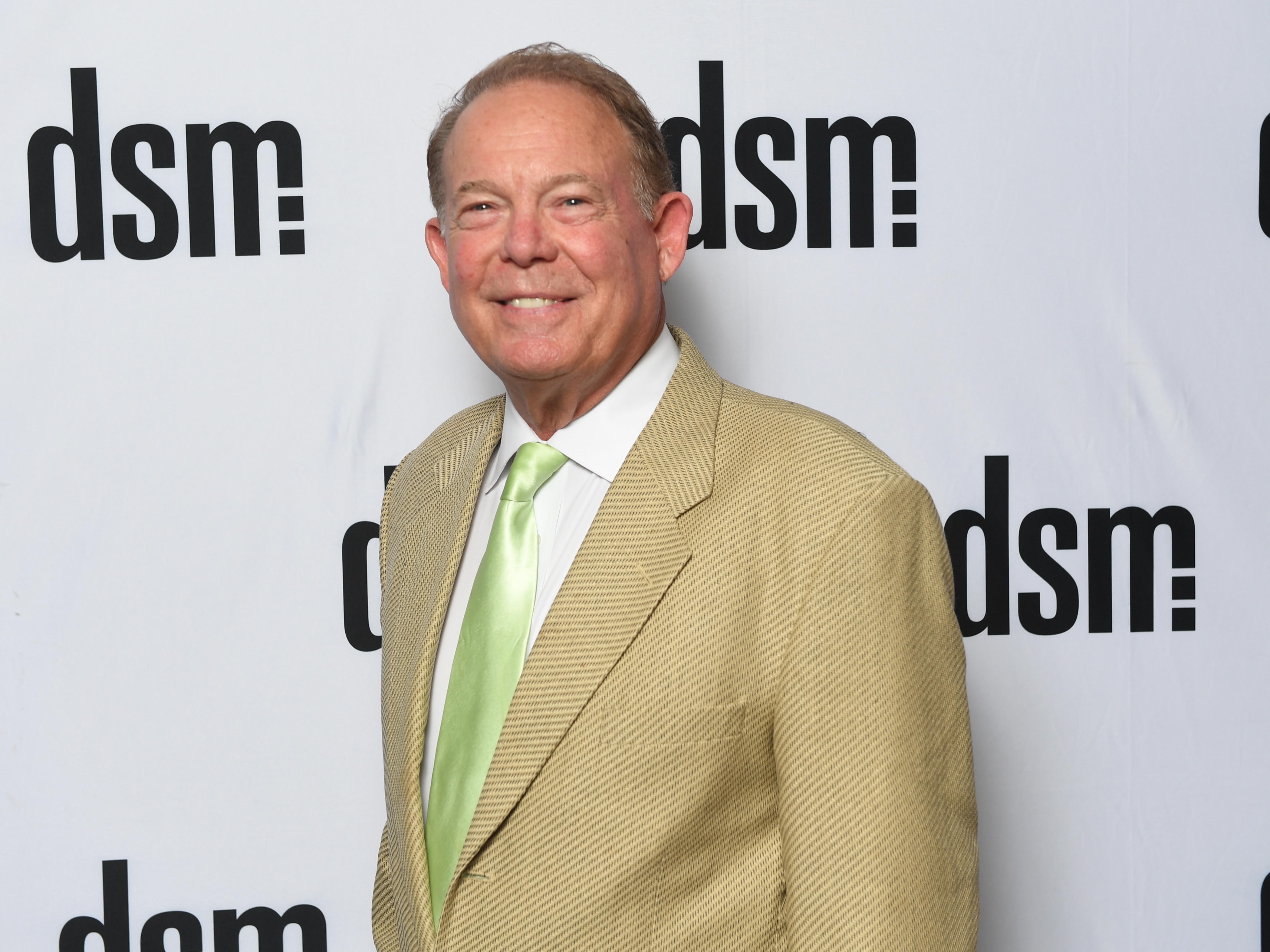
Bruce Gerleman, the visionary behind Jethro’s Barbecue, joined The Iowa Podcast with Justin Brady to share his story of how he transitioned from a career in real estate development to launching one of Iowa’s most beloved restaurant brands. In 2008, facing the collapse of the real estate market, Gerleman turned to the hospitality sector and opened the first Jethro’s location. Known for its award-winning wings, the restaurant has since become a statewide institution.
Hear from Iowans directly. No algorithms.
Don’t let the algorithms choose your news. Enter your email address to hear directly from Iowans leading news in politics, community, agriculture and business. No editing. No clickbait. No rage. No agenda.
Preserving Iowa’s History Through Architecture
Long before his restaurant fame, Gerleman made a name for himself by restoring some of Des Moines’ most historic buildings. Projects like the Hawkeye Insurance Company building—the oldest commercial structure in the city—as well as the Rock Island Depot and the Saddlery Building, were all saved and modernized under his leadership. These renovations involved reinforcing aging brick structures with internal steel frames and new foundations, effectively building modern spaces within historic shells. He credited a 25% federal tax credit for helping make these complex preservation efforts financially feasible.
Innovation, Investment, and Iowa’s First Smart Building
Gerleman also led the development of Iowa’s first “smart building” in the 1980s, transforming the former Yonkers furniture store into the International Trade Center of Iowa. By attracting telecom partners and linking the property to the World Trade Center Association, he brought early email, voicemail, and fiber optic infrastructure to Des Moines. He later acquired the Locust Mall—now home to the Greater Des Moines Partnership—with no upfront capital, leveraging creative financing and tenant recruitment. Notably, he was also the first downtown property owner to implement a smoking ban, years ahead of citywide regulations.
From historic preservation to culinary entrepreneurship, Gerleman’s career reflects innovation, resilience, and a deep commitment to Iowa’s growth.
Learn more about Bruce Gerleman here »
Thank you to Bruce Gerleman and Jethro’s BBQ. We are excited to have Jethro’s BBQ as our studio sponsor and excited to collaborate with him.
Interview Transcript
This transcript was created with help from Ai. Please report errors to us and always refer to the video as your primary source.
Justin Brady: I’m Justin Brady on this exclusive Iowa podcast.com interview. We have a familiar face back in the studio. Bruce GERLeman, the owner of Jethro’s Barbecue. Bruce, thanks so much for coming back on the show. Appreciate it.
Bruce Gerleman: Hey Justin. It’s great to be here again.
Justin Brady: So we did, I brought you in here. I’m gonna talk barbecue. The old jethro’s that you sold a while ago burned down and I was like, oh, that’s interesting. Like a lot of people have good fun memories of that location. Let’s talk about that. But throughout that interview, I. Some really, I ended up calling, I don’t remember if this is on air or off air, but I ended up calling you Iowa’s most interesting man in the world or something. And I wanted to do this special collaboration with you to go through some Iowa history and some other projects. And I also think that a lot of people don’t really know who you are. The guy behind Jethro’s, outside of the fact that maybe you’re on some ads, sometimes your voice is on some ads, you’re an Iowa staple and whether you like it or not, too bad. You’re in my studio now, so we’re gonna talk about it. I wanted to start with the, just really, briefly, you are the guy behind Jet Row, right? How old is Jethro’s now? That’s the barbecue space. We have Jethro in the background for those, watching the
Bruce Gerleman: and it’s great to have him here.
Justin Brady: overlooking you.
Bruce Gerleman: Yeah. Justin, the year was 2008, and if you remember back at that time, the economy crashed. And, but prior to that, I had been in the real estate development business and, specializing in historic renovations. And, when 2008 hit, if you remember, the markets crashed, interest rates went to, hell and, I realized that there’s not gonna be really any real estate development to do right now because no one was lending money and, and, so I had to come up with a plan to, to, have a business that I could make money at. And so that’s when I opened Jethro’s Barbecue in 2008.
Justin Brady: Yeah. Interesting. And like I’ve told the, like I’ve, the, your Twitter account, I don’t know if you run it, your team runs it, but your Twitter account knows at this point that I’m obsessed with the wings. And I know I should be more creative. I’m, I promise, I’m a creative person. I explore different foods, but when I go to Jethro’s, it’s not possible. I have to get the wings every time because they mix and match all the sauces. and then I usually get like a, some maker’s mark or a bourbon with it. So
Bruce Gerleman: go. it’s
Justin Brady: for me to get off that train. Sorry if that offends anybody. oh, you should experiment more, but
Bruce Gerleman: It’s okay.’cause you’re, in good company because they were just voted the best Wings in Iowa.
Justin Brady: When was this?
Bruce Gerleman: This was last year by, on Inside Edition there they had a, poll. So there you
Justin Brady: There you go. I’m, not
Bruce Gerleman: And that’s the bone wings and the bone end wings. Uhhuh.
Justin Brady: uhhuh. Yeah, I do the bone. I do the bone in wings just because I’m a man. Just kidding. I’m gonna get so much hate for that. Just kidding. you talked about historic renovation. There’s this 160 year old brick building that you converted and got on the historic registry. Can we talk about this a little bit? you probably know what I’m talking
Bruce Gerleman: about. Absolutely. It’s the oldest building in Des Moines, oldest commercial building. It was built in 1868 and it was down on fourth Street at two 13 fourth Street, and it’s the old Hawkeye Insurance company building. So when you, take a building like that and try to convert it into a modern office, residential building. You have to really just start from, the, bottom, the foundation, and you have to put a whole new, foundation in the building. And, while you’re doing that, you gotta hold the building up. So otherwise it’ll fall down.
Justin Brady: The novel
Bruce Gerleman: so there’s a, there, there’s a patchwork way to, to put a new foundation under a building and. My architects, devised a plan where we would cut out a four foot section of the foundation and, repo the concrete, re reinforce it with steel, and it was a checkerboard. So every four feet, we would cut it out again. So the, first thing you have to do is put a new foundation under the building. Wow.
Justin Brady: Wow.
Bruce Gerleman: Yeah, and then once you get that done, you have to, because the brick is there and it’s unreinforced brick and it’s 160 years old. You have to build a steel frame inside of that brick structure and tie the brick to that steel frame so that it could then support the floors, because the floors have to be able to support a hundred and fifty five, a hundred fifty pounds of live load to, to meet the current codes. And the old floors couldn’t do that. So when you save a building like that, basically you’re saving the shell of the building. and rein and, building a brand new building on the inside of it.
Justin Brady: No, I, mean I imagine just based on a little bit, I know on architecture and building and engineering, isn’t it like way more expensive to do it that way?
Bruce Gerleman: Oh, sure. It is. Absolutely. it’s so much, it is more expensive. and that’s why the, department of Interior provides a 25% investment tax credit. Do people who save these historic buildings and, really it’s one of the best laws that, Congress has ever passed because it had the effect of saving thousands of historic buildings throughout the nation. I.
Justin Brady: Yeah, because we see like areas where we see older photos and we hear locals that are like, oh, this used to be really beautiful. Here are all the photos of the original buildings. And then someone bulldozed everything and put up this super cheap like builder grade crap. That doesn’t look good. And what you’re saying is the reason more historic renovators like yourself are able to do this now is because there’s some incentive to preserve the history.
Bruce Gerleman: and really this law, and this, tax act that, it benefits historic rehabs. It saved, not only the Hawkeye insurance building. But I also use that same program to save the, rock Island Depot here in
Justin Brady: Mm-hmm.
Bruce Gerleman: the saddle rebuilding down on Court Avenue where, court Avenue, brew Pub is now
Justin Brady: a cool building.
Bruce Gerleman: the Homestead Building where, splash is located there at Third and Locust. And then we talked last time about the, mansions out on Grand Avenue, the Crawford Mansion, governor Cummings Mansion, the Polk Mansion. All of those buildings have been saved because of that tax act.
Justin Brady: Wow. Yeah, and it’s, I love the older. Building so much. I do not like, the newer construction, if it’s gonna be newer construction, I want it to be high design and beautiful. But it seems like so many people just cut corners. This is not possible to build things like the saddle building or the, what’s the, you said the former Hawkeye building is the one that Hundred 16th
Bruce Gerleman: The Hawkeye Insurance Company building. Yeah. It was where the casualty insurance business in this, city in the state started. It was founded by, Frederick Hubble and Ebenezer Ingersoll. Two, two names that you might, all remember. And so they founded the Hawkeye Insurance Company building. And they built the building. and that’s where the, Hawkeye Insurance Company, was located also in that building at the time was the Des Moines leader, which was the forerunner of the Des Moines Register. Really? Yeah. The newspaper. I. Was published there. And then finally the, there, the, they had a bank there. The Hubble’s had a bank and, that vault is still there in the basement of the Hawkeye Insurance company that was built in 1868. By the way, Jesse James never robbed that bank.
Justin Brady: That’s fantastic. What now? What is the, when you repurposed it and redeveloped it, you redeveloped it into what exactly? what purpose did it serve when you were creating, when you were like redoing everything?
Bruce Gerleman: Yeah. we, when you do a historic renovation, when you do any commercial real estate project, it only works if you have people that are gonna pay your rent. So
Justin Brady: Funny how that
Bruce Gerleman: Yeah. So we, the, first two floors of it were an office building, and then, there was a little restaurant in there, and then the upper floors were all apartments. you the, office building, on first and second floor, there were attorneys in there. There was a, hair salon and there was a restaurant. So you have to find the commercial tenants that are gonna pay your rent, if you’re gonna go out and borrow money. and like me, I had to borrow money all along. Now, some people don’t have to borrow money, they just go out and buy a building and pay cash for it. that’s not me.
Justin Brady: you had to kinda work for it, huh?
Bruce Gerleman: Yeah.
Justin Brady: You also renovated the old, younger store. Talk about this a little bit.’cause you bought it from the fa Hubble family. Speaking of Hubble.
Bruce Gerleman: I did. And, back, in the 1980s, the yo the Yonkers store for Homes, which was a furniture store, there on three 12 eighth Street. that’s, it’s connected by Skywalk now to the, locust Center Mall. where the partnership is located. that building, they closed the, they closed the furniture store. So at the time I had just finished the renovation of, ENCO Avenue. Of the Rock Island Depot. And, that building became for sale. So I purchased it from the Hubble family back in those days. And, we converted it into the, international Trade Center of Iowa. Which was a member of the World Trade Center Association.
Justin Brady: What is now, I don’t understand what this is, but what is the World Trade Center Association and how did you make that happen?
Bruce Gerleman: the World Trade Center, it’s an association, based in New York City, and we all know the, terrible events of, nine 11, but this was 1986, and so I traveled at the time, John Ruan, the senior, John Ruan, the founder, one of the greatest Iowans of all time. was trying. He had founded, he founded RU on Transportation and, Bankers Trust the bank company. And, he was trying to build a World Trade Center as a member of the World Trade Center Association. And he was trying to get the state legislature to, dedicate $30 million to this, skyscraper that he was gonna build in downtown Des Moines and join the World Trade Center Association. I thought, whoa, that’s a great idea, but let me try to figure this out. So I flew to New York City and met with the, leaders of the World Trade Center Association. On at, on the top of the World Trade Center on Windows of the World. this, of course, this was, it’s since all been destroyed. But I met them there and I said, I would like to b open a trade center in Iowa. And they says, Mr. Ruan has, the franchise rights to Des Moines. And I says, how about Cedar Rapids? And, they says, we’ll sell you this, the franchise rights to Cedar Rapids. And I says, what if I, sign up for Cedar Rapids and build my first branch office in Des Moines? And they says, we, you can do that. So that’s how I became a member of the World Trade Center Association.
Justin Brady: That’s absolutely fascinating. The and this building then that is part of the World Trade Center Association. you’ve called this, you told me this, off air, the smartest building in Iowa. What does that mean?
Bruce Gerleman: at the time to, to become a member of the association, they had the cutting edge technology. This is when you had the very first voicemail. This is when you had the very first email. This was 1986. 1987. I. and, so I needed to recruit a highly technical, capable comp companies and that were specialized in, world trade and international trade. And so I approached the, what was then the independent phone companies of Iowa. There are like 157 independent phone companies, that throughout the state. And I convinced them to locate their new headquarters there. And. What happened is they brought fiber optics from all over the state into that
Justin Brady: really, when was this?
Bruce Gerleman: This was 1986. Holy cow.
Justin Brady: cow.
Bruce Gerleman: and they moved their headquarters there and they moved all of their switching equipment and all of their computer systems. So all of the telephone traffic from around the state was, transmitting through that building. And that gave us the wiring and the infrastructure then to, bring voicemail, and, email, and communication with other world trade centers around the world.
Justin Brady: That’s wild. I skipped over something earlier, but you mentioned, I don’t know if this building is on there or not, but you mentioned the other building, the Hawkeye Insurance building, about being national historic landmarks. and I know you have a few of these, so I think right, you have a few of these buildings. How does this process work to get things registered on the National Historic Landmark List and what’s, behind, what drives that?
Bruce Gerleman: the International Trade Center, it was a renovation, but it, was not a historic renovation. The historic renovation, first of all, you have to, have an architecturally significant building. Or a historically significant building, maybe a historical figure had been there in the past. And so they, they have a c criteria there, the Department of Interior that evaluates the architectural design and or the historical significance of the building. And, and so there’s a series where you have to do a lot of research. You go to the old Sanborn fire maps, you go down, you spend a lot of time in the archives. In the basements up at the capital complex researching these historical figures. And and when you do that, you realize very quickly that you’re just a caretaker. You’re, you might own that building, that historical building for maybe 30 or 40 years, but you’re just a caretaker because you go through these abstracts and All of the people that have owned that building over the last 160 years and all the significant historical impact and historical significance they have to for our state. And so I just, I’m proud of the fact that I played a small part in saving these national historical landmarks and, there are seven of them in the city that I saved, so I’m very proud of that. Yes.
Justin Brady: just Des Moines alone.
Bruce Gerleman: yes, Uhhuh.
Justin Brady: Yes. I didn’t know that. Holy cow.
Bruce Gerleman: yeah, I was the first one to do it and I, hate to use the word I, but, but anyway, I did and, I, and then I actually did another project because I was so successful at that at the time. I. they recruited me down in Savannah, Georgia to save the building where they filmed the movie Roots, the Alex Haley movie from the eighties. That was, a big tv sequence. and so I went to Savannah, Georgia and did a all the research there and turn that into, bed and breakfast called President’s Quarters. And, I, that hotel now features the 17 different presidents that had visited Savannah, Georgia, and each suite was, renovated and designed to incorporate the furniture and the art artwork and the design of that president and the time that he was in office.
Justin Brady: And anybody who hasn’t been to Savannah, Georgia, that place is gorgeous. It is just, it is absolutely amazing down there. All the historic properties are incredible. I will say, if you go in the summer. Bring a straw hat. there’s a reason people in Savannah wearing the straw hats and the linen suits. And the linen because it is hot and it is humid, and I strongly recommend you shield yourself from that. last thing before you head out, what’s the story behind this $15 million garage that you bought for not 15 million? what was No money down? what did you do here?
Bruce Gerleman: and that’s, how do you buy a $15 million shopping center and parking garage with no money down? Yeah. Yeah. that’s the question. And. we will just, I’ll take you through the steps there, Justin, because it’s, when you buy a commercial property, typically you’ve gotta have a 20% down payment, sometimes 25%. So that’s your equity. and, and then you can, now this is a, if you, don’t have enough money, if you don’t have $15 million in the bank and you’ve gotta go borrow money to buy this project, you’ve gotta have 20% down. So what I did is I went to the owner of the Locust Mall. Back then, it was the Hubble family. They, had, they owned the Equitable Life Insurance Company and, they owned a lot of real estate around the city, as they still do today. And, but at the time, equitable founded this insurance company called USG, which was an annuity company. It, was a very fast growing. subsidiary of the Equitable Company, and when you sell insurance, you have to have capital reserves. And, USG was growing so fast that the hubble’s needed to raise more money, to have capital reserves on hand so they could sell more insurance. And so I went to them, they put this mall on the market, and I went the Locust Mall where the partnership is located now. And it’s 11 story, mall with a parking garage, 750 parking stalls. And so I said to them, I’d like to buy your building, but I don’t have any money. to put down. And they said, how’d that go? Yeah. They says, what, if we gave you a second mortgage? And I said, okay, yeah, that’d be great. I’ll take a second mortgage on the Locust Mall. So once I got, they agreed to give me a second mortgage for the equity. So then I went to another insurance company and says, look, I have the equity here. I have a second mortgage from the owner, and would you loan me. The money for the first mortgage. And they said, yeah, that’s a great idea. And so that’s how I bought the Locust Mall with no money down.
Justin Brady: That’s super funny. And now Locust Mall that you said, that’s where the Greater Wayne Partnership building is
Bruce Gerleman: Yes. Today.
Justin Brady: Yeah. And so today it’s offices and there’s some retail on skywalk level, but there’s also that, what do they call it, little bites or small bites in the basement. I actually go there all the time to eat lunch. So you know
Bruce Gerleman: Yeah. and, yeah. And but at the time, the Locust Mall was about half empty. So to make it all work, like I previously said, I had to go find tenants. And uh,
Justin Brady: you did?
Bruce Gerleman: So then I leased the building up and, it was a wonderful investment. And we had the food court back then, and actually, some of the, Logston brothers had their first restaurant down there. Steve, who owns, Luca and then Joe, who of course owns Lemi. They had one of their first restaurants there. The GLIs started out down there that have all the, Lebanese and Mediterranean food. we had the potato pan if anyone remembers her. The, sold the potatoes. Anyway, yeah, we had all those, I recruited all those tenants and filled the building up. And, of course back then it was right next to the Des Moines Register, and so we
Justin Brady: Oh yeah.
Bruce Gerleman: yeah. The Locust Mall. Back then, all the register reporters would sit in there, in, in the food court, and they would sit there and write their stories and smoke cigarettes
Justin Brady: Interesting.
Bruce Gerleman: was full of smoke back in those days. And fi finally, I, and I can’t remember what year it was. I bought them all in 90, somewhere around 91 or 92. I was the first, business to declare no smoking allowed really in downtown Des Moines really? And it was a huge, Huge story. At the time, everyone thought, he’s gonna go out of business because no one, it’s crazy. This guy’s crazy. How? How can you have a building like that with restaurants where they don’t allow smoking?
Justin Brady: That’s crazy. It’s really interesting. There. We were talking before we were recording that my old office, in the East Village, there were some, there was some damage in the plaster work and I was talking to the building owner about this. It’s a long story we’re not gonna get into, but, and I was like, why didn’t you bother trying to match the paint? And he is That’s not paint. Is that patina? You see that slight yellowish color that you like because that’s from decades of cigarette smoke. I’m just like, whoa. Bruce GERLEMAN the Jethro’s barbecue owner. Thank you so much for coming in on this special episode on Iowa podcast.com. And I should say also thank you for sponsoring Iowa podcast.com. You’re of course Jethro, and you’re the guy behind the Jethro’s Barbecue Studio, which all our shows. Are recorded in right now. So thank you so much for that as well.
Bruce Gerleman: It’s great to be here and, the, statewide audience, are just happy to be a part of the state of Iowa. And JETHRO is proud to represent the state. And all that we stand for.
Justin Brady: Yeah, and we’re proud to have you on the show.
Bruce Gerleman: Thank you, Justin. Thank
Justin Brady: you. Thank you.