

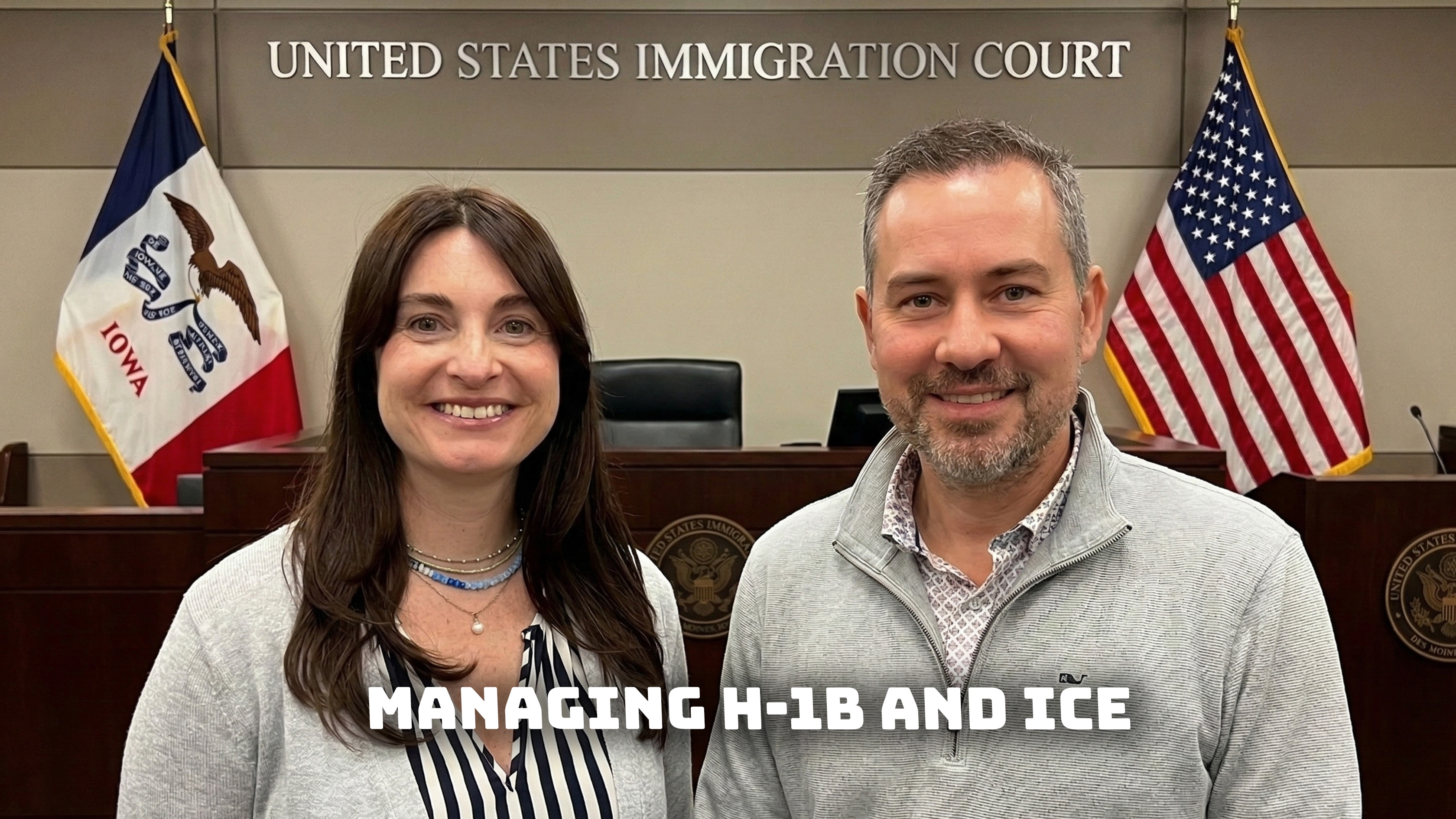


Iowa immigration law has been evolving quickly. Executives dealing with the H-1B Visa changes are facing a decision that could cost $100k worth for white collar workers, while at the same time ensuring their organization is above board in case of an ICE visit. Iowa’s top immigration attorney, Kailey Blazek-Naranjo of Dentons Davis Brown, gives a concise best-practice overview for Iowa CHRO and CEOs.
Blazek-Naranjo expertly navigates both issues explaining when the H-1B Visa fee is due, and scenarios where Iowa employers can avoid paying it altogether, like hiring students who are already in the country. She also explains why Iowa in uniquely positioned to grab top talent due to lower cost of living and Visa salary requirements. She also explains why employers who think they’ve employed US Citizens could have easily missed key data.
“Iowa employers could certainly be at an advantage if they’re willing to pay.” — Kailey Blazek-Naranjo

The $100,000 H-1B Question
The biggest shocker? A new policy may subject certain employers to a $100,000 fee before they can hire an H-1B candidate.
- Who is affected? This primarily impacts candidates currently outside the U.S. who have never held H-1B status, such as specialist physicians or university professors.
- The Iowa Advantage: A new weighted lottery system favors employers offering higher wage levels. Because Iowa has a lower cost of living, local employers might actually have better national odds if they are willing to pay competitive “Level 4” wages.
- The Student Loophole: Foreign students already in the U.S. on F-1 visas are generally not subject to this massive fee, making college campuses a critical talent pool.
Is your Iowa business ICE-Ready?
Beyond visas, Blazek-Naranjo warned that ICE (Immigration and Customs Enforcement) audits are a reality for any U.S. employer.
- The 72-Hour Rule: If ICE delivers a Form I-9 audit, you may have only 72 hours to produce records for your entire workforce.
- Good intentions aren’t enough: Employers aren’t required to be forensic experts, but they must ensure documents appear authentic. Even well-meaning HR teams can accidentally accept sophisticated false documents.
- Proactive compliance: Conducting an internal or third-party audit before ICE knocks can significantly reduce your legal liability and potential fines.
Thanks to Dentons Davis Brown for collaborating with The Iowa Business Podcast to bring incredible value to our listeners! Collaborators compensate our hosts directly for their time and effort crafting exclusive content.
