

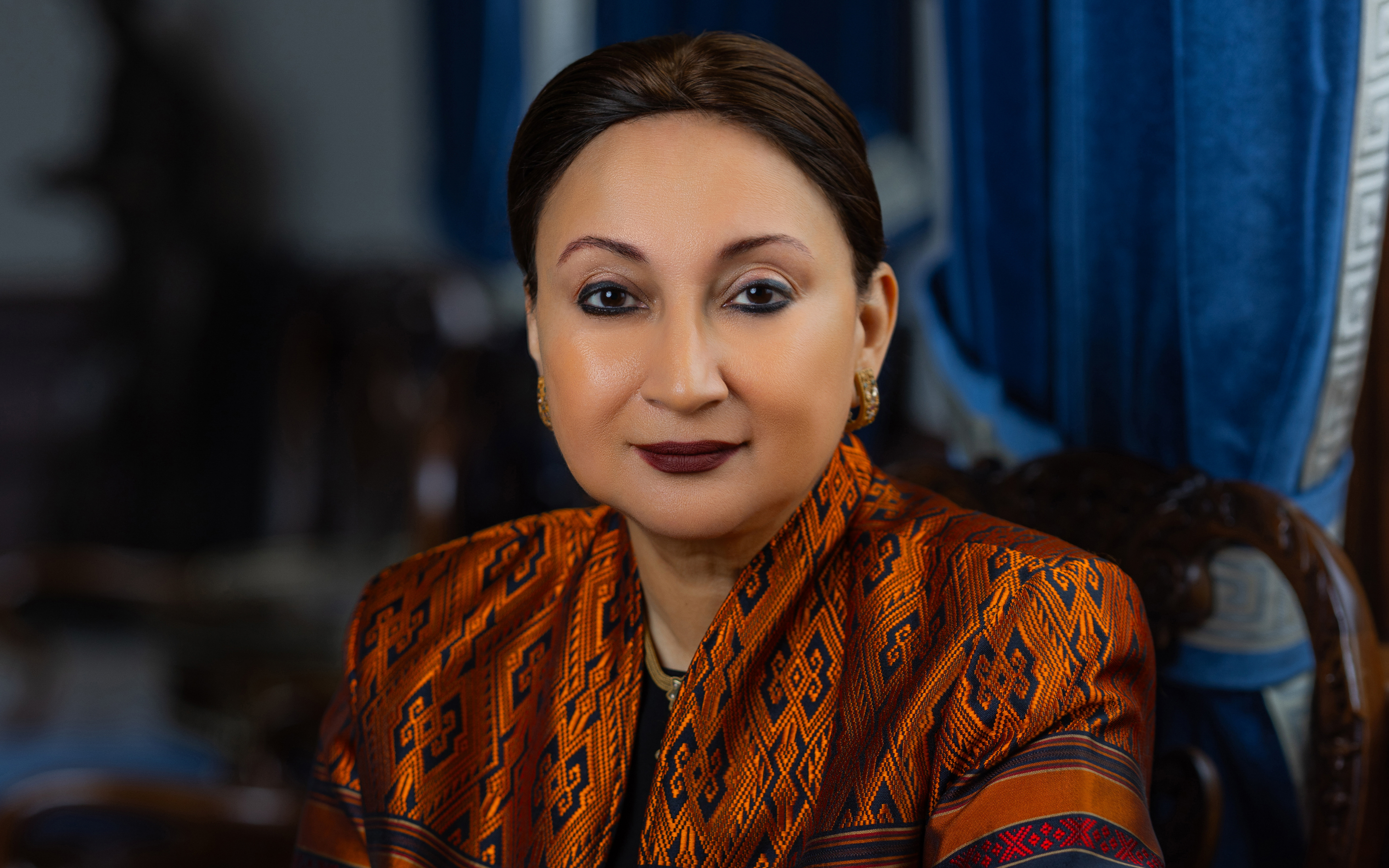
Mashal Husain’s path to becoming President of the World Food Prize Foundation reads more like an odyssey than a résumé. Born in Pakistan, she spent her early years in Tanzania, the Philippines, and Thailand — the daughter of an oil company executive whose work moved the family across continents. “For the first 26 years of my life, I never lived in one city for more than four years,” Husain recalls. What others might see as dislocation, she now considers preparation for a global mission.
Her early education at international schools exposed her to cultural diversity long before the term became fashionable. Learning English in Tanzania, studying in Manila, and later settling in Bangkok taught her adaptability — a quality that would define her leadership decades later. But the constant moving also created a yearning for stability. That sense of belonging, she says, finally came not in an international capital, but in Des Moines, Iowa.
Discovering a Calling in Des Moines
When Husain arrived in Iowa at age 27, she had never heard of Norman Borlaug — the Iowan scientist who won the 1970 Nobel Peace Prize for sparking the Green Revolution. Her introduction came through Ambassador Kenneth Quinn, then president of the World Food Prize Foundation. A chance meeting revealed that Quinn had served as deputy ambassador in the Philippines while Husain was a schoolgirl there. Their shared connection would prove pivotal.
Soon after, Quinn hired her to join the foundation. “That’s where my story begins,” Husain says. “I didn’t come from agriculture. My background was in hospital and healthcare administration. But you don’t have to be a scientist to be a hunger fighter.” That phrase — hunger fighter — now serves as a personal creed and a rallying cry for the global organization she leads.
Iowa stories for your inbox
Justin, David, & Kaylee cover Iowa news, agriculture, business and tech. No clickbait. No rage. No agenda. Support our vision and subscribe!
The Borlaug Dialogue Goes Global
Now at the helm, Husain has expanded the World Food Prize Foundation’s reach beyond Iowa. The annual Borlaug Dialogue — often described as the “Super Bowl of food security” — draws more than 1,400 participants from over 50 countries each year, including Nobel laureates, government leaders, and innovators in agricultural technology.
In recent years, Husain has launched Dialogue Next, a series of regional gatherings following the footsteps of Borlaug himself. The first event took place in Mexico, where Borlaug began his groundbreaking work in 1944. Another convening was held in India, highlighting his efforts during the 1960s to combat famine in South Asia. The next, Husain says, will take the movement to Africa — a continent Borlaug dreamed would one day experience its own agricultural revolution.
Building the Next Generation of Hunger Fighters
For Husain, global impact begins with local empowerment. Alongside the main conference, she oversees the Global Youth Institute, where high school and college students from across the U.S. and abroad present research on food and sustainability. “Unless we expose young people to global challenges, how will they know?” she asks. The program now draws students from 20 states and nine countries — a testament to her commitment to cultivating the next generation of humanitarian leaders.
This global focus feels personal. Husain, once a citizen of many places, found her purpose in one. “It felt so right,” she reflects, “that in a fairly homogenous community, the nature of my work is global.” For one week each year, Des Moines transforms into a miniature United Nations — farmers, ministers, scientists, and youth sharing ideas under one roof.
A Legacy Rooted in Iowa, Reaching the World
Asked what she hopes comes from the Borlaug Dialogue, Husain resists the urge to claim credit. “People aren’t here just because of our content,” she says. “They’re here because others are here.” That “power of conversation,” she believes, is where collaboration begins — where ideas brew, partnerships form, and global hunger meets local resolve.
For a woman who once saw herself as a nomad, Husain work has anchored her deeply. From the plains of Iowa, she’s proving that leadership can be both humble and global — and that the fight against hunger begins not in New York or Geneva, but in the heart of America.