

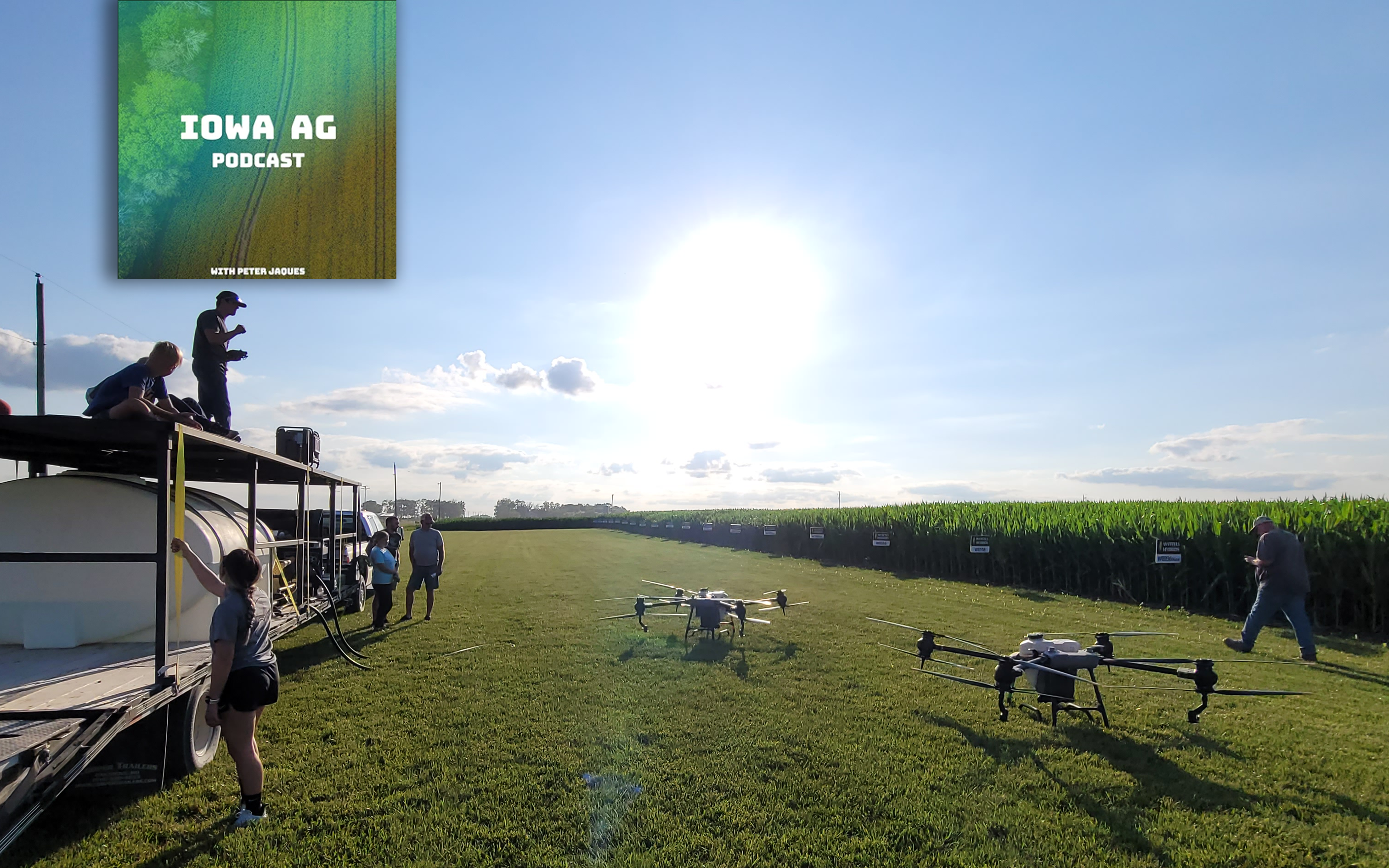


In this episode of the Iowa Ag Podcast, Peter Jaques sits down with Mason Mead, a fifth-generation agriculturalist and Iowa State junior, to explore the dynamic shift happening in modern farming. Mason shares his journey from growing up in a family rooted in ag traditions to diving deep into cutting-edge technology like precision drone applications and autonomous tractors. Their conversation touches on how young professionals are balancing respect for longstanding farming values with the excitement of innovations reshaping the industry. Mason offers candid insights into the challenges and opportunities facing the next generation of ag leaders, including the friction between tradition and tech, and the importance of building personal connections in an increasingly digital world.
Listeners will be inspired by Mason’s passion for agriculture, his hands-on experiences with emerging technologies, and his thoughtful reflections on the role of integrity and hard work in both farming and life. Whether you’re an ag professional, a student, or just curious about how technology is revolutionizing the fields that feed the world, this episode delivers a fresh perspective on the future of farming.
Iowa stories for your inbox
Justin, David, & Kaylee cover Iowa news, agriculture, business and tech. No clickbait. No rage. No agenda. Support our vision and subscribe!
Hey everyone, I’m Peter Jaques, your host for today’s podcast. Joining me is a remarkable young man named Mason Mead, who’s been part of the agricultural fabric for most of his life, representing up to a fifth or sixth generation depending on the side of the family you look from. Currently, Mason is honing his skills in agricultural business as a junior at Iowa State University, focusing on economics, business, and sales, while also working in the family business in agronomy, seed sales, and chemical application. Lately, he’s delving into precision agriculture, especially with drones, and applying dry and wet fertilizers along with pesticides.
How do you think the younger generations can bring fresh ideas to traditional farming practices?
My upbringing instilled core values such as honesty and integrity. If I broke these fundamental rules, there were consequences, but those lessons shaped the person I am today. This extends to my work ethic too; I believe in doing a job right even when no one is watching. In agriculture, for instance, I take the time to spray the edges of a field thoroughly because it’s what the client is paying for and what upholds my reputation.
At Iowa State, the high point of my learning hasn’t just been in the classroom but making connections with industry representatives and potential future colleagues. Understanding how valuable these interactions are helped me concentrate on my career path. Despite technological advancements and generational shifts causing friction, it’s essential for the industry to bridge the gap between tradition and innovation. I’m excited about the future, with technologies like large-capacity spraying drones and autonomous tractors promising increased precision and safety.
What misconceptions about the agriculture industry do you wish more people understood?
On misconceptions, people often think you need to be a farmer to engage with agriculture, but the industry offers a variety of career paths beyond farming. As for advice to others contemplating a career in ag, I’d encourage them to ask if they’re passionate about contributing to the critical sectors of power, protein, and energy. And if I weren’t in agriculture? Perhaps I’d be a gunsmith, considering my fascination with mechanics and firearms. But it only reinforces how much agriculture is intertwined with who I am and my aspirations.
If you could have a conversation with your great grandparents about farming, what would you want to ask them?
“Oh, man. Honestly, I’d really want to know. I just want to compare and contrast how it’s changed over the years. I’d love to ask him and sit down and be like, so, what would you guys do when, I’m trying to think of a scenario. I thought I was going to come up with one. What would you guys do if it was too cold to harvest? Would you hold off until later? Blah, blah, blah. And what population do you guys plant on? Just the way that everything has changed. What kind of products do you guys use? And what would you run them at? And I guess it’d be a vastly different world to compare it to. It’d be a lot of fun.”
Thank you all for listening, and especially to Mason for sharing his insights and experiences. We need young, bright minds like his in agriculture, and it’s been a pleasure discussing the challenges and future of this essential industry.