



Nick Leeper‘s career embodies the Iowa tech ecosystem at its best. Starting as a software engineer at Pioneer (now Corteva), Nick spent nearly a decade building research lab software before catching the startup bug. In 2008, he and close friend Derek Brooks made a pivotal leap together to Chicago to work on the Obama campaign—a decision born from their friendship and mutual ambition that shaped both their trajectories. After the campaign, Nick landed at Dwolla, where he spent 11 years helping build real-time payment systems, working with institutions like the Federal Reserve and the Gates Foundation.
What strikes Nick most about his venture-backed experiences is how they’ve accelerated opportunity. “I was in rooms I had no business being in,” he reflects, describing how startups compress experiences that might take decades in corporate environments. But he’s also candid about the downsides: the emotional toll of building products that get scrapped, the constant pivots driven by investor expectations, and the cycles of hiring and layoffs that come with funding rounds.
Hear from Iowans directly. No algorithms.
Don’t let the algorithms choose your news. Enter your email address to hear directly from Iowans leading news in politics, community, agriculture and business. No editing. No clickbait. No rage. No agenda.
In 2024, Nick joined Hummingbirds as head of engineering, working alongside COO and Co-Founder Charise Flynn and CEO and Co-Founder Emily Steele. He was drawn to the company’s rare advantage of having product-market fit before scaling—and to the opportunity to build his own team and set culture from scratch. At Hummingbirds, he’s found better work-life balance and a woman-founded environment that brings a different energy.
(Check out our interview with Emily Steele here!)
The conversation pivots to AI’s impact on the next generation of engineers. Nick acknowledges that AI will reshape venture’s traditional playbook of “grow, hire, grow”—but argues that code was never the bottleneck. The real work is understanding problems and validating solutions. His concern: how will junior engineers build the pattern recognition and judgment that comes from shipping products and learning from failures? It’s a question without easy answers, but one that defines the moment we’re in.
Nick shares the origin story of his friendship with Derek Brooks and their leap to Chicago for the 2008 Obama campaign, a pivotal moment that led him to @dwolla where he spent nearly 11 years helping design systems that process billions of dollars. Along the way, he reflects on what it means to work at venture-backed startups: the exhilarating opportunities to work on problems you never thought you’d touch, the heartbreak of shipping projects that get shelved, and the importance of people and community in tech.
Today, Nick leads engineering at @Hummingbirds, a woman-founded creator platform where he’s building his own team and setting culture from the ground up – something he always wanted to do. But as the conversation evolves, Nick and Kaylee dig into a bigger question: what does the future of tech look like in the age of AI? Nick explores how artificial intelligence is rewriting the venture playbook, the risk that the “people in the middle” of their careers face as AI disrupts how we work, and why human creativity and problem-solving (not just code) remain the true bottleneck in building great products. Tune into this thoughtful, wide-ranging conversation about ambition, mentorship, and what it takes to leave a mark in tech.
Interview Transcript
This transcript was created with help from Ai. Please report errors to us and always refer to the video as your primary source.
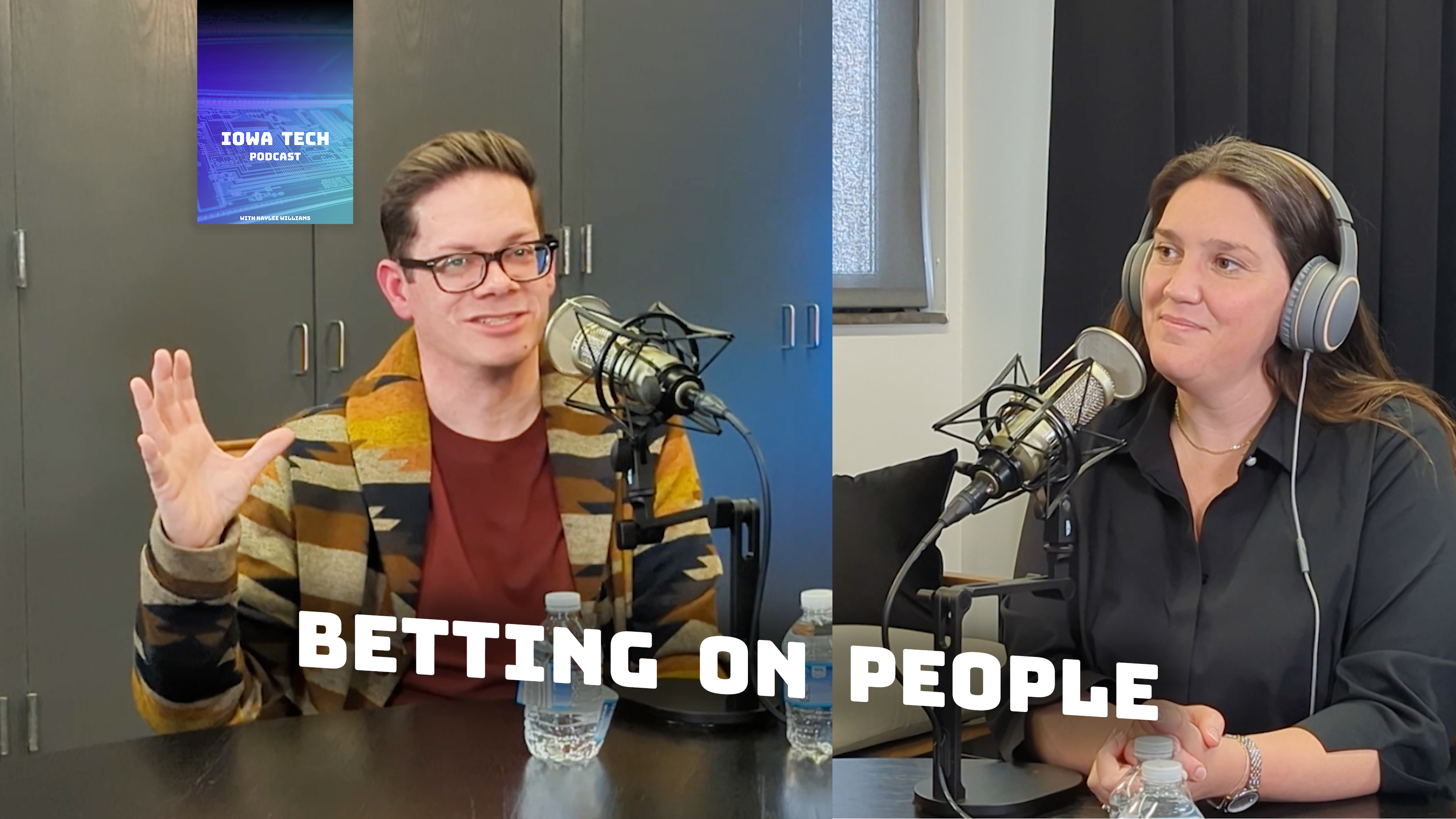
Kaylee Williams: Hey there. Welcome back. It’s Kaylee Williams and you are listening to the Iowa Tech podcast. I am here in the Jet Rose Barbecue Studio, and I have with me Nick Leper, who is a developer. He’s been in the startup ecosystem for a long time, maybe 10, 15, years, maybe longer,
Nick Leeper: more, maybe, 20 maybe. I don’t know. Um,
Kaylee Williams: Um, and I reached out to Nick because, uh, some of our, our frequent listeners, our frequent flyers will know that I. Had the opportunity to talk to Derrick Brooks in my last episode and he told me the story about how he and Nick Leaper moved to Chicago together to work on the Obama campaign together. And it was like, I’ll make the leap if you make the leap. And I thought that was so special and cute and I Love it. when like male camaraderie is one of my All time Favorite. things. And so I was like, well, I have to talk to Nick and I have to hear the story. So Nick, thank you for being here. I’m really glad to have you.
Nick Leeper: Yeah, absolutely. Thanks Kaylee, for having me. This is, I, I’m really excited. I think this is gonna be super fun,
Kaylee Williams: yeah, I think so too. I have so many, I have so many. things I wanna ask you, but maybe let’s just start with a little bit of your background and who you are for those who, who don’t know you. Yeah,
Nick Leeper: That’s a great question. Um, I’ve been thinking about this one a little bit, like who I am. Um, I think at my core I’m someone that likes to solve problems, right? Like that’s why I got into tech. Like I think it’s really, I drive people probably bonkers by just saying like. Hey, that’s a solution. Like what problem are we actually trying to solve here? I say that to my wife, I say it, you know, at work all the time. It probably drives people crazy. Um, but I think that’s something kind of core to me is like, I just love problem solving and tech has been the path I’ve chose to kind of solve problems. Um, you know, otherwise it’s, I’m I, somebody that just cares a lot about people and like, especially people I work with. You know, I think a lot about. Um, I’ve never regretted spending time and like doing extra with people. Like it’s just something that investing that time always seems worth it, right? Whether it’s, you know, if you want to think a little more like capitalism, like you gain, you know, your network, you’ve expanded your network and you’re looking for a job, you might have that. But also like, I love to watch people either I’ve hired or that I work with grow and like see them become something that maybe I saw and they didn’t. Um, so I think those are kind of things that are core to me. Um, but otherwise, I’m just a kid that grew up in central Iowa. You know, I grew up in Mitchellville, which is a small town, kind of near Des Moines. Went to Iowa State, have lived here my whole life. Married someone that went to Southeast Polk. I went to Southeast Polk, um, you know, lived in Chicago for a year, but otherwise I’ve been here my whole life and it’s home, you know, and I, I love. Being here and trying to make it better. You know, loving it for what it is, but also like, ah, we can, we’re almost there. You know, we’re almost there. We can be there. And I love it. So I love trying to be one of those people, those agents, you know, have changed to try to keep growing the ecosystem. So.
Kaylee Williams: We need, We need, as much of that as we can get. Um, so you are an engineer, is that what you studied at Iowa State University? Yeah.
Nick Leeper: It’s a good, yeah. Um, kind of, um, when I went to Iowa State many years ago, um, I actually graduated with MIS, so management Information Systems was kind of a new program and it was kind of like pitched as like a mixing of computer science and business. So I took, I had kind of like minors in a lot of business. Like I think I had a trans transportation logistics minor, like, but I also had a lot of core CS classes. Um, which actually for me was like, I think really took to that problem solving part that I like is like, you know, code was one part of it, but also like I got a background in marketing and econ and all of these other things that I think have really kind of made me maybe. For me personally, at least more well, well-rounded and like, feel like I kind of know a lot about a, a lot of things and I didn’t, you know, there’s people that are way better at computer science, like pure computer science than I am. But you know, I think as, you know, as our world keeps growing and the internet expands and AI now, like some of that was like, oh, maybe, you know, learning more about how business works was kind of smart back then. So, yeah, I mean, I did study engineering, but I was more, you know, more business stuff too, so.
Kaylee Williams: we were laughing about this just Before I hit the record button. I know you, but I don’t know you.
Nick Leeper: Mm-hmm.
Kaylee Williams: I’ve seen you in the ecosystem at so many events, ATLA events in the early Days. when I first moved to Des
Nick Leeper: Yeah.
Kaylee Williams: Yeah. So I’m curious, what, how did you end up at Dwella? Was that your first job outta college?
Nick Leeper: no, I wish, um, I wish I had gone straight to a startup.
Kaylee Williams: I’ll,
Nick Leeper: that. Um, no, outta college I didn’t like, it was early two thousands and it was kind of in that like, you know, the.com had kind of busted and it was hard, like it was hard to find a job, honestly. And I. You know, I was calling places and was looking. I had done some internships, so I had some experience. Um, and I was about to take a consulting role, which, you know, totally would’ve been great. Um, I probably would’ve learned a lot really quickly and done a lot of things and I randomly got a call from Pioneer, so was now Corteva. But, um, this starts the, I can see you smile. This is the start of the Derrick Brooks and I story. Um, and so I ended up interviewing there. Joined Pioneer, um, as I worked on software. I’m gonna almost say exactly what Derek said. Um, I worked on software for research labs, um, and yeah, I was there for almost 10 years until
Kaylee Williams: oh my gosh. You were 10 years at
Nick Leeper: Yeah, I was at. Pioneer for quite a while. Um, I loved it, honestly. I learned a lot. Um, you know. Had a lot of fun. I worked with people like Derek. Um, you know, they had kind of brought in a lot of younger people, younger engineers, and we just had a lot of fun and built a lot of fun stuff. That’s great. Yeah. It was, and it was a really great place to learn. Um, you know, but I kind of got that itch at the end where I was like, I, I love it, but I don’t, you know, and I started to feel this in my core of like, when I’m starting to get, I get restless, you know, and I could feel like. I want something different. And I’d read, you know, Derek and I were trying to do our own startup and we’d, you know, I read books and like listened to podcasts and did all this stuff of like, I think I want to be in the startup life. And that’s not how I got to D Wallah, but that’s where I started. Um, and then we can come back, but I left for the campaign. I left Pioneer to go to the campaign. And then on the campaign Derek and I, um, worked with someone and she was like, oh my God, you guys are from des. And we’re like, yeah. not a lot of you don’t get that a lot. No.
Kaylee Williams: you don’t.
Nick Leeper: and she’s like, do you guys know Dala? And we’re like. I mean, yeah, everyone in Des Moines Tech kind of knows of DwAA. She’s like, do you guys know Ben Ben Millen, um, the founder of dla? And I’m like, absolutely not. I don’t, I do not know Ben at all. Um, she’s like, I’m gonna introduce you guys. I mean, this is literally like the beginning of the campaign and Derek talked a little bit about, but like campaign, you kinda know when you’re gonna get fired. So we’re like a year and a half away from anything. And I was like. Oh, we’re just like, okay. Sure, sure. And so we emailed with Ben a little bit and like nothing really happened about that. Um, and then as I was ending the campaign, um, I was gonna, you know, I hadn’t talked to DLA still and I was coming back to Des Moines and the plan at that time was my wife and I were talking about moving to Chicago, um, and Kind of jumping in, like, you know, I met so many people in Chicago, love the city. The campaign was full of a lot of Chicago tech people. Derek kind of touched on it, of like money was coming in. Um, they were funding a lot of things, so I was, you know, trying to figure out where I wanted to kind of land. And I, um, got an email from DwAA and it was this woman, Jenna Hogan. Um, if you’re in Iowa Tech, you might know Jenna. She’s amazing. She’s been in HR at a lot of startups around Des Moines, just. I can’t say enough great things about Jenna, but she, um, reached out and she was like, Hey, I heard you were on the campaign. Do you wanna come in and like, talk about to our engineers, like about what it was like and what you learned? Totally. Just like soft pitches me of like, I know I’m looking back. I’m like, oh man, Jenna, you’re so good. I know she did. And I went in and they’re like, Hey, do you want a beard? Like the whole startup experience, you know, in 2013, I’m like, do you want a beard? Do you want to like, play some ping pong? And I was like, man, this place is great. Like, like how they were on Dulo was on the 18th floor of the, uh, Wells Fargo building at the time. So not their first office, but kind of like their second office. Um, so I went in and I talked and I was like, man, this place is great. Like, you know, I, I really liked it. And so Jenna’s like, well, do you want to, like, do you wanna meet Ben? Do you want to like, kind of interview? And I’m like. At that point, I was still planning to move to Chicago, but I think we were, my wife and I were both kind of feeling like, we just didn’t know if that was gonna be the right move. Like, we were excited, but we were also hesitant like we both had been here. You know, kinda like I said, we’re, we’re Central Iowa people. Like we grew up here, our families are here, we love it here. Um, and so, you know, I was like, yeah, uh, I I want to at least explore this. And so met with Ben, met with a lot of. Different people at Dwella and yeah, just kind of ended up like, I think this, you know, Ben is, if you don’t know Ben, he, he is very good at explaining his vision and like getting you excited about it and the things he TA was talking about. I was just like, yes, I want to, I want to build this, I want to be part of this. Um, and so yeah, I, that’s kind of how I ended up at Dwella. And then I was there just about 10 years also.
Kaylee Williams: For A long time. So it was 10 years
Nick Leeper: It, yeah. I was, I was actually about to hit my 11 year. I was what month? Short when I left. D So yeah. Yeah, that was kind of, it was a, a long journey to get to Doah. But yeah, it’s a place like, honestly, I still love, still care about, like, kind of grew up there. You know, it’s like where I, I knew about tech and I’d like built some cool stuff, but it’s kind of the place where I learned like what I wanted to do and like how I wanted to do, more importantly, maybe how I wanted to do it. Um, I had some really good, really great mentors and bosses there that I. Picked a lot up from and like kind of helped me formulate like how I wanted to lead and how I wanted to be. So, yeah.
Kaylee Williams: and I think, so you probably met Cherise Flynn then through the dwell experience. Yep.
Nick Leeper: Yep.
Kaylee Williams: And we’ll come back to that. because you work with Cherise
Nick Leeper: Okay. I do, I am fortunate enough to get to
Kaylee Williams: Before we get to hummingbirds mm-hmm. And talk about what it’s like to work for a venture-backed startup, just broadly, and then we’ll, we’ll dig in on your hummingbirds experience and how, maybe that’s different from the Dwella one. But I want, I do need to hear your Version of The Chicago story. because What I, what Derek shared with me is that
Nick Leeper: Dave?
Kaylee Williams: he and his wife. We’re gonna move to Chicago. Mm-hmm. But they didn’t wanna go. And then when he talked to you about it, it was like, well, if you go, then we’ll go and then we’ll have built-in friends when we get there. Yeah. And I loved that. And so I’m curious if that is how you remember it.
Nick Leeper: Yeah. Um, absolutely. So Derek, yeah, we, we weren’t working at Pioneer together, but we were kinda, like I said, we were like trying to find out if we wanted to do our own startup thing, but we’re both engineers at heart and like neither of us wanted to like be a CEO or be. Yeah. So nailed it. Neither of us wanted to sell or market or do all the other important things that a startup must do, and so we ended up just building a lot of fun stuff together and. Um, you know, he had come to me one day and was like, yeah, my friend, my buddies, the CTO of, um, the Obama campaign. I’m like, oh my God, I know this guy too. I’m like, that’s incredible. I, that’s, you know, it was 2011, you know, 2008 was historic. Yeah. And we were just like, that’d be so fun to be part of. Right. And he was like, but I’d have to move to Chicago. Like, I just can’t, you know, like, Carrie’s here. She’s got her job. Derek’s wife, um, you know, they had a dog, they had a house, an Ankeny. And, you know, so we talked about it. You know, we, like I said, we’ve, we’ve been close friends for 20 plus years, so I was just talking, probably having a beer, just chatting about it. And I went home and I was talking to my wife Nicole, and was like, God, you, you gotta hear this, like this opportunity Derrick has and isn’t gonna take. And she’s like, oh, that’s crazy. You know, you’re talking about it. And the next day she was like, Hey, what if you and Derek went together? Like, what if you guys just both went.
Kaylee Williams: was her
Nick Leeper: It was a hundred percent her idea. And we’ve both given her credit. She was like, what if you guys
Kaylee Williams: credit works too.
Nick Leeper: Yeah. Yeah. And like Derek and I are close friends. Her and Carrie are close friends and she’s like, you know, you guys will have each other. Carrie and I have each other here. ’cause we are in the same, like, we had a house, a dog, she had a job here. Um, and so yeah, that was kind of just how it, we were like, okay, so we went and interviewed together. Um,
Kaylee Williams: You were bonded buddies? No,
Nick Leeper: were bonded
Kaylee Williams: You can’t take one without the
Nick Leeper: Nope. They kind of got us both. Um, and it worked out like we both kind of split. It was funny because we lived together. We did a lot together, but we really didn’t work together like we worked. You know, he talked a lot about the stuff he worked on. I had a completely different experience. Like, like he talked a lot about election day. It was crazy for him and so busy. I didn’t do anything honestly, for the last. Month. All I did was document things because I worked on completely different systems that were like so important at the beginning of the campaign. Mm-hmm. So I worked a lot on like fundraising and donation. Oh yeah.
Kaylee Williams: yeah. That’s very important.
Nick Leeper: important. Like the
Kaylee Williams: of the campaign,
Nick Leeper: no one cares. Like the money coming in at that point is like they can’t really spend it anymore. Right. Um, so not that important. So yeah.
Kaylee Williams: That’s really funny. I have a wildly
Nick Leeper: different experience than Derek had. So.
Kaylee Williams: I, I, just love that story. Iowans, we stick together. Yeah.
Nick Leeper: exactly. We stick together. We took the league together. Um, we had a lot of fun together, you know, he talked about it. We, we hung out a lot and, but we also, it was fun because we kind of had two different experiences. So even now we’ll talk about like that and he’s like, I don’t remember that. And I’m like, yeah,
Kaylee Williams: That’s really
Nick Leeper: It is kind of funny.
Kaylee Williams: What’s your favorite Chicago hang? What was The spot. that you and the crew
Nick Leeper: there was, so we lived in Ukrainian Village. Um, I absolutely love Ukrainian Village. Um, there was a couple places, Zco Pane is this like Ukrainian bar that we kind of found that was like a local bar, um, that we just hung out a lot. Like the bartenders were great. It was just kind of a dive bar. Um, kind of blanking on the hill. Be mad at me. I’m blanking on the. There was this beer bar we went to probably every night. And I’m blanking on the name of
Kaylee Williams: of course. you’ll, you’ll remember it at
Nick Leeper: Oh, the minute we walk out. Um, but yeah, there was a lot of places in our neighborhood we, we’d hang out a lot, you know, ’cause we kind of worked down by Millennium Park and there’s not a lot downtown really, that you’re like, oh, I want to hang out there. Like, the neighborhoods are the fun spots. So we would end up back in our neighborhoods hanging out a lot, um, you know, work till 10 or 11 and then go drink for an hour or two and then go to bed and then get up. It’s a young man’s game. Um, it was hard even then. I can’t imagine doing it now. It was definitely a young person’s game,
Kaylee Williams: Yeah. You earned your stripes.
Nick Leeper: uh, yeah, I probably took a few years off the, off my life. But yeah, I had a lot of fun, learned a lot, and met a lot of gr really great people, so.
Kaylee Williams: Let’s talk a little bit about your hummingbirds experience. Okay. and and maybe actually, let’s zoom out and talk it first I wanna know from you, What is it like. to work for a venture backed startup?
Nick Leeper: Yeah. Oh, I can definitely talk about that. Um, especially from an engineer’s perspective, maybe as a, as an interesting one of like, it’s, I don’t know, I like to think a lot about like pros and cons and like, there’s a lot of pros and there’s some things that are harder. Um, I think pros are like, I gotta work on things that I don’t know that I, I would ever get to work on. You know what I mean? Like, um, just the sheer like. You know, venture works. Like money comes in and it’s like, we’re gonna go build all these things. And you’re like, great. Like, okay, that sounds so much fun. Um, I always say it dwell like there was, I was in rooms, I probably had honestly no business being in. Right? Like, I was talking to banks, I was talking to the Federal Reserve, I, you know, helping design the, one of the first realtime payment systems in the us. Yeah.
Kaylee Williams: Yep.
Nick Leeper: The kid from Mitchellville. I was like, I did what? Like how am I at this bank or at New York at the Federal Reserve, or, uh, I got the opportunity to work with the Gates Foundation on a, they still have continued on. It’s a project called Moja Loop, um, that is, was kind of designing a payment system to support kind of underdeveloped, underserved countries. Yeah. Super cool.
Kaylee Williams: And. through DLA you did
Nick Leeper: Absolutely. Yes. Through Joel, I was kind of the head of the engineering team that worked with a bunch of other companies through the Gates Foundation. We kind of designed and built this first prototype or proof of concept or whatever engineering term you want to use, um, you know, for this system to kind of help. Yeah. And we ended up in Johannesburg for meetings for that. You know, we were in Seattle, it was just like venture backed startups. I feel like you just, you get the opportunities that you just. You might get outta Corp Corporation someday, but it’s like you just kind of fast forward everything. I feel like it’s like push a button and you’re just doing stuff that you’ve never even thought you would be. Um, you know, and you get a lot, you get to work with a lot of different people. Um, you know, and venture backed, like a lot of, a lot of hiring happens. Um, and so like you’re you’re working with people from all over the country all over and it’s, it’s really cool. Like you get a chance to talk about and meet people and do things and travel. I dunno. It’s really fun. But it also can be, there’s some downsides, or not downsides, but maybe just like as an engineer, you don’t always know like, why are we building this? You know? It’s one of those things you’re like, and you, you just don’t have the context. And like, I mean, you probably know as venture comes in, like there’s expectations that come with money, right? And like, You know? different, different firms want want you to do different things and expand in different ways and grow. And you know, as an engineer you don’t always have all the context and you’re kind of like. Okay, like, we’ll build this. Um, but then sometimes that, you know, it shuts down or it, it’s like, oh, we’re not gonna do that anymore. And you’re like, oh man, I poured my heart into that. Or like, I really, you know, I loved that. That was really fun. Um, you know, and then I think too, there’s the, like the business grows, but sometimes the business shrinks and that’s kind of, that if you’ve been in venture backed for, you know, and companies, it’s kind of the. Not all of ’em, but a lot of ’em grow and they contract and grow and contract as they get funding and funding runs out. And it’s hard, like not only so you, you know, the plus is you get meet a lot of people and work with a lot of people. Sometimes you gotta say goodbye to a lot of people and, um, that’s hard. And you know, as somebody who cares a lot about people, you, you get kind of like, dang like, oh man. Um, but you know, that’s also like, you keep ’em in your network. You stay friends, you’ve. Get a talk, you know, and that kind of with Charice as we talked about earlier, is like sometimes you find ’em again. Um, and I don’t know, you know, careers are long community’s kind of small, and so you, you get a chance to run into those people again and keep working with them. So, yeah.
Kaylee Williams: And how did the intersection happen again with Cherise? And maybe Tell us who Cherise is. Okay. And then you made the leap from DLA to the hummingbirds. Mm-hmm. So. did you, did you get the zoomies? Were you kinda like at Pioneer, like you were just a little bit ready to, to move on? Or What? really, What really? inspired you to make that
Nick Leeper: yeah. So I’ll start with that and then we’ll come to hummingbirds. So yeah, I, you know, I had a really great, he’s still at dla. I had a really great boss at Dwella and you know, we talk every year of kinda like, you know, when you get to, you’ve been someplace as long as I had. I think it’s really healthy to start every year. I would start with like, is this still the thing I’m most excited about?
Kaylee Williams: good for you.
Nick Leeper: And I think that’s something that’s really healthy and that people are kind of afraid of. And
Kaylee Williams: oh yeah.
Nick Leeper: definite huge credit to my boss, uh, Skyler, um, still a CTO at great guy. Um, you know, he would let me explore that and help me kind of like talk through it and like, you know, we’d talk every year and he is like, here’s some stuff I can, like, here’s some stuff on my plate. Would you love to work on any of these things? They kind of line up.
Kaylee Williams: you?
Nick Leeper: And you know, I’d be like, yeah, that’s awesome. That’s exactly, you know, kind of what I wanna do or no, none of those really are hitting me. And so, you know, I kind of did that every year and some years I’d explore different things, talk to different places and see like, Hey, is DOA kind of what I’m most excited about? And every year up until, you know, when did I 2024, the answer was yes. Um, you know, and at the end of 2023, I was starting to get the itch a little bit of like. Maybe I’m ready for something else. Like I, at that point, I was a director of product engineering at Duala, which means the teams, you know, I had a bunch of teams under me and they worked on the products at Dwella that they offered. Um, great. You know, but I, you know, I would always kind of like. I’d love to build my own team. Kind of start the culture, set the culture, help set the culture. You know, I came into DOA and it was, I certainly did that with a lot of people. You know, like we kind of all grew up together at doa. Like Skyler and I started within three or four months of each other. And you know, there’s a host of names of people that are probably known in the, you know, the tech Iowa Tech community from DwAA. Um, we kind of all grew that culture together. And so I was looking like, I wanna do this somewhere else. I wanna bring what I learned here, like all these. Lessons I’ve learned and things I’ve taken from Skyler’s leadership and Ben’s leadership and all these people that I’ve gotta work with and do that somewhere else, I wanna do that. Um, and so, yeah, uh, Cherise Flynn, um, she’s the COO of Hummingbirds. She was the COO at Dwella. Um, she and I had kind of kept in touch over the years, um, but she had just reached out and was like, Hey, I haven’t talked to you in forever. Like, would you want to get coffee sometime? This was probably late 2023. Um, and I was like, yeah, of course. Um, sure. And she was like, I want to, she kind of frank and like, I feel like this was, every time I end up somewhere, I feel like it’s like I’m, it’s obvious to everyone but me that like, someone’s recruiting me.
Kaylee Williams: me.
Nick Leeper: you know? And she was like, I’d love to just run, like, we’re starting to think about tech, bringing tech in house and I’d love to hear from you, like your thoughts and get some feedback. Great.
Kaylee Williams: Oh, that’s a soft Cher sell, if I’ve ever heard it. Yeah. Cher
Nick Leeper: also an amazing seller. Um, amazing boss too. Um, but, uh, so we met, had coffee at, I think we were at chain and spoke probably, um, that’s a hummingbird’s favorite, feels like, um, a lot of Ingersoll locations, our hummingbird’s favorites. But, um, so we ended up there and yeah, we, to her point, she did talk about like, Hey, I’m thinking about what it would be like to bring tech in house. ’cause at that point. They were pretty, like doing pretty well. Um, you know, I always, the thing I loved about hummingbirds when I joined is like, it was a company that had found product market fit with a, like, not a tech focus. Like, you just usually don’t find that in startups. Like they, a lot of times they start with tech and then find their way into product market fit. They had flipped it of like Emily, Emily Steele, the CEO, and Cherise had found a fit. With a product that was like, not terrible, it was a good product, but it needed, it hadn’t been enhanced or grown a lot over the years. Um, it had been kind of a, an MVP that had been then taken over by some different, you know, contracting firms, consulting firms that helped. Um, some really great work had been done, but they didn’t have it in house. And so like, they couldn’t really, like, let’s just go, let’s like, let’s get some professional, you know, a full-time team in here and go.
Kaylee Williams: Yeah. Really dedicate time and money on the
Nick Leeper: yeah, exactly. And people, yeah, exactly. Um, and so, you know, I talked to her and I was like, yeah, this is what I think, blah, blah, blah, blah, blah. And a couple days later she just reached back out and was like, do you, would you just want to be the head of engineering? And I was like, oh, you know, one of the, it was kinda like with Joel was like, I’m not not interested. And the more I just spent with it and thought about it. Started meeting, I met Emily, um, I met the head of sales at, at hummingbirds, the head of cs, and I was just like, this is a, a really amazing team. Um, I think the other really amazing thing about hummingbirds that I talk about a lot and think about a lot is it’s woman founded. And like that’s, you know, it’s, it’s sad to be calling it out is something special, but it is something special and it brings a different energy that you just don’t always find at other companies. Um. And whatever you want to read into that, you can, but it’s, it’s just a different kind of vibe and different kind of energy. Um, and it just brings a different level of, I don’t know, positivity maybe. You know, it’s just like, we got this, like we can do this. We’ll figure it out. Um, and you know, the more I talked to those four Cherise, Emily, you know, sales Cs, and I was like, I think this is some place I want to be like, yeah. You know, it’s just one of those where you’re like, it just feels right. Yeah. And so, yeah, I. It was hard to leave, dwell, honestly, it was really hard. I wasn’t unhappy. I was just like, I think it’s just time for me to move. Like I’ve kind of graduated, you know, like I’m ready to go, go out in the world and take everything I learned here and bring it somewhere else. Um, and so yeah, that was kind of how I ended up there.
Kaylee Williams: And how, has the experience at the hummingbirds, sort of a two-pronged question, How has it been different? from your time at Dwella and have you gotten to at least start the process of building your own team and Doing what you. said that you wanted to do?
Nick Leeper: Yeah. Yeah, that’s a great question. Um, well, I’m gonna start with the team, I think. Um, yeah. So. right away I hired, you know, right when I started, within a month, I had three folks join the team,
Kaylee Williams: Within a month. Yeah,
Nick Leeper: yeah. Um, people
Kaylee Williams: you knew or people you met through a process,
Nick Leeper: a mix, well, kind of a mix. Like I tapped into the Iowa Tech Network a little bit and found. I’m an engineer who’d been at Bunch Ball. Who’d been at, um,
Kaylee Williams: You worked at Bunch
Nick Leeper: I did not, no. But he had been at Bunch Ball. Okay. Um, no, I did
Kaylee Williams: I was like the
Nick Leeper: I know, I, I knew a lot of people that from Bunch Ball that came to DwAA or ended up, you know, it’s one of those companies that you find spread throughout Iowa Tech Dwell is another one, um, you know, had been at WorkHound. So someone that had kind of been around the Iowa Tech scene for a while. He joined, um, found a woman in Minneapolis, kind of just through random network connections. Um, so I was able to join, you know, get a few people to join me and we quickly got started of like, we inherited this app and, you know, it was. Needed some love and needed kind of to grow to what the company wanted to be like and how it wanted to scale to. And so, you know, we, we did right away I got to like, okay, we’re gonna set the culture, like there’s four of us. We’re gonna have to figure out how to work together. We’re gonna have to figure out how we want to do things. We’ve all. Experience some different things. Um, you know, how do we wanna do this? And so, you know, as of now, two years later, there’s seven people on the team including me. So we’ve grown, probably doubled. Yeah. Um, in size. Um, and you know, I think that’s about right for where we are as a company. Um, you know, so yeah, I have been able to do exactly what I wanted to do is kind of start building my own team and setting some culture, which has been really, really
Kaylee Williams: what’s the culture like? How would you describe it?
Nick Leeper: Um, I mean, I don’t know. I
Kaylee Williams: it’s a hard thing to describe.
Nick Leeper: is a really hard thing to describe. Um, we have a lot of fun, you know, we work hard and we have fun, I think is a good way. And we’re, you know, we’re close. We’re not, you know, I don’t, I’m not gonna ever say like, oh, the company’s my family, you know, but I like, we care about each other. We work hard, we get a lot of stuff done, like we just get stuff done. I found fortunately was able to find a lot of people that just. Just like what they do and work really hard, and we have fun doing it. We don’t run ourselves into the ground. You know, we, you know, hummingbirds is very, very good about that work-life balance and really not just, you know, pushing, pushing, pushing, pushing, pushing. Um, you know, we go through phases where we have to get something delivered and work hard, but we also take the time to recharge and, you know, get away for a little bit and do the things that we all, you know, we all have families, we all have lives. And I think that’s important, right? Like that’s, yeah, it’s, it’s really easy in tech and startups to just push and push hard. Yeah. Because it is like, the venture backed was another kind of, it was, you know, you are taking this money in exchange for like, we’re gonna grow. And like that often means we gotta go, uh, we gotta go really hard and fast. And sometimes that’s it. It wears you down and you don’t always realize it until you kind of are burnout, you know, until you’re like.
Kaylee Williams: it’s a little too late. Yeah.
Nick Leeper: And you’re like, I don’t know how I’m gonna recover. I love Derrick when you talk to him, Brooks, um, talking about how he kind of took the time off and like, I think that’s such a, like,
Kaylee Williams: yeah.
Nick Leeper: I know it’s not everyone can do that, but like if you get that opportunity, even if it’s not, you know, he took like eight months, even if it’s
Kaylee Williams: like a couple
Nick Leeper: weeks of just unplugging and doing things that you love that are not technology sometimes is so important. Mm-hmm. Um. The other part of the question was kind of about hummingbirds and maybe how it was different, how it might be a little bit different.
Kaylee Williams: Two venture backed. companies. Talk a little bit about how your experience has changed from One. to the other.
Nick Leeper: Yeah. Okay. Um, hummingbirds is a little bit different. You know, they’re have done seed funding. Um, so there’s a little bit less, I don’t know, I, I, I, don’t know for a facts, but it seems like when you, you know, you kind of get into later rounds and stuff, like expectations grow the more. Money you take the, the farther you get in your rounds, you know, things change. And so we’re still fairly early and like, I think I’m, I mentioned it, but finding that product market fit so early, I think has been critical because it, you can take money to expand the things that you already do well, rather than like, we don’t really know what we do well yet. We’ve built some really cool tech, or we’ve got these really great people. We’re still trying to find what we can sell. Whereas like hummingbirds was like, oh, we already know what we can sell and we sell it really well. We just need money to like, keep going. Like make it bigger.
Kaylee Williams: Can, confirm. It’s fun to be an investor in hummingbirds. I love that.
Nick Leeper: I love that. I love that we have that connection. Um, yeah, so I think that’s been a different experience as
Kaylee Williams: like,
Nick Leeper: you know, I think I was at Dwella when they kind of, they found their product market fit. Like for a while early on it was a, you know, peer-to-peer payment, kind of like a Venmo. Um, didn’t really catch fire there. Like there was it. definitely was doing okay, but it didn’t really catch like, not Venmo, like Venmo caught, you know, fire and was now they are what they are. Um, and ELA in probably 2015 or 16 kind of pivoted and found theirs of like, Hey, we’re gonna be this white label, API that powers all these other startups. Really cool. Super cool. And being there when it happened was really, really fun. And seeing it like catch. Um, but being part of a company that’s already kind of caught, you’re like, oh, this is great. Like, this is like, we’re pouring gas on the fire and just going. Um, so that’s been a lot different. Um, you know, there’s still always the, like, are we gonna do another round of investment? Like, there’s always kind of that, so it’s like you’re still, you still got some of it of like, you’re doing things that are important, but you don’t always know why. Sometimes you know what it’s like I think about AI a lot in this space. Like it’s really hot right now. Everyone’s, you know, a lot of companies getting funded are, AI companies are a AI forward or first, or whatever term you want to use. Yeah. Um, and so, you know, I think a lot of companies are like, well, we gotta build some AI stuff and, you know, and like, cool. Yeah. Probably, um, you know, it is the, you probably, you probably should, um, you should think about that a lot. Um. And so, you know, I think it’s, it’s always that, like there’s always that part of being in venture backed, and that’s the same across companies as like, you’re oftentimes doing things because other people are doing them. And it’s not bad or wrong, but it’s like it can lead you down paths of like, is this us or is this. Like, is this what other people are doing? And I think we’ve, we’ve done a nice job at, at hummingbirds of like, yeah, we want to be AI forward. Like we’re, you know, using the tools and we’re starting to build these things into our systems and like really starting to try to take advantage of where it makes sense for us and not just like, let’s go build a bunch of AI stuff that no one actually uses or cares about.
Kaylee Williams: mm-hmm.
Nick Leeper: You know, it’s being very deliberate about building the things that we think. Are gonna make our product better for our users, for our customers, and our hummingbirds, our creators. Um, so yeah, I mean, I, I don’t know that it’s fundamentally different from Dwella. Um, just maybe like getting in early when they’d already found their product market fit. Just kind of like, there’s not as much guessing and like building stuff that you’re like, oh, that was wrong. No one wants that. It’s kinda like, we know what people want. We’ve got a really great customer base and community, and it’s like, just keep doing what they want, like keep doing that. So.
Kaylee Williams: uh, when Brooks was in here, he was talking about how. One thing he loves about being an engineer Is creating products that actual consumers use and touch. Mm-hmm. Do you have that connection to the end user? Mm-hmm. Um, and I suppose in this case to the hummingbirds? Mm-hmm. Yeah. I
Nick Leeper: mean, yes. Uh, we have a really great, really great community, um, that we kind of have nurtured and like. There’s this thing part of hummingbirds called the Charm. Um, yeah, it’s a. really great, it’s kind of outside of our platform, but it’s this place where our hummingbirds can talk and learn and ask questions. Get feedback of like, Hey, I made this content. What can I do to get better? There’s kind of a university, um, there’s just like all this really cool community that’s been built by our teams. Um, shout out to Jordan Lampe, um, another Dwella person, former D
Kaylee Williams: person,
Nick Leeper: person, Iowa Tech person. Um, he leads our community at Hummingbirds and him and his team have done an amazing job of kind of nurturing this community. And so, yeah, it’s really cool to like build the products and see the feedback and the charm of. Hey, this didn’t work for me, or no, I, I love this. This is exactly what we wanted. Um, and we get to sometimes talk to the birds and, you know, we have some, we call ’em like power birds, but just like birds that I know, it sounds so cool. Uh, birds that, you know, work with us a lot or, um, do a lot of really great content. So we get a, you know, a chance to kind of pick their brains sometimes and ask ’em like, Hey, would this be useful? Would this work for you? And so, yeah, we do kind of get that same thing that Brooks was talking about that I think is also really. It’s like, it’s kind of like why we do it, you know? It’s
Kaylee Williams: like, it’s your why. Yeah.
Nick Leeper: yeah. It’s like you build stuff so people can use it and their lives are, hopefully, whatever they’re doing, their lives are a little bit better by the software you wrote.
Kaylee Williams: yeah. Are you a hummingbird? Nick?
Nick Leeper: I am. I,
Kaylee Williams: I,
Nick Leeper: I am not a hummingbird. Um, I have multiple Instagram accounts, which is kind of embarrassing to admit.
Kaylee Williams: you have a Finsta?
Nick Leeper: I have, uh, probably three Finstas, um, that are, some are interesting, some are not. Um, I collect records like vinyl records and so I have like a Finsta about that. Um, but then I’ve created some to just like use for testing and hummingbird, you know, like to Create some content. But I am not good at creating content. It is not my passion. It is not my skill. It is. The people that can do that are amazingly talented and just so creative, and I love it. I love being able to like see it. I don’t love doing it, if I’m honest. It’s just not for me.
Kaylee Williams: It’s, alright.
Nick Leeper: No, I get it. It’s not that I don’t get it. I’m not being the old man of like, I don’t get it. Like I get it, it’s amazing. I just try and I’m like, Hmm, you know, I take like a static picture of an OP can, and I’m like, there’s my content, You know, And Our teams are like, no, that’s not, that’s not content. That’s just a picture. And I’m like, okay, cool. cool. I’m just testing, you know, Yeah. I tried.
Kaylee Williams: the important thing. Um,
Nick Leeper: so I’m not a hummingbird. I feel like I. Yeah, just not for me.
Kaylee Williams: And so, for those of you who are listening who are like, what is a hummingbird? Uh, intentionally. we have not told you because there’s an episode I’m gonna link to in the show notes, um, with Emily Steele, the CEO of the hummingbirds, where she gives the whole layout of how the hummingbirds works and what it is that the company does. So Definitely. check it out because it’s such a cool concept and the product market fit was yeah, there from day one, which is super exciting.
Nick Leeper: Yeah. Emily, she probably told it so I’ll spoil a little bit, but like she started the company with a spreadsheet Of like, here’s some companies, here’s some people that make content. I’m just gonna connect ’em. And like that’s so Emily, if you know her, like she’s just. She’s a connector, right? She’s just one of those people that brings people together and it’s, it’s really fun to get to work with her every day and learn and observe and watch and yeah, it’s a really cool company. Definitely check out, Emily can talk about it much better than I can. Um, unless you wanna talk about the tech. I, I think I can still probably, I probably know a little bit more about it than she does, but everything else, she can definitely highlight it. So,
Kaylee Williams: and that’s. really, you mentioned Jordan Lamby, and I actually don’t know if I knew that Jordan Lamby was working at the hummingbirds, but that’s Incredible. Cherise has pulled pulled the A team together. and
Nick Leeper: pulling Yeah, I think we’re up to six former DwAA people now at a side. Uh, hummingbirds is less than 50, more than 30, somewhere between there. So there’s a pretty solid contingent of ex DwAA folks there now. Um, which is fun.
Kaylee Williams: That’s really fun.
Nick Leeper: Yeah, it is fun. It’s fun to do you.
Kaylee Williams: here or do you guys all work remotely?
Nick Leeper: So we primarily work remotely. We do have some smaller office space in the cross building, actually. Oh yeah. Um, so we use that to, there’s, I would still say the, there’s maybe 20 of us in Des Moines area, so we’ll occasionally get together there and, you know, whiteboard or brainstorm things. But for the most part, we’re pretty distributed across the country,
Kaylee Williams: Yeah, it’s 2026, you know, it,
Nick Leeper: you know, it,
Kaylee Williams: um. we’re, so we’re excited to work with the hummingbirds for, uh, startup Week in the fall. And historically. we’ve worked with the hummingbirds for the Inno Venture Challenge, the pitch competition. that was like the precursor to what is now Startup Week. Yeah. And so. um, I don’t know if anyone has seen this, but if you go to the Iowa Startup Week website and you click on, I believe it’s the Ecosystem Builder tab, there’s this. Awesome picture of the hummingbirds at the Inno Venture Challenge, and they’re all wearing their ivory sweaters with the hummingbirds embroidered on it. And They’re all, a couple of them. Not all. of ’em are holding a little glass of wine
Nick Leeper: Oh my gosh.
Kaylee Williams: look like they’re, just on cloud nine having such a great time. and I love this, picture so much because I think it’s a, a great representation of the magic that is the hummingbird, like the company. itself. Yeah.
Nick Leeper: Yeah. It’s a really, really cool place. Really fun. Um. I feel very fortunate to have for Cherice to have been the one that Cherice reached out to. Um, and yeah, I don’t know. It’s another one of those places I’ll look back someday and be like, man, that was a special place.
Kaylee Williams: Yeah.
Nick Leeper: And that’s cool when you can look back at your career and just be like, I worked at a lot of special places. They were all different, but they were all similar and special in their own ways. And yeah, it’s, it’s definitely special. There’s a little bit of magic there that I think I’m fortunate to, to get to be a part of. So.
Kaylee Williams: Do you think that engineers today who are just Starting. out their careers have, will have the same kinds of opportunities that you had? Or do you think that AI is changing things in such a way that maybe they’ll have to forge a new path?
Nick Leeper: That’s a really, really good question. Um, I think it’s, yeah. Yes. Um, I think yes. And as Cherice likes to say, um, yes, there will be some. Some changes. I don’t think it’ll ever be quite the same. And I think, I’m really curious. One thing I think a lot about is how is AI going to affect venture backed companies? Like the, the pattern, the playbook that we’ve known for years is like grow, hire to grow. You hire, right? You want to, you want to keep going upstream. You triple your engineering team, like that’s what you have raised money to do. Or you triple your sales team or you triple your marketing team as a playbook. And AI is just Like, Hey, you’re gonna have to rewrite that playbook, right? Like, you don’t need the same amount of people to scale. And so I think a lot about, yeah, what is that gonna mean for those new engineers, those new sales folks, those new marketing folks, like as this playbook’s getting rewritten, what are we gonna do? Um, and how are you gonna get those same kind of experiences? Because I think, you know, Derek talked, uh, did a really nice job. I thought of explaining how he’s thinking about ai. He is like, it’s a developer, right? It’s like kind of a junior developer right now in our world, at least. Um, you know, it, it can write a lot of code, but you know, if you’ve, if you’ve done engineering at all, you kind of know like code’s not really the bottleneck. It’s not really ever been the problem. I think people a lot of times think it is because it’s kind of a black box of like, well, I don’t know. The engineers went off and then it worked and, you
Kaylee Williams: mm-hmm.
Nick Leeper: but as if you’ve been inside, you know, it’s like writing the code’s, not really the hard part. It’s like understanding what problem you’re trying to solve, thinking about all your drawing, all your past experiences together and like. Thinking through how you want something to work is really what takes the time is, and like AI doesn’t really shorten that. Like you can use it to bounce ideas off and like quickly test out ideas, which I, that’s my favorite honest use is like, Hey, I’ve got this idea, let’s quickly just prototype it and see if it’s even worth investing in. Love that. But I think, you know what, what makes me a little worried for people coming up is like, you don’t get a draw then on those same experiences of
Kaylee Williams: Mm-hmm.
Nick Leeper: Wow. I know that won’t work ’cause I did that, you know, five years ago and like it crashed everything. And, or I’ve seen that before. You know, you just, the pattern recognition’s gonna be different. Maybe that’s not bad. You know, I don’t know yet. I’m kind of curious, I think of how it’s gonna affect people. I think, you know, new people are kind of coming up with AI and I think that’s, you know, I have a, a team member on my team that’s just outta college and like, just the way he approaches things with AI is just, to me, is like. I wouldn’t have even thought that. Like, just ’cause he grew up with it and like it’s how he works. And for most of us it’s like trying to bolt AI onto how we work and like Yeah. And like fighting against it and not fighting and like,
Kaylee Williams: Begrudgingly using
Nick Leeper: yeah. Begrudgingly sometimes, or like, he’ll be like, why did you do that? And I was like, well, I thought that’s, and he is like, no, you just do this, you know? And I’m like, oh, okay. I feel like the old guy of trying to learn this tech. But you know, I think it’s, I’ve read somewhere recently like. The concern is kind of the people in the middle, right, of like senior people have learned a lot, have seen a lot. They know how to use it as like a booster to what they already do. And like new people just grew up with it and like they’re they’re learning with it. And so it’s a whole different kind of experience. But those people in the middle kind of don’t have as much experience, you know, without it, and don’t have a lot of experience with it. And they’re kind of like, how are they gonna. Bridge that gap. And I’m, you know, I know, I know a lot of developers or engineers in that gap that are amazing, so I think they’ll find their way to it. But it’s kind of a, it’s kind of a tricky spot in the career and, you know, yeah. I don’t think we fully know yet what it’s gonna, how it’s gonna kind of impact this industry. You know? It definitely, it definitely helps us go faster. But I think, you know, I, I talk to my team a lot and at Hummingbirds, and I was like. Again, code’s, not usually the bottleneck. It’s usually just like, what do we want to build? And like, you know, how how have we validated that this is the right thing to build? And I think by nature code being a little slower, before it was like, oh, maybe we got some of that benefit of like, we’re just slowing down a little bit. Yeah. Um, so I don’t know. It’s an interesting world and it’s really fun time to be part of a little scary little, like unnerving. I think everyone just feels a little like. What’s gonna happen? Um, I don’t know. I’m trying to be like, I think it could be really cool. I don’t know, like There’s always gonna be needs for humans to do things. Like we have some unique skills that I think are hard to, to put into a, you know, a program. So, I don’t know. It’s fun to like learn how to work with it.
Kaylee Williams: um, I, so there are two books that I have on my reading to-do list, and I wonder if you’ve read either of them. The one is called, if Anyone Builds It, we’re All Doomed. And the second one is called Super Agency. what if AI goes Right? So it’s like the two different sides of this. And I think the super agency is written by Reid Hoffman, and I think the, if anyone builds it, we’re all doomed, is written by a couple of researchers out of the valley who wanted to just sound the alarm of Like, Hey, this is, like a real, this could really have some negative implications. Yeah. So I haven’t read them. yet, but I’m wondering. have you. Had a chance to read them or do you even know about them? Have you heard about these
Nick Leeper: I’ve heard of the, I had not heard of the Reid Hoffman one. the positive. I love that. Yeah. I’d heard of the, the alarm kind of sounding, oops. Um, the alarm kind of sounding one, but I haven’t read either yet. But I, I’m gonna put ’em on my list too.
Kaylee Williams: I’m afraid to read the alarm sounding one. ’cause like I already have a little bit of AI skepticism, so I don’t wanna Feed into that. But I’ll balance it out with the super
Nick Leeper: I love that. I love that. And I think, that’s such a good approach too, is trying to understand both sides. Like I think there is some things to be afraid of. I mean, afraid is maybe not the right word, but just like hesitant or cautious about like, you know, it’s a technology as it stands, it’s designed to kind of come from the middle or the mean, right? So you get like a lot of. You know, I think about as, as I’m talking with it and like designing things, I’m like, I’m getting kind of an average. Right? Like that’s oversimplifying things for sure. But you’re getting kind of the middle right, of like the most likely thing to come
Kaylee Williams: Yeah.
Nick Leeper: Yeah. And so there’s something in that of like, that’s not where real innovation comes from, right? Like when you think about it, it
Kaylee Williams: the other end of the bell curve.
Nick Leeper: right at one end or the other. You’re finding things that are just connecting things that aren’t obvious. Mm-hmm. And AI kind of draws you toward the obvious. And as I think, as long as you know that and remember it. You can use that for your advantage to kind of like rule out some things of like, okay, maybe that is, maybe I’m thinking a little bit more towards the mean, or maybe I’m letting it push me. You know? I think you can take advantage of that. So I think it’s smart to be informed and know, especially like how you use it like. A lot of people use it to, I, I’m gonna use this term, I don’t know if people know it, rubber duck in engineering, where it’s like, it’s basically like in the days you would talk to an inanimate object about the problem. Like if you’re stuck, you’d explain it to something in, you know, not another person, just a rubber duck. And that’s supposed to help you. You know, as you talk about a problem, you often are like, oh, that’s what’s going on, you know, as you explain it to someone else.
Kaylee Williams: Talk therapy.
Nick Leeper: A little bit without having to bother another, you know, engineers can be a little, um, antisocial at times. So it is like you get an inanimate object. Yeah, exactly. Pretty weird. Um, and so a lot of people use AI for that. And like for me, I just love, I would rather talk to a human about it because I love the, like, I love when one of my teammates will be like, wait a second. Wait, what does that mean? Explain that to me. And you’re like, oh, okay. Let me, you know, where AI is? Like, yeah, great. Have you thought about
Kaylee Williams: so smart.
Nick Leeper: Yeah, you’re the smartest. Um, and it’s gotten a little bit better about that, but it’s still like, I just, sometimes the human where it’s like you see someone’s eyes like brain kind of firing. I’m like, wait a second. Um, I don’t know. So I, I, I love your approach of like, read, you know, a positive book and read kind of a, like, cautious book. I, I, I like that.
Kaylee Williams: And we can find our way right to the mean.
Nick Leeper: I think exactly right. There we are. Back to the mean. Um,
Kaylee Williams: Nick, I could talk to you. for an hour longer. I, And like this conversation kind of deviated into AI and I am Scooping. my own episode. I wanna bring you and then Kani and Brad Dwyer And um, somebody else. And I can’t, oh, Derek Brooks, I wanna Bring you all back together to talk ai.
Nick Leeper: very
Kaylee Williams: I just think it would be such a fun, and I wanna be one of the, bro skis, you know? I wanna like hang out with
Nick Leeper: hang out.
Kaylee Williams: Maybe we’ll have beers instead of waters and
Nick Leeper: That would be great. Yeah.
Kaylee Williams: about Ai. So I’m scooping my own show with that, but I think it’s such an interesting topic and you’ve had, um, such a cool career and an Opportunity to build. really meaningful products. Um like really build them, like truly Get in there. and Actually have an, impact. And so I appreciate you coming on today and talking a little bit about yourself and about your story, and I hope to have you back.
Nick Leeper: I would love to. Yeah. I’ve, yeah. I mean, like you said, I’ve been very fortunate in my career to get to do a lot of different. Interesting things and like I said, end up in rooms and I was like, I don’t know if I should be here. Like, you know, on the Obama campaign writing software to process, you know, millions of dollars of donations Writing, Yeah. writing software at dwella to process, you know, millions and billions of dollars of like just, I don’t know. I can’t imagine growing up when I was a kid in Midville, I’m like, that’s what I’m gonna do someday. You know? I was like, I probably wanted to be, I think I wanted to be a lawyer, which a lot of my cousins are lawyers. I probably could’ve done okay.
Kaylee Williams: yeah. I think you would’ve
Nick Leeper: I think I would’ve been fine, but I’m glad to have found myself and have been very blessed and fortunate to end up in places that I’ve been able to have a lot of fun and do a lot of cool things and talk to people like you and get to meet all kinds of people. So it’s been cool.
Kaylee Williams: Hey Nick? if anyone wants to reach you and Learn a little bit more. about what you’ve had the opportunity to work on or Ask you some questions. Yeah. Would that, be okay if they contacted you and how could they get in touch with
Nick Leeper: yeah, absolutely. I love it. Um, I, like I said, I. Truly am a believer in that. Like I, I have never regretted spending extra time with people or talking to people. Um, so yeah, you can reach me. Um, hummingbird hummingbirds email is probably the easiest. Just nick@hummingbirds.com. Mm-hmm. Pretty simple. Um, and I, you know, I’m the head of engineering there, so I look at it, look at my email a lot, so, you know, I will I will get back to you if you have any questions about. Anything. If you wanna talk about tech, have a coffee network. I love to meet people. So
Kaylee Williams: that’s, wonderful. And I think one of the things that makes Des Moines really special, people like you are willing to meet with anyone really who wants to talk to you.
Nick Leeper: Yeah, I love that. I, I was thinking about that when we were talking earlier is like, you know, I think Iowa nice is a thing, like nice is a little reductive, but I think it’s like. There is something special here, right? Of like, there’s so many people in this community that are willing to, yeah, just have a coffee, have a beer, talk about things. Um, so yeah, I, I love to continue that on and be part of it. So.
Kaylee Williams: And I felt really foolish because I texted Cherise after my interview with Derrick Brooks and I was like, Hey Cherise, do you think Nick Lieber would wanna come on the podcast? And if so, could you share his email with me? And she was like, yeah, it’s nick@hummingbirds.com.
Nick Leeper: I was, I was lucky at at dla. I didn’t get Nick. at, at dla.com. I was always Nick l. There was a nick when I started, so I was another joining an early, joining an earlier stage company. Yeah, you get the you get the first name at emails or if you join later, you don’t always get ’em,
Kaylee Williams: Yeah. Yeah, yeah.
Nick Leeper: yeah. Yep.
Kaylee Williams: Wonderful. Well, thank you again. and thanks for Tuning. in to the Suite’s episode of the Iowa Tech Podcast. See you next time.