

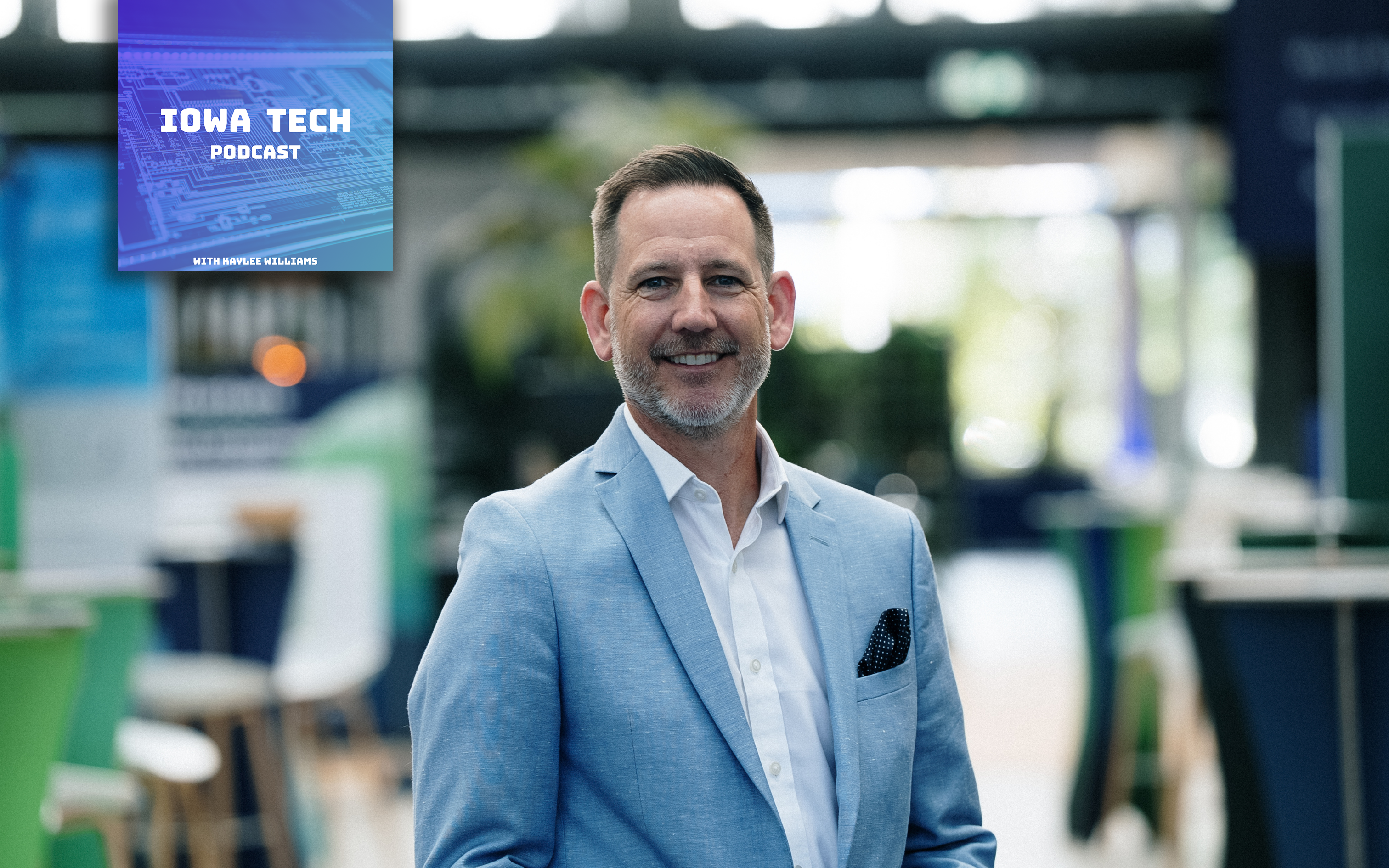


In this episode of the Iowa Tech Podcast, host Kaylee Williams interviews Paul MacDonald, co-founder and managing director of the Bio Innovations Midwest conference. Paul shares the conference’s evolution from its European roots as World Bio Markets, which later became Bio Innovations Europe, before expanding to the U.S. Midwest with support from the Nebraska Department of Economic Development.
Unlike traditional conferences, Bio Innovations Midwest focuses on facilitating curated one-on-one meetings between stakeholders—scientists, investors, customers, partners—rather than hosting lecture-heavy sessions. This format is designed to foster meaningful collaboration and accelerate the commercialization of bio-based technologies.
Paul and Kaylee discuss the need for bio-based innovations to achieve cost parity with fossil-derived alternatives. They emphasize that commercial viability is essential for advancing sustainable solutions that can address global challenges like climate change, pollution, and resource scarcity.
Rage-free Iowa news in your inbox
Justin, David, & Kaylee cover Iowa news, agriculture, business and tech. No clickbait. No agenda. If you support our vision, subscribe today!
Looking ahead, Paul outlines the global expansion of the Bio Innovations brand. In 2026, Bio Innovations Midwest will rebrand as Bio Innovations North America. Additionally, a new conference—Bio Innovations APAC—is planned for Singapore, chosen for its strategic position as a regional business hub and its partnership with Synergy, a local synthetic biology initiative.
Paul also breaks down the bioeconomy into five key stakeholder groups: biodevelopers, community enablers, investors, brands and buyers, and suppliers. This segmentation helps demystify the sector and encourages broader participation and investment.
The episode ends with a call to action for listeners to attend the upcoming Bio Innovations Midwest conference. Kaylee and Paul share a belief in the transformative power of technology and encourage innovators to connect, collaborate, and turn scientific breakthroughs into real-world impact through the bioeconomy.