

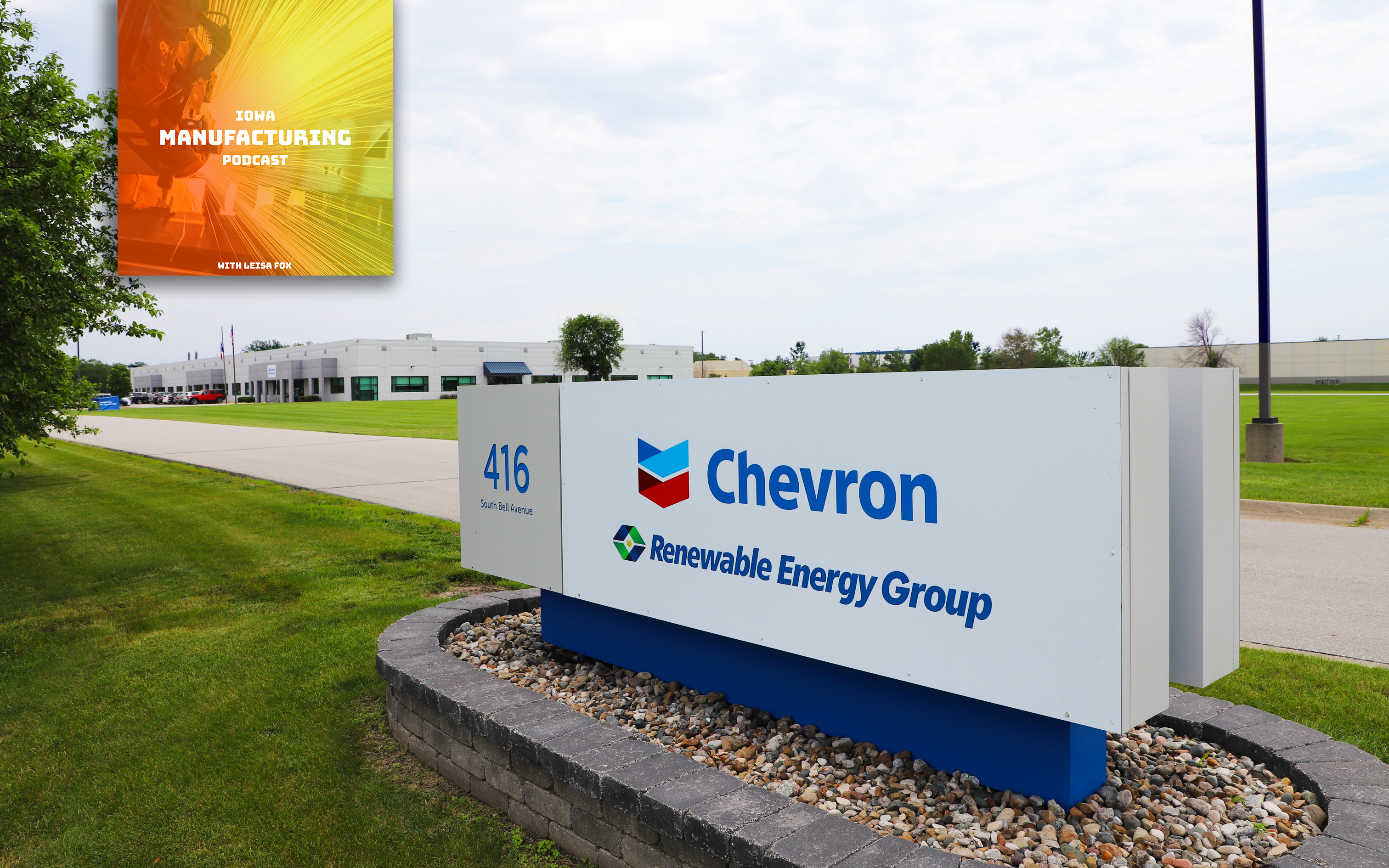


In June of 2022, Renewable Energy Group was acquired by Chevron, a global energy company. The roots of Renewable Energy Group go back more than two decades when the company operated under the umbrella of West Central Cooperative in Ralston, Iowa. The biodiesel industry was still in its early stages when the company produced its first batch of biodiesel in 1996.
Hear from Iowans directly. No algorithms.
Don’t let the algorithms choose your news. Enter your email address to hear directly from Iowans leading news in politics, community, agriculture and business. No editing. No clickbait. No rage. No agenda.
Coupling REG’s deep roots in renewable energy with Chevron’s extensive resources leveraging its strengths to safely deliver lower carbon energy to a growing world makes perfect sense. Their capabilities, assets and customers are distinct advantages. They are building on those strengths and aim to lead in lower carbon intensity oil, products and natural gas and to advance new products and solutions that reduce the carbon emissions of major industries.
Join Stacey Orlandi, Director of Manufacturing as we explore the reasons REG was the right company at the right time in Chevron’s growth in renewable fuels and how well things are going. Stacey, one of Iowa’s few female manufacturing leaders, talks about Chevron’s intentional work toward bringing more women into the workforce – especially in leadership roles. Mike Wirth, their CEO, is walking the walk by very deliberately recruiting amazing women onto their Board of Directors. They are now one of few manufacturing companies whose board make up is 50% women. Stacey discusses how they are making Chevron a workforce destination in Central Iowa by making it a great place to work for all types. With meaningful work for those right out of high school through PhD level graduates, Chevron’s attrition is negligible and opportunities are great.
With strides being made in Carbon Capture and Storage, Hydrogen and an even deeper dive into renewable fuels, the future is bright. They aspire to achieve net zero upstream emissions by 2050. Accomplishing this aspiration depends on continuing progress on commercially viable technology; government policy; successful negotiations for carbon capture, utilization and storage (CCUS) and nature-based projects; availability of cost-effective, verifiable offsets in the global market; and granting of necessary permits by governing authorities. Their presence in Ames and the depth of resources available through the acquisition makes these aspirations all that much more achievable.