


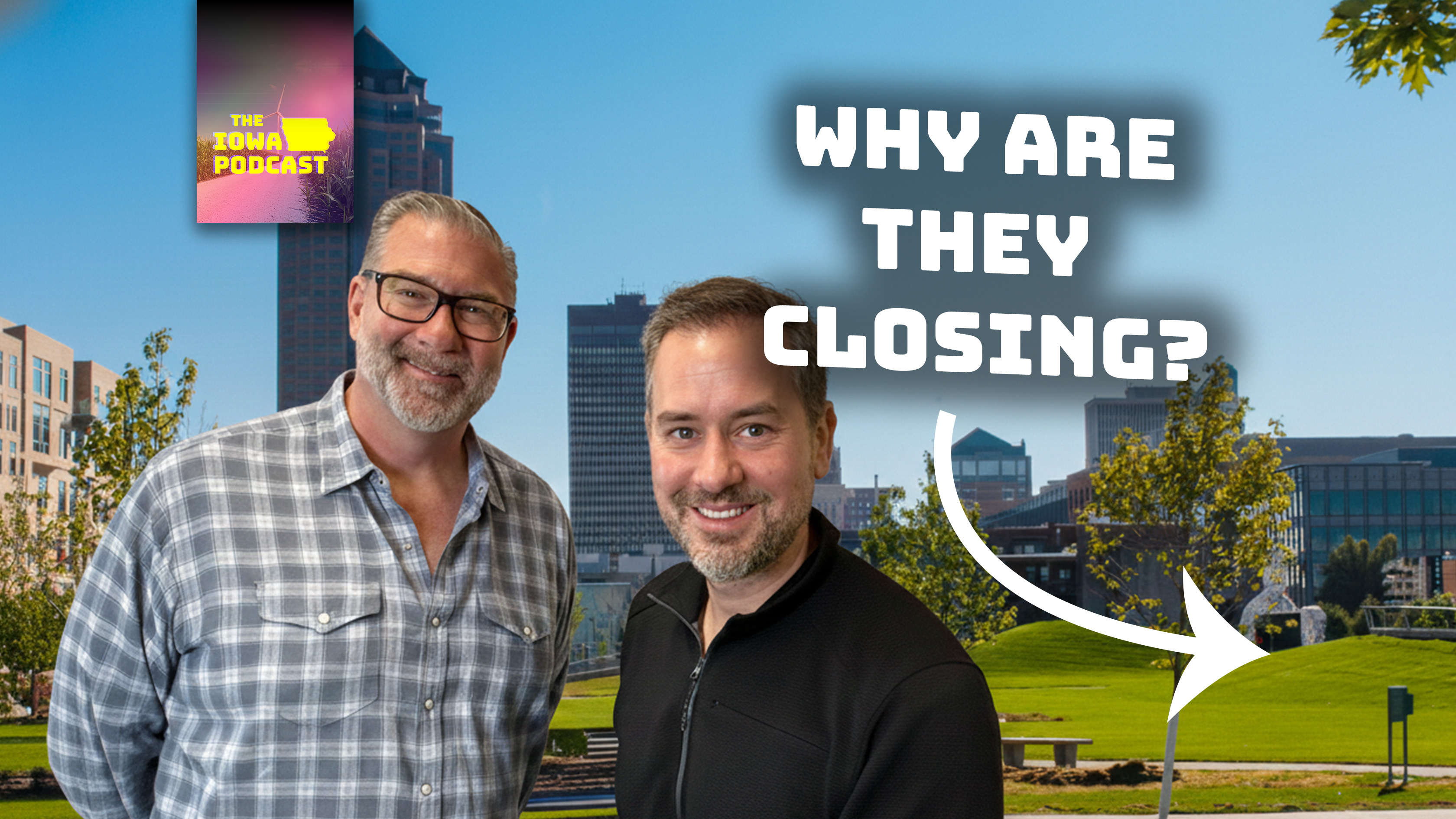


Americana and Django, two iconic Des Moines restaurants, are gone for good and they’re not alone. 600 restaurants in Iowa will be closing in 2026 and it’s because the challenges are too many to count. Scott Carlson, owner of The Craft Beer Tent, and Gilroy’s opens up about Americana’s closing.
Increasing taxes, work from home, zero-proof, changing food preferences, homeless population, increasing food and labor costs, regulatory burdens, food delivery, and rising insurance rates are just a few challenges most restaurateurs have to deal with. But Iowa eateries are dealing with all of them simultaneously. Carlson breaks down what happened and what needs to change.
Hear from Iowans directly. No algorithms.
Don’t let the algorithms choose your news. Enter your email address to hear directly from Iowans leading news in politics, community, agriculture and business. No editing. No clickbait. No rage. No agenda.
Interview Transcript
This transcript was created with help from Ai. Please report errors to us and always refer to the video as your primary source.
Justin Brady: Real Iowans, real Talk, no drama. This is the Iowa Podcast, and of course, I’m Justin Brady in the Jet Roses Barbecue Studio. W W what’s going on with Iowa Restaurants? Uh, Iowa Restaurant Association says 600 are going to close. That’s 10% of the entire industry, 10%. Now, we normally see these numbers with like first restaurant restaurants who’ve been open a short time a year. They don’t make it. That’s, it’s pretty normal. It, it does not happen in Iowa when it’s a bunch of industry icons. Django gone. Pancake gone. There are, I have a list. I’m not gonna run through the whole list, but They W there, there’s a problem. And, uh, Americana, another iconic establishment right at the Western Gateway Park, one of probably Iowa’s most iconic locations is also closing as well. And we’re gonna figure out what’s going on with Scott Carlson, the owner of Americana. And. You’ve also are the mastermind behind Gilroy’s and still open, obviously,
Scott Carlson: Still open, yes. Hi everybody. Hi everybody.
Justin Brady: and of course, uh, court Avenue Brewing. You were the operational partner, so you were the brains behind it, not necessarily the owner at that
Scott Carlson: time. Right. You
Justin Brady: since, uh, left that organization as well. Yep. Started that, uh, turned that over. But, um, I guess I should start broadly with. First of all, Americana was, for those who haven’t been, it was an iconic glass western gateway sculpture, park, leather seats, cool bar. The whole vibe was incredible. And so for that to close down what happened,
Scott Carlson: You know, that, that’s, that’s a complex question, right? It’s deep. It’s deep and long and and, uh, and we’ll probably touch on all those things today, But, you know, for us, if you’re gonna talk about just Americana, it Just happened to be the location, right. It was, we were open 14 years. you know, had a really great, Great. 12 years, right? And the last two were challenging, Uh, we actually had a, a wonderful year. of The year after COVID, you know, when, when people came back out, you know, to restaurants. Um, but then we started to dwindle pretty quickly, um, after
Justin Brady: COVID,
Scott Carlson: even after COVID, so, uh, and a lot of it, was, it was a multitude of things. right? So people wanna say what? happened, right? What was the thing? And it wasn’t one thing. It Was a lot of little things like you know, a death by a thousand cuts. Right? You know, people will say, But you know, we, we, you know, nationwide never returned. Period.
Justin Brady: Mm-hmm.
Scott Carlson: Right. True. Um, Wellmark, I think is back to one day a week, come and go. Never even occupied their building,
Justin Brady: They never did? No.
Scott Carlson: No. I think there was, Oh. I think there was like 50 people. you know, but Not the 300. or, you know, 300 plus. And, and I think it’s down to like, 15, you know, now, um, uh, Meredith sold during that time and and it, you know, it was cut in half and I think it’s been cut in half again. Uh, Mid-American Energy Good, good. plus moved over there, but that took a while. You know, for them
Justin Brady: they’re still working on it. If I drive by, it’s still,
Scott Carlson: and they’re still, but they’re there so that whole neighborhood just kind of dwindled as far as corporate, you know. um, motion and behavior. So we lost, you know, corporate lunches. We lost corporate happy hours. We lost corporate, you know, gatherings. We lost corporate celebrations. We’d lost, uh, freshman classes, right? You know, The the, the new the new employees that come to Nationwide don’t come to Nationwide. They’re, they’re stay at home, so there’s no 15, 20, 30 freshman, you know, members of the, of the, of Nationwide’s new employees, uh, used to come and have a lunch for the first week. You know, they could, they Get to know each. other. They don’t do that anymore.
Justin Brady: Oh gosh.
Scott Carlson: Right? And then if you. had a retirement party or you had a big success or a big sale, you’d come and have happy hour and have a big banquet afterwards. They don’t do that
Justin Brady: Mm. Um,
Scott Carlson: you know, and with and so all those, all those pieces, just kind of started to go away.
Justin Brady: so I didn’t understand how much of a role that businesses played downtown businesses played on downtown restaurants. Right. Which, I mean, now that you say that makes sense, but you have all these downtown, basically people were coming out for lunch and people after they were off. Work. Or like, what a crazy day, I’m gonna have a drink, maybe hang out with my friends. Maybe even, you know, your corporate team, you would go out and have drinks. So all that with COVID just ceased to exist. And then, And, on top of that, we have seen, we had, um, Rick Tolson in here, Hubble. Yes. And he was saying. Dude, and this is my summary, dude, downtown has just been carved out, right? And so there have been some people moving in the residential units, but that’s a totally different crowd. And those aren’t the ones putting butts in seats.
Scott Carlson: And we love, you know, we always say the Reg residential units, those are our regulars, right? Those are the ones that come in and, you know, come see us for Sunday brunch or come see us For Monday, happy hour. Right? That they, and they’re great, right? But they’re you know, they’re spending their dollars. And as we know, the economy’s tough right now, so when they spend their dollars they’re a little more. you know, cautious with them. If you have a corporate credit card, Whole different kind of crowd and clientele. Um, we love ’em all, but we kind of need all three legs of that stool to make it. work. But then, you know, the homeless population has really increased. Americana happens to be just a couple, couple blocks from the homeless shelter. So that became, you know, kind of a problem for, for us. Right. We, We were very compassionate, all of our banquet food on Saturday, and Sunday after our big banquets, we would send over to the homeless shelter. Right? so we were good partners. Unfortunately, the homeless population got so hard that they became problematic to us,
Justin Brady: Mm,
Scott Carlson: Mm-hmm. You know, using our bathrooms. to shower in, coming into the restaurant, asking for money, you know? that kind of stuff. and nothing. we were we’re compassionate, right? So. We were trying to work with them. It just became you know, problematic for us. You know. Then they closed the streets for all the street parties. Right. Which we are supportive of all street parties. but However, it got to be really problematic. In the summertime, we sometimes had two or three back to back weekends. right. And weekends are our busy time. But if you can’t get to us, it’s hard to come see us. Um, and then We had construction. You know, they closed down our street for a while when they were trying to, you know, work the, the bridge from, from Fluer. Right. So we kind of lost our traffic from to and from like the airport, which was kind of a nice little piece for us. Mm-hmm. Uh, you know, if we’ve got a come picking up, somebody from the airport that’s coming in for corporate and
Justin Brady: swing
Scott Carlson: they’d come by and have a drink. And dinner on the way in. Right. So we lost that. Um, Our building had some major plumbing issues, um, and we sit in a pad. there’s no basement, so they’d have to tear into the restaurant to fix that plumbing. Um, so for us, Americana wasn’t one thing. Right? Yeah. And there’s, there, there’s a lot of factors to it, but we didn’t see, you know, we could probably, could we survive a four to eight week shutdown for plumbing? Maybe in a good, environment, but in a bad environment. it
Justin Brady: with the other issues in the Western Gateway.
Scott Carlson: So all those things kind of together, um. Or why Americana closed. Yeah. Right. But if you, look at the big picture, if you really want to know, kinda why restaurants are closing, you have to go back pre COVID and, and what really started the issue. and Probably the, the, the, what you see is problems today as far as, the massive closings is the Amazon effect. so when, when Amazon started to take out the mom and pop. You know, card shops and the, and the pen stores and the handkerchief stores and the bookstores and all the things that you would go and you know, maybe spend some of your dollars at when you could buy ’em on Amazon for cheaper and they delivered to your house, you know, the pet sh the pet shop stores, all those kinds of. things. You know, those buildings are still being built, right? by Developers and the ones that are built still need to be occupied. So the realtors had to fill ’em. That’s their job. My job is to fill the space. Yeah. Well, if you can’t fill it with traditional, retail. You fill it with what you can, which is things you can’t get on Amazon. I can’t get a massage on Amazon. I can’t get my hair cut in Amazon. I can’t get my nails done on Amazon. I can’t get my karate lessons on Amazon. I can’t get my. Bar, you know, drinks in Amazon. I can’t get my food from Amazon. So all of a sudden. they Started to push for those kinds of uh, uh, renters, which then made overbuilt really quick. Right? All of a sudden, more like every, I, I would say pre COVID. I got a call once. a quarter from a real, real real estate, uh, developer saying, Hey, I’ve got a great spot coming up. You know, and I’d look at, I’m like, that’s a good spot, but not for me, or, that’s a good spot. Let’s, talk some more. You know, When the Amazon effect, I started getting in twice a week, three times a week, because they need to fill up the strip mall on both ends, right? I’ve got, I got an end cap on a strip mall. I’m like, of course you do. Right? And they, And they only think of it for, fast casual, a restaurant, a bar, right? There’s No other, they have no other renter for,
Justin Brady: there is an insane amount of saturation. Like one of the good things Iowans will say is, we’re really, really fortunate to have so many restaurants here.
Scott Carlson: That’s also a double-edged sword because many too many seats, not enough customers,
Justin Brady: It’s a ton of things, and so we’re seeing kind of a market correction, but that on top of what you mentioned, which is the post COVID fallout. right. And how this has dynamically changed commerce. Like everything has changed. Right. Things that we took, I mean, to, to list them would be crazy. You’ve already listed quite a
Scott Carlson: Yeah. And there’s a, there’s a litany of those. things. Yeah.
Justin Brady: There’s like the work from home people.
Scott Carlson: and the delivery.
Justin Brady: Yeah, there’s,
Scott Carlson: Uber and
Justin Brady: and Uber Eats,
Scott Carlson: and they take roughly 35%.
Justin Brady: Right? People don’t know that they
Scott Carlson: a We’re a nickel business. So for every dollar that you spend in a restaurant, a restaurant only makes about a nickel.
Justin Brady: right? I think it was half of restaurants in Iowa right now aren’t making a profit. They’re
Scott Carlson: I would say. correct. Yeah. It’s,
Justin Brady: It’s, uh, I think that was more Iowa Restaurant Association data. Thank you. Jessica Dunker
Scott Carlson: Dunker. Yep. Yep.
Justin Brady: Um, you, you did mention we’ve, we talked a few times about after work drinks and people and, and habit changing the zero proof movement, I think is another thing. Health is great, but facts are facts, which is I think a lot of bars and restaurants, a lot of the revenue does come from the bar. Correct?
Scott Carlson: Absolutely. so and so
Justin Brady: I know the zero proof movement has also thrown, uh, the industry a curveball. And I will say Iowans, for whatever reason or more, are, are heavier drinkers than other states. And so maybe that is another reason Iowa restaurants are feeling kind of the burn a little bit more than other states are
Scott Carlson: For sure. Um, you know, and it’s, and also there was the complete meal right? People would come out and have appetizer, maybe an entree and split a dessert. We’re split an appetizer. have an entree and split a, you know, and have, And have each a dessert Um, those, because of the economy. We’re losing our de appetizer sales. We’re losing our dessert. sales, right? You might Have water and not a pop, right? Because everything’s gotten expensive. So all, and we make money on things like, Pop or iced tea, we make money on things like dessert or appetizers. Right. So, you know, we we might still have the but in a seat, but that. but’s not spending this money dollars. Yeah. Right. And if you couple that with, uh, DoorDash and Uber and you couple that with people working from home and you couple that with, you know, lots of different things, you know, those are the things that you’re starting to see why restaurants are deciding to say, Hey, it’s time for us probably not to be. Open any longer. that was, and that was our case for Americana. Probably the same case for Jango, you know, that that’s going on. Right. Um, and so I think there’s gonna be a switch. We’ll, we’ll Des Moines figure it out. I hope so. Right. But it might be a few years, right? It might be longer than that. I Hope not.
Justin Brady: I, I think the fear is when Americana went, I think people are like, whoa, what’s going on? That’s not ’cause it’s Western Gateway. This has been like Cedar Rapids, uh, Des Moines. They all have their, like areas that are like the area. I can’t, I’m, it’s Iowa City and Cedar Rapids have one too. Um, but uh, I’m not gonna name ’em all ’cause I’ll like, I’ll tick somebody off is what’s gonna happen. Right. Um. But I think when people look and they’ll say other restaurants, well they’re closing. I mean, that was a tough area and or that was, but now it’s two. It’s two neighbors, right?
Scott Carlson: And we loved our area. We love that
Justin Brady: all the time, like as far as ambiance and servers like it, you don’t get better than that in the state. You know, like those kind of iconic locations, you don’t get better than that. And so I think that there, this should be a warning sign to a lot of people in the legislature, but also consumers about, Hey, this is something you need to pay attention to now. Right. And so the, like what are some of the more of the. Systemic issues that are even addressable? Or is this kind of one of the whole, the economy is shaking out and we gotta watch where things fall is, I mean, I don’t even know if anybody can do anything about it,
Scott Carlson: you know? there’s, there’s, I think you hit the, you nail on the head. I think our legislators, especially local Des Moines, Polk County. Right. I mean, I, I don’t think they understand small business. They, they certainly don’t understand how restaurants and, and bars really work. Right. Um, I think they focus on big pieces of the puzzle. Principles, Meredith. Sure. Nationwide, things like that. And, and
Justin Brady: leaving though.
Scott Carlson: Right. And I appreciate them too. You need the big pieces of the puzzle. to make the small pieces work too. Of course. Yeah. Um, however, I think they lost sight of small business. Right. And so I think, you know, they’re, they do, they have to kind, of. Think about that a little more deeply. You know, maybe talk with Jessica Dunker from the I Restaurant Association on maybe some solutions and some ideas of how to regenerate, um, business. But I think, you know. I’m, I’m, I sit on the National Restaurant Association Board. I say the other NRA, the the fun NRA. Right? Um, and so, uh, uh, we have an economist that sits on that you know, works for that association, nationwide association, and he spoke to us, at the board meeting a year ago, and I felt like he was talking to me. Right. And I and I went and found him afterwards and I said, my goodness, I feel like you’re talking to me. And he is like, Scott, Are you a are? He goes, there’s two kinds of cities in the country right now. Two with some exception, but. two, if you Left COVID quickly. you’re booming. If you left COVID slowly. you’re struggling. And he goes, What kind of city do you have? And I said, oh, I think we, we left slower. We were sluggish on the way out? And he goes, then you’re gonna probably struggle. That city will struggle. And he didn’t really name much except he goes. he used a little bit of Detroit in the, in the, in the conversation when he was speaking to, to us as a, as a, as a board member. Meaning he goes, here’s what’s happening. The city themselves are losing their big corporate. Uh, buildings, and they’re big corporate renters, and they’re big corporate kind of earners. Mm-hmm. And they’re, and they’re either downsizing and leaving or going back home. hence, when those buildings get reassessed for taxes, those cities are freaking out. He goes, just so you know, we’re getting the information from these cities. So everything I’m telling you, so the cities know this, they’re just not addressing it now. Right? Right. And he goes, so What they’ll do is they’ll start to, raise rents on warehouse spaces. People’s homes. I dunno if you live in Des Moines or Polk County Rent, I mean taxes have gone up dramatically. ’cause they need to make up They want to make up the difference. And the corporate buildings paid a huge chunk of those taxes. He goes, and then what you know what’ll happen is those. homeowners and those small businesses and those small warehouses will kind of pick their head up eventually and say, do I need to live here If I’m only working at Wellmark one day a week? Can I live 25 minutes away and only commute one day a week to work and maybe get out of Polk County or go out of the city for, you know, a little cheaper taxes or maybe Dramatically cheaper taxes. Of course. Yeah. And then what happens is the buildings that just lost value four or five years, four or five years. later, the homes lose value because people are leaving, not arriving. Yeah. Because that’s when Des Moines gonna have a real problem.
Justin Brady: It’s already happening.
Scott Carlson: It’s happening. Right. And So, and he goes, Scott, but they, they know this. They just are addressing those, those concerns right. Now,
Justin Brady: Is there something they can do? Like if, if you were able to get, and I’m not saying left or right ’cause I actually don’t even know where this goes. Um, but is there something they can do? ’cause um, like is it as simple as, uh, are they overregulating restaurants and taxing ’em up the wazoo and it makes, um, ’cause you know, regulations are. But it’s a double-edged sword. Like anything else, there’s balance that’s needed. You can overregulate, you can under regulate. So is there, are there things that they’re pushing onto Iowa restaurants that are making it really, really hard to operate?
Scott Carlson: You know, restaurants in general, And, and, and Iowa’s a little tougher state than most, um. But restaurants in general, if you look, at our code book, so the code that we get to be a, to operate a a restaurant is almost as thick as a hospitals.
Justin Brady: oh gosh. Right.
Scott Carlson: So and, and That’s because they wanna make sure we’re serving safe food. Yeah. But it’s Become very, you know, very difficult. Right. um, but then if you look at, like, the DR shop laws, those are the liquor liability laws that are for Iowa. They’re really a terrible written law. I’m not saying they’re not meant to do good things. but
Justin Brady: I had a nickel for every time I’ve heard from a, a grocery store person, a retailer restaurateur about how stupid liquor laws are in this state, I would have a billion dollars. Like I hear so many problems with that.
Scott Carlson: that. right? It’s very expensive. And if you think or if you go back to your own personal wallet, You’ve seen your insurance go up, your car Insurance, your home insurance, your health insurance, your dental insurance, your vis, whatever you have for insurance is increased. Well, restaurants take that by. Mm-hmm. Because we have liquor liability, consumer liability, uh, renter’s liability, ownership liability, um, you know, fraud liability, I mean, sure. On and on on and and health insurance and all those things. And Those. those costs have just gone ballistic. Right. Um, since CO credit card companies, mostly MasterCard and Visa have raised their fees. 70% what? 77 this is.
Justin Brady: is, Okay. This is interesting because we have seen some people have started to see on, see on invoices that people are adding credit card surcharges. Right. And I know any new fees make people mad, but you’re saying guys, we’re adding like a dollar or 2% fee at this point, which is great because our fees have gone up 70,
Scott Carlson: and We can’t keep up. Yeah. So, and we’re doing the same thing. with, with the fees. And so, and, and On those fees. I don’t, I don’t know if the customer always thinks about it or the public thinks about it. We pay the same fee on sales tax. We pay the same fee on the gratuity you leave on a credit
Justin Brady: Mm-hmm.
Scott Carlson: So we’ve even asked the legislator, Hey, could we, could we? get reimbursed for the cost of collecting sales tax? Hmm, sure.
Justin Brady: Mm sure.
Scott Carlson: It’s in the 20, 30, 40, maybe $50 million that we, that we pay in fees to Visa and MasterCard to collect sales tax.
Justin Brady: and they’re just like, no thanks. Well,
Scott Carlson: they’re actually, cons thinking about they’re, they’re thinking about it. Or could you pass legislation saying. ma MasterCard, visa can’t charge the 3% on, on. on tax and Maybe gratuities, right? right. People’s income. Well, ultimately,
Justin Brady: if like, so for those that don’t know, banking laws regulate a lot of this. And so it’s very, very, you can’t just go out, even if you have tons of money, you can’t just go out and start a new credit card company. So competition is limited and competition’s probably not changing anytime soon. So when you have a few. Players at the top that control everything. They can do whatever the heck they want. So that’s a problem. If we had different payment options that were legal, that would, you know, and I know a lot of people think crypto’s the answer, we’ll we’ll see. Um, but yeah, the, the chain, the, the, the downward pressure, I think a lot of Iowa restaurants face is, is. Is getting close to insurmountable. And so seeing two iconic things close and like I said, uh, 600 are gonna close this year. There’s a long list of very, very, uh, loved restaurants in every Iowa city that are gonna go away, or, sorry, have already gone away in the last. Six months. I actually had a list, but I don’t have that anymore. But, um, even Jeff Bruning, you know, Jeff, I think pretty well. He’s the
Scott Carlson: they do great work. Songs
Justin Brady: buzzer, Billy Royal Mile Chicken Hessen house. He even did an interview on Channel five, I think, and he’s like, guys, we’re really buttoning bating down the hatches right now. It is, basically, it is rough. And so the other thing is, and I, I, I’m. I don’t know if this has kind of bubbled over yet, but I’ve seen in the last two years, really hot in the last year, of course, with uh, Bobby Kennedy announcing he was officially joining the Trump ticket. We saw, whether you like that party or not, doesn’t matter, but we, even the Super Bowl now, we’ve seen a lot of ads for changing food preferences, preferences, the fight against glyphosate in Florida now, the fight against seed oils, um, the fight against food dyes, all these things that are. Most people don’t know actually really hard to completely eradicate and the whole supply chain’s gonna have to change if we go that route. Were you starting to see customers, food preferences change? Is that maybe another reason people are like asking a lot of questions or being more selective or cooking at home?
Scott Carlson: I would say we’ve always had, those concerns and we always try to react to those. I mean, that’s what restaurants do well, right? I mean, you know, we, we, we. as restaurants are always trying to accommodate. What the public wants, right? So, um, so I’m okay with some of those things. We, we, we can, we can make those exceptions. Now. Now, when limes got super expensive and avocados got super expensive. that’s hard to adjust. Right. You know, quickly to those, because we can’t change our menu just off the bat, you know, very easily. Or beef or chicken or butter or, and if, and for a while all those things were going up. that was before Terrace too. I mean, those, those things were just going through the roof, right? And so, and we just can’t raise our prices. Fast enough, you know, to, because it’s just, it’s, it’s a shock to the, to the customer. And again, the customer is starting to feel the pinch. So we want to be very selective on how we, you know, pa pass those prices on. And, and, and Jeff was right. We’re we’re, we’re we’re batting down the hatchet, we’re tightening our belt right to, to make those things work. But eventually they don’t, Django, Americana, you just say, Hey, it’s probably we can’t tighten our belt anymore. And. charge enough. We can’t get enough customers in the door. to make it work. Um, one of the things you haven’t talked about. which has been Actually talked about in, in the IO restaurant Association with Jessica Dunker, but also on the national Restaurant Association, is the Ozempic effect, you know, the, the United States and the world We’re starting to take, you know, the, the, the, uh, uh, I’m not sure what the
Justin Brady: GLP
Scott Carlson: GLP ones. GLP ones, right. Um, and there are, they, they they, and they’re starting to feel that they, they solved more than just weight. I mean, they’re obviously for diabetes right, to start with, but they’re now saying, Hey, they’re anti-inflammatory. They feed the liver, they don’t hurt the liver. I mean, there’s, there’s, they’re starting to find that there’s more. benefit for those things. But What they do do. is take away cravings. Mm-hmm. So if you’re gonna go out to eat, you may have just a small meal. You might split an entree if you’re both on a GLP one, Um. You when, when, when you lose your cravings, you also don’t maybe want that Manhattan or you don’t want that class of wine ’cause you don’t have that craving. for it. And so you say, Hey, maybe I’ll just go with water Or I’ll just go with iced tea. And so those are starting to, and they, you know. in fact this and that. I think a year ago they thought 4% of the population was on a GLP one a year ago.
Justin Brady: Oh my gosh, that’s really high
Scott Carlson: know. that’s really high I don’t know what that number is today. Is it 10% good. So, you know, those are the things that we’re also trying to, figure out. So we have gone, and you, you kind of talked about it, we have gone to like talking about do we do lower alcohol drinks? So instead of an ounce and a half of, of vodka, we do three quarters of an ounce. Sure. Right. So you still can have, a little bit of a fun, you know. you know. You know, alcoholic drink, but not, you know, as much alcohol. Do we, do we do, we take our entree size and cut it down. We don’t wanna make the, we don’t wanna make the plate look small, but do we take it down? Because people just aren’t eating as much. So We’re always adjusting. right? we’re always listening to our customer. interesting. We’re always, you know, trying to figure out what, what, what we’re doing. You know what,
Justin Brady: and you’ve been like, you’ve been in this game so long and you have such a great track record and you, I’ve watched ’cause, um, court, avenue Brewery, when you owned that, I was there all the time. I, that’s
Scott Carlson: turns 30 this
Justin Brady: Yeah, and I, I like did lunches, business lunches there all the time.
Scott Carlson: Right. Very cozy.
Justin Brady: I noticed that you would change, you would adapt things, you would adjust things. But when you have like eight major trends happening within the same year, it like, if you adapt to that, you turn off customers. ’cause they’re like, whoa, this is a completely different restaurant. So it’s kind of that, that balance that you have to hit.
Scott Carlson: We wanna take, care of vegetarians, we wanna take care of low carb, we wanna take care of gluten-free.
Justin Brady: another thing
Scott Carlson: all, we’re always trying to adjust, you Know to, to what we, hear. Right? And so there’s ozempic things you’re starting to see
Justin Brady: goodness, I didn’t even think about that. That’s like an, that’s like 10, I’m gonna have to go back through this and like lay like, like list out all the trends, but that’s another one is gluten-free. And now of course Florida’s talking about glyphosate and vegans, vegetarians, carnivore, like, holy cow, man. There are a lot of different food trends, right? And so we’re in the middle of like a food civil war at this point. Some people are pretty passionate on both sides. Like we have.
Scott Carlson: I remember when they took away. uh, lard and cow fat, right. And,
Justin Brady: And now we’re putting it back in Tallow.
Scott Carlson: I remember when we used tallow. How great, the french fries.
Justin Brady: Oh, dude,
Scott Carlson: great the Fried chicken. was. How anything that was fried. It’s unreal. It was So good. And when they took that away, I remember we had to figure out how to make it work. really, I mean, ’cause we were like, wow, soybean. oil is not the same.
Justin Brady: it away,
Scott Carlson: couldn’t use it anymore. It was no longer a allowed, we were no longer allowed to use beef at
Justin Brady: Wait, what? When did this ha, was this a, a local law
Scott Carlson: it was nationwide. So we weren’t Nationwide.
Justin Brady: They banned beef tallow. yeah, yeah. When was this?
Scott Carlson: During the, cholesterol kind of health?
Justin Brady: actually banned it. I thought they just were like pushing other
Scott Carlson: Oh no. So we couldn’t, we couldn’t even use it. So we had to go to, like canola oil, you know, seed oil. So we were forced to use these other oils, soybean oil, you know, corn oil, um, you know, all the, you know, so we, we had to really readjust and it, also had a lower burn temp. So it didn’t last as long. it cost more money you know, all these things. And beef towel was just super cheap and super flavorful. I remember, uh, going to Europe, you know, and, uh, more or less Slavic countries. And they were still using beef towel and I mean, I’m like, I just want to eat french fries. oh I just want, I just want eat French fries
Justin Brady: crunch man. Right. Ugh.
Scott Carlson: crunch, The flavor, everything about it, you know, so it was, you know, and, and there’s such a, there’s a high, there’s so much beef fat out there that. that it, it was a very inexpensive product, you know, to, to get your hands on at the time. Right. And So, you know, so I think you’re gonna start to, as you’re gonna see, that’s coming back.
Justin Brady: is coming back. Yeah.
Scott Carlson: You know, margarines are going away. right? You know, the things that we’re, supposed to save us are now are not good for us. You know, in the current, and as they always say, science isn’t, isn’t, exact. It’s always evolving, right? So things always change as they get, new information. So again, we have to adjust to those, those things as well. But we liked, I mean, I remember when soybean oil came out and corn oil, I was happy to support Iowa. right. I mean, I was like, all right, let’s. try the soybean. Let’s see if we can make it work. You know, let’s see if we can make this thing, you know, I like to support anything that’s coming outta the state of
Justin Brady: Yeah, and I should say like we’ve had, um, agricultural paper and people in here before and they’re like, come on. They’re like, if, if soybean oil ceases to exist, they use for soybeans is so I, I was talking with the World Food Prize people about this and we had a soybean farmer and he’s like, they used for, we use soybeans and asphalt, we use soybeans and ink. We use soybean because there are so many uses
Scott Carlson: It’s become tremendously useful. Yeah. You
Justin Brady: it’s like, it’s like, okay, sure. If you’re not even gonna use it in for oil. There’s so many uses for soybeans and corn. They, they, you know, ethanol, all these things. Um,
Scott Carlson: and there’s been a fight, you know. one of, one of the things that make things that more, even more expensive, which I think people don’t think about and you just reminded me, is there was a fight, you know, stop using food for fuel. Right. So stop using it for oil. Stop Using it for. ethanol because as we sell corn and soybeans to ethanol plants, as we use corn and soybeans for oil, you know, food prices go
Justin Brady: Sure.
Scott Carlson: Right? Because there’s a Competition for the, product. And so there was a big talk saying, Hey, can we slow down or stop using food until it becomes, you know, some better science, you know, for, but Right now it’s costing so much money it has to be subsidized, right. To make it work. which then makes the cost of corn go up, which if the cost of corn grows up, chicken go up. Yep. Beef goes up. Yep. You know, hogs go up because you know, they’re, A
Justin Brady: of that is grain finished or grain fed, right? Mm-hmm.
Scott Carlson: More money ’cause they can sell it to a higher price. to the ethanol plant than they can, you know, to, you know, to the farmer, you know, and that kind of stuff. Right. So there’s been a, that fight kind of. on, you probably don’t hear it as much, but the fight for food, I hear it on the, on the National Restaurant Association because it affects normally their franchisees. Franchisees, they’re buying bulk beef buying, you know, lots of product. You know, that’ll, and they need a, they have a really small margin.
Justin Brady: Right. So looking back and, and for, you know, Gilroy’s, uh, of course West Des Moines, the, it’s so funny, Gil. Basically Gilroy’s is a restaurant themed around a ginger,
Scott Carlson: It is. Yep. Gilroy loosely means son of a redhead in Gaelic. loosely, loosely. absolutely And, and My partner over there, Carl Wertzberger is a, slender, it’s a redhead Yeah. ginger, Right, right, right, right. And so we were just coming up with names and that just, that one just, seemed, and we actually talked about, do we call it Gingers? But we didn’t want to confuse it Does that sound like an Asian restaurant Does that, that’s great. Does it sound like a bar, right? Yeah. We didn’t, We didn’t, we, so we, Gilroy just kind of stuck because it was more unanimous. Right. The people didn’t really know exactly what it meant. But we could tell you if you had, if you asked what Gilroy meant.
Justin Brady: so is there like advice you’re giving for yourself through this? Like what is the strategy to continue and for other restaurants popping up in Iowa? Like are there lessons learned? You know, if you could go back four years ago and say. Scott, these things are coming adapt now or is it just like, we didn’t even see these things coming. They popped up. So like what is the advice for Iowa restaurants to stay
Scott Carlson: So if you were going an industry icon here if you’re going back in time? if we could have reoccupied quicker. Right, if the city would’ve got reoccupied very quickly and got people back to work in their offices and back to work downtown And just became, that became the, the the old normal quicker. Um, but by the way, I get it, people were nervous. and scared and there was a Lot going on, a lot of information out. there. So people were doing the best they could. Companies were doing the best they could. Employees were doing the best they could. So I’m not pointing any fingers here. Um. But if you could have reoccupied quicker and got back to a normalcy, things would’ve been better for Des Moines. Right. But that didn’t happen. So now like. and, and, and again, our economists from the National Restaurant Association kinda hit on the head. It’s the Golden Circle. And the Golden Circle isn’t Miles, it’s minutes and it’s 25 to 35 minutes. It’s the Golden Circle Waukee, far out West Des Moines. Mm-hmm. Norwalk, Ankeny Altoona, right? Because if you don’t have to go. to your office downtown Des Moines, but one day a week. You might as well live where it’s more affordable. So now Restaurants are kind of going to the golden circle, so they’re gonna open up about 25 Palms theater. Right. You know, thing if you kind of go to those kind of areas. you’ll start, Oh, these restaurants are doing pretty well. That’s ’cause I’m living there.
Justin Brady: Yeah.
Scott Carlson: Yeah. And I’m only working, I’m only working from my home. I’m only working downtown one day a week and I’m working from my home, You know, for the other four, right? I can now meet my friend. for lunch or have a a, a one-on-one business meeting, you know, at a local restaurant in, you know, close to my neighborhood or I can meet my family out, you know, for dinner or I can, you know, go to the movie closer and have dinner there, right? And all that kinda stuff. So that will be the golden circle. So if if you, if you, If you’re a restaurant today, you know, and if you want to open up a restaurant, I would say hit that golden circle and it’s not Miles, it’s minutes. So it’s about that half an hour because that’s, that’s that. That seems to be the break point. Even if you’re gonna work one day, maybe two days a week down in your office, in the city, You’re okay doing a half an hour commute. Or up to a half an hour commute. That’s about the break point You don’t wanna do an hour that’s too long, you’re not gonna go to Newton. Right? That’s a little too far. Um, but you’re gonna hit those kind of, you know, that circular kind of area. And then, Let’s face it, Polk County, Texas are, expensive, right? So, You know, if you get out of the county, all of a sudden you realize you’re, you’re, you’re. Your house taxes are a third less. mm-hmm. Right. The school part. of the taxes are maybe 20% less. Right. So all of a sudden you can kind of go just about 30 minutes Away and have, a little, maybe bigger home, maybe a little bit more acreage, or maybe a little bit, you know, blah, blah, blah. With a lot less taxes. yeah. And a lot less resources. You know, and I, by the way, I love Des Moines. I want people to hear that. I love this. I live in Deines, I love, and I live in Des Moines. I love this city, so don’t get me wrong, I want the city to be supported, but If you’re asking me where should a restaurant go? That’s where they should go. today. Yeah. Right. Is Hit. that, hit that kind of golden circle And find a spot there.
Justin Brady: I would also say this is a cautionary, just my own personal opinion, feel free to rebut this, but uh, my own personal opinion to any city planners would be, keep in mind when you do construction on roads and when you do major reconstructions and when you shut down roads for events or you get permits for that, you hurt businesses on those roads. And for, I think. Why am I blanking? Americana sits on Inger. Uh, sorry. Locust. Yeah. And then Panka and a couple other restaurants on Ingersoll. And we’ve seen businesses on Ingersoll Close, and a lot of them point to the same thing. I know that you pointed to something similar, which is if you’re closing these things down all the time, we can’t function even for events. When they do events downtown, people don’t come to the restaurants. They’re coming to the event and they ba and you’re the people who want to go to Americana or Django. Won’t go because there’s like, oh, that event is there. I’m gonna do it next week.
Scott Carlson: if it was just the event, that’s one thing. But what happens is not everybody knows there’s a Latino Fest or Asian American Fest, right. Or Italian Fest or Arts Festival or car show get in. Right. So what they remember, that’s where I talked, This is when I talked to my legislators or my city council, or my Polk County, if you folks. When that person leaves their. their, their house in West Des Moines and decides to come to Americana for brunch and They don’t know there’s an event. and they can’t get to us and they have a reservation. They get anxious. Yeah. Right. And they call us and we’re very patient, but we’re also trying to get our reservation stacked, Right. If you come in half hour late, then all of a sudden the next reservation at that table can’t get there. Right? If they get there on time. But we’re very accommodating. We, We, we, we can work with those things, but what happens is that person had an anxious, experience going to have brunch.
Justin Brady: they learn a
Scott Carlson: So now it’s not just, oh, is there an event downtown? I’m just not going downtown anymore
Justin Brady: I don’t even know.
Scott Carlson: I don’t know.
Justin Brady: I go half the time. There’s an event. Half the time there’s not, I don’t even know. ’cause it’s always a different organization. There’s
Scott Carlson: Or there’s Construction Right. Construction or they have a Street.
Justin Brady: Ingersoll Construction happened for like two, like five years or something just never ending. And a couple restaurants there like last year, two years ago, closed and they’re like. No one could get to us ever. Like it was always closed. And I think this is a hard lesson for cities, like if you want your restaurants that drive culture, they drive the activity, that nightlife, the restaurants are the ones that have the lights on. People are walking to it. That’s what cities want. If you want that, when you do construction projects, you need to think about the impact and the effect on the local retailers. Scott Carlson, oh, last thoughts? Last
Scott Carlson: thoughts? So we were talking about like the homelessness too. We are. We are Iowa. Nice. Right? right. And this is what I love about this. state. This is what I love about this city. But what we were finding is with the homelessness and people asking for money or people coming to your table or people in our, in our restroom, the customers always like, it’s okay, you know, I get it. Don’t worry, you know, ’cause we would kind of gently but firmly. ask them to leave. And the customer, you could Tell oh, it’s okay. And I’m Like, no, it’s, I, I know you’re saying it’s okay. and I get that it’s okay, but we have to have this person
Justin Brady: Mm-hmm.
Scott Carlson: And what happens is that person that’s very nice about it is very nice in the moment. but then they don’t come back. ’cause they had that, They had that awkward situation. And they go, you know, I can eat closer. to home and not have that situation. Right. So It’s not like they’re mad at the homeless. They just, and again, it’s, it puts a little seed in their head saying, you know, last time I did make it downtown. I was asked by a homeless person twice for, you know, money and one was at my table. Mm-hmm. Right? And so again, they just make that conscious decision. like, Hey, next time I can probably go somewhere and not have that experience. And again, they’re not mad. They don’t look at me and go, boy, I’m never. coming to Americana again. Right. But what happens is they, just don’t
Justin Brady: and that’s one of those things people aren’t gonna voice because they feel bad, right. And they’re like, this is a crappy situation. But I should also say, none of us are on 24 7, right? And when I go to work, I go to work. When I come home, I come home. We need to have a release. We need to calm down. Like I can, I can donate to the homeless programs. Um, I can, I can spend a lot of time, donate a lot of money. But also just wanna go out and have a time with my wife and not be harassed. Right. And I say not be harassed because I have been harassed downtown. When I didn’t give someone money, I was being nice. I’m like, Hey, I don’t have any cash on me, and I just got the F you. You know? I’m just like, okay.
Scott Carlson: Right. And, and It doesn’t make you. feel good where you’re going out to have hospitality. that night.
Justin Brady: you get that, you know, that does, people learn, you know, they’re like, I don’t want to be around uncomfortable experiences. And so people learn whether you like it or not, people learn to avoid uncomfortable
Scott Carlson: Right. Experience. And if you had Kids with you, and somebody uses the language, That’s hard too, right? Yeah. You know, you’re, you’re trying to teach your kids, you know. that there’s community right? Of all kinds, but sometimes you don’t want to have that
Justin Brady: Yeah. And you can tell consumers, Hey, this person’s unfortunate, and you can, yeah, good luck telling a giant swath of Consum consumers what behavior they should or should not tolerate. Right? As a business owner, what you do, what I mean, what I do on this show is we adapt what people want, right? Because that’s how we stay in business. Absolute. Scott Carlson, Iowa restaurateur, of course, give the Gilroy’s plug
Scott Carlson: Gilroy’s, the RAF beard tent. just
Justin Brady: like stacks up there.
Scott Carlson: Yeah. And you know what, And you know,
Justin Brady: craft Beer
Scott Carlson: it’s great. You know, Gilroy’s we always say is a great meeting place. You’re just outside the city and you’re just, outside the suburbs. Right. You can get Right off the expressway. right off of grand. You know, I mean, it’s an easy, easy Ashworth, you know, it’s an easy, easy place to come see us off university. So if You’re out and about. Come see us and, uh. come summer, we do live music on the patio on Wednesdays, and we’re getting there. I feel like spring’s just mm-hmm. Knocking on the, on the
Justin Brady: And I saw you’ve expanded the patio
Scott Carlson: We did. We did. Yeah. We made things a little bit bigger. a little more roomy. So, um, Yeah. Come down and say hi. We’d love to see you.
Justin Brady: Scott Carlson, thank you so much for coming on the Iowa
Scott Carlson: Oh, thank you for having me. Cheers.