



Audio version:
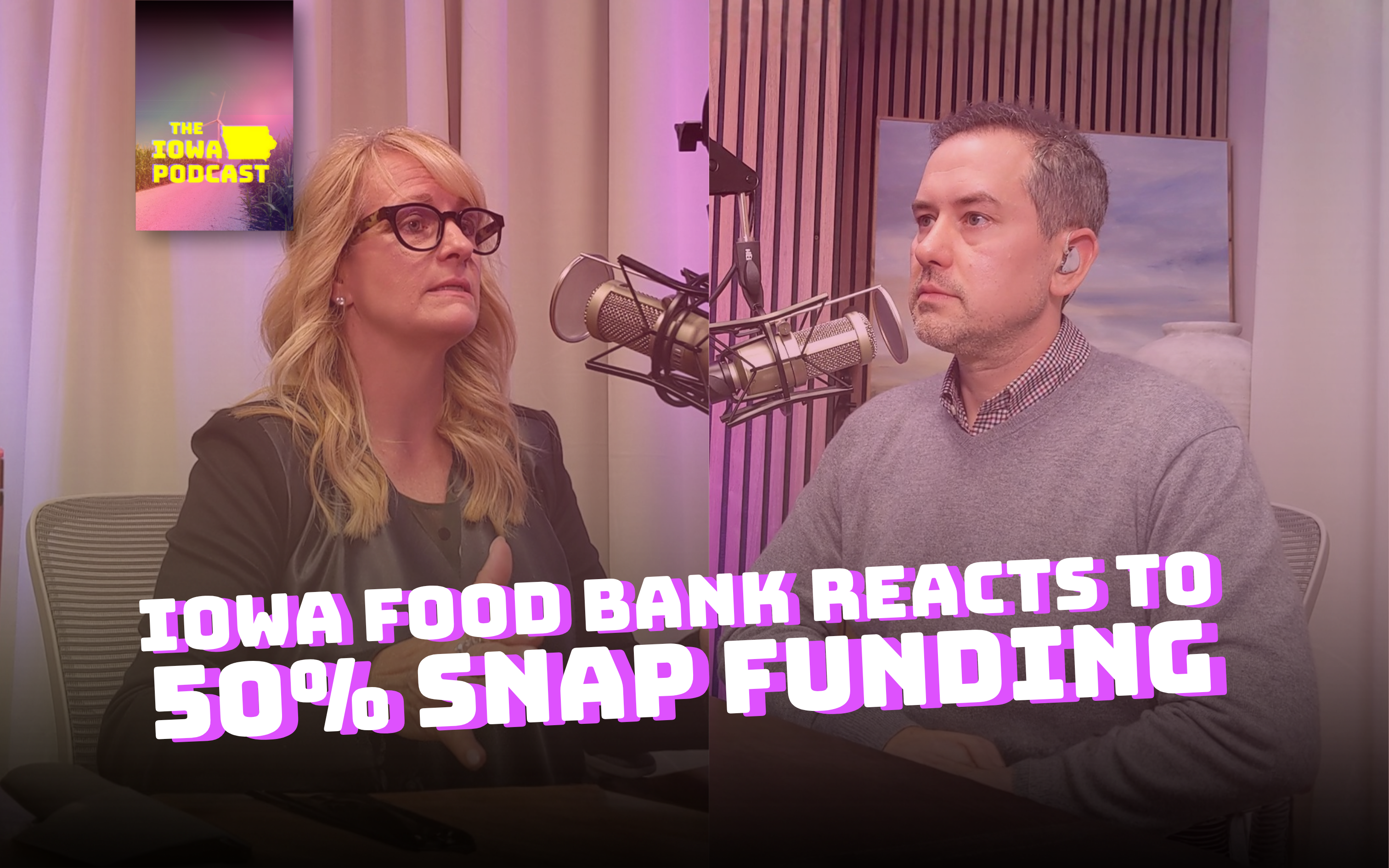
SNAP benefits are extended through November but only at 50%. Because Congress didn’t appropriate funds, The White House released a contingency fund this week, November 3rd. Tami Nielsen, CEO of The Food Bank of Iowa explains the impact on Iowa, how the funds will be allocated, and why Iowans’ SNAP benefits might still be delayed for weeks.
One out of every 9 meals for food insecure Iowans is covered by The Food Bank of Iowa and their partner pantries. This means, Iowans will now be turning to food pantries to fill that gap. Due to the incredible increase in need, The Food Bank of Iowa has great concerns they will be able to keep food on Iowans tables.
Rising Need, Strained Resources: Food Bank Feels the Pressure
With 23% of the Food Bank of Iowa’s clients also receiving SNAP benefits, the gap left by even partial disruptions is substantial. The charitable food system is already seeing increased activity. “A lot of folks are utilizing the charitable food system for the very first time,” Nielsen said, describing overwhelmed partner organizations fielding calls from Iowans unfamiliar with how to get food assistance. The food bank’s website now serves as a critical resource, allowing users to find nearby food providers.
For every meal provided by the charitable food system, SNAP typically covers nine, meaning any reduction creates a massive deficit. “We just know we can’t fill the gap,” Nielsen admitted, even as partner pantries scramble to meet rising demand. Volunteers are being called in, and food orders are increasing, but the scale of need may outpace what the system can realistically deliver.
Navigating the System: From Food Bank to Pantry
A major challenge lies in public awareness and understanding of how the food system works. Nielsen broke down the structure: the Food Bank of Iowa functions as a distribution hub, supplying food to 700 partner pantries across 55 counties. “A food bank is a large distribution center… and a food pantry is like a modified grocery store,” she clarified. The food bank stores, manages, and delivers food by the truckload; the pantries distribute it directly to those in need.
Hear from Iowans directly. No algorithms.
Don’t let the algorithms choose your news. Enter your email address to hear directly from Iowans leading news in politics, community, agriculture and business. No editing. No clickbait. No rage. No agenda.
First-time users often face confusion. Pantries have varied intake processes, and users are encouraged to check hours and requirements via the food bank’s “Find Food” tool. Many don’t understand the difference between the food bank and pantries or know they must go to a partner site, not the food bank itself, to receive assistance. Nielsen stressed that “we are here to help,” reassuring listeners that support is available.
Economic Impact and Systemic Strain from SNAP Reductions
Beyond individual need, the ripple effects extend to local economies. With SNAP providing $45 million in monthly food support, grocers and the broader community will also feel the loss. “For every $1 spent in SNAP funds, $1.50 goes back into the community,” Nielsen explained, adding economic urgency to the social crisis. As of now, new SNAP applicants are still being processed, but existing recipients are left waiting for November benefits.
Nielsen also provided key statistics: 131,000 Iowa households—totaling 167,000 individuals—rely on SNAP. Many of them are working families earning below a livable wage, or seniors on fixed incomes. With such a broad cross-section of Iowans affected, the need for clear communication and community support has never been greater.

Behind the Scenes: How the Food Bank Sources and Distributes
Despite assumptions, the food bank receives minimal government support. Currently, USDA food represents just 10% of inventory—down from 50% during COVID—and the majority of food is either purchased or donated by retailers, wholesalers, and individuals. “We are now purchasing more per month than we spent the entire year of 2019,” Nielsen stated. The organization’s operational funding comes entirely from donors, including corporations, foundations, and individuals.
To meet current demand, the food bank operates like a large-scale logistics hub with forklifts, massive freezers, and a warehouse capable of holding 142 semi-truckloads of food. All food is distributed free to pantries, with partners paying a nominal fee to cover shared costs. Still, it’s clear that demand is rising faster than inventory can be replenished.
Busting Myths: Who Really Uses the Food Pantry?
Nielsen used the closing minutes of the conversation to challenge common misconceptions. “A lot of us think that food insecurity happens to other people,” she said. But the reality is that most food bank clients are working families, seniors on social security, or people with disabilities. These are individuals trying to cover basic needs like rent, heat, and child care—food often becomes the flexible item in the budget.
She urged listeners to remember the humanity behind the headlines: “They’ve worked hard. They’ve paid into social security. But social security is not enough for them to live a healthy life.” With food prices rising, even stable incomes can fall short, and the charitable food system becomes a necessary lifeline.
How You Can Help Right Now
Nielsen ended with a clear call to action. With looming uncertainty and no timeline for SNAP distributions, the Food Bank of Iowa needs help. Donations of both food and money are urgently required. “We really couldn’t do it without the support of donors,” she said. The food bank also offers tours and volunteer opportunities for anyone wanting to get involved.