

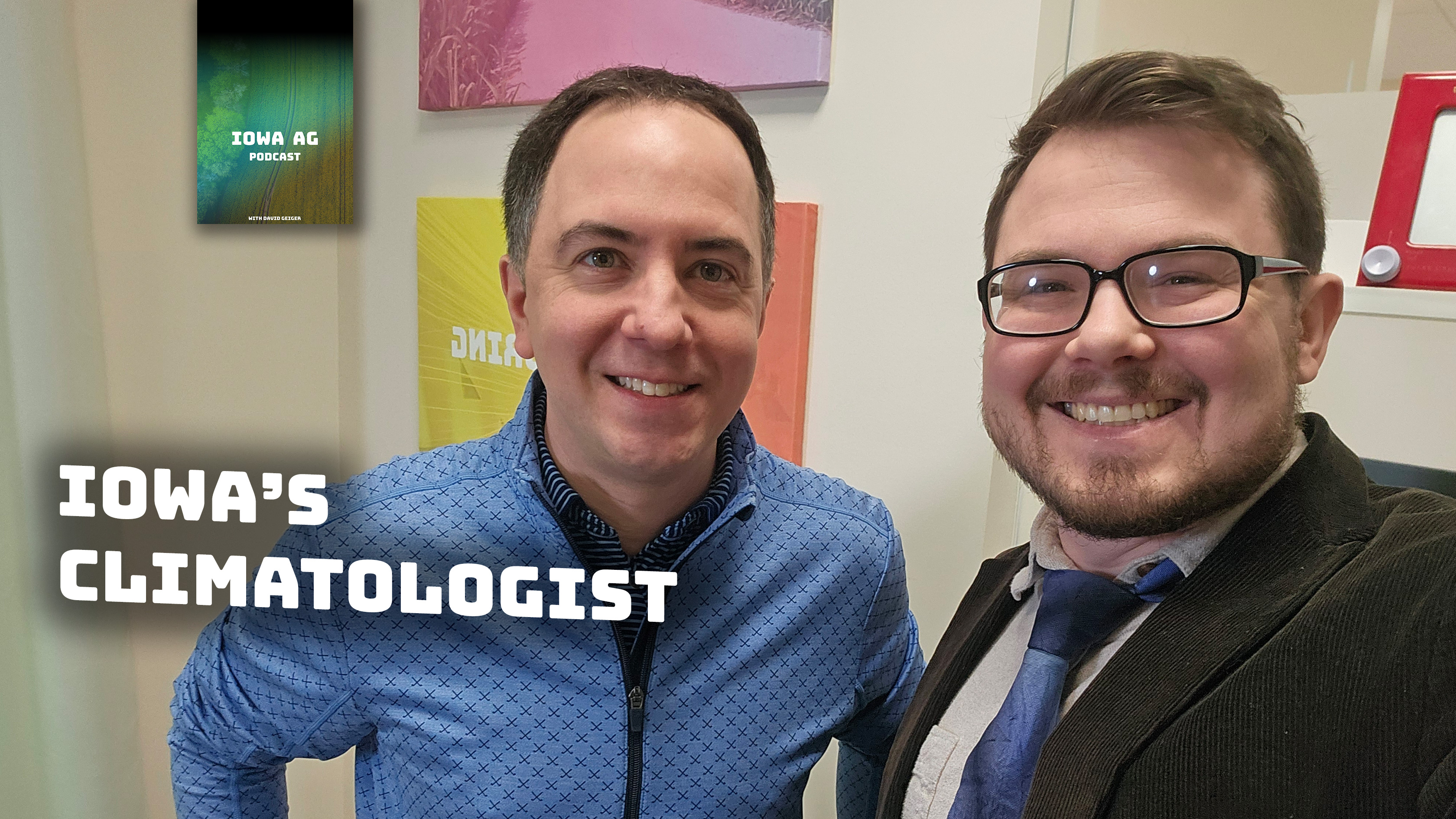


Dr. Justin Glisan, Iowa’s state climatologist, discusses how weather and climate data shape agriculture, infrastructure, and public safety across the state with David Geiger.
Glisan describes the role of the state climatologist as the custodian of Iowa’s 153-year climate record, providing historical context and scientific analysis to help Iowans understand both past and future weather patterns.
Scientific discussions and balancing politics
A key theme of the conversation is communication. Justin explains how he works with farmers, legislators, and the public by providing data rather than directives and encouraging dialogue instead of talking “at” stakeholders. He also addresses the challenges of discussing politically sensitive topics such as climate change, water quality, and extreme weather, stressing the importance of science-based information and transparency.
Rage-free Iowa news in your inbox
Justin, David, & Kaylee cover Iowa news, agriculture, business and tech. No clickbait. No agenda. If you support our vision, subscribe today!
Frost Depth in Iowa Agriculture
The discussion covers recent winter conditions and frost depth, explaining how snow cover, soil moisture, and temperature influence spring runoff, infiltration, and drought recovery. Justin explains how Iowa’s relatively shallow frost depth this winter compares to years with deeper freezes and why these differences matter for both farm fields and urban systems.

Geiger and Glisan also explore long-term trends, including Iowa’s recent stretch of historically warm years, changing snowfall patterns, and the increasing concentration of precipitation into fewer, more intense events. Justin emphasizes that climatology relies on 30-year averages and robust datasets, cautioning against drawing conclusions from single extreme events without enough context.
The episode concludes with Glisan vision for the future, including stronger interagency collaboration, improved soil moisture monitoring, and continued trust in scientists whose mission is to protect life, property, and Iowa’s agricultural productivity.