

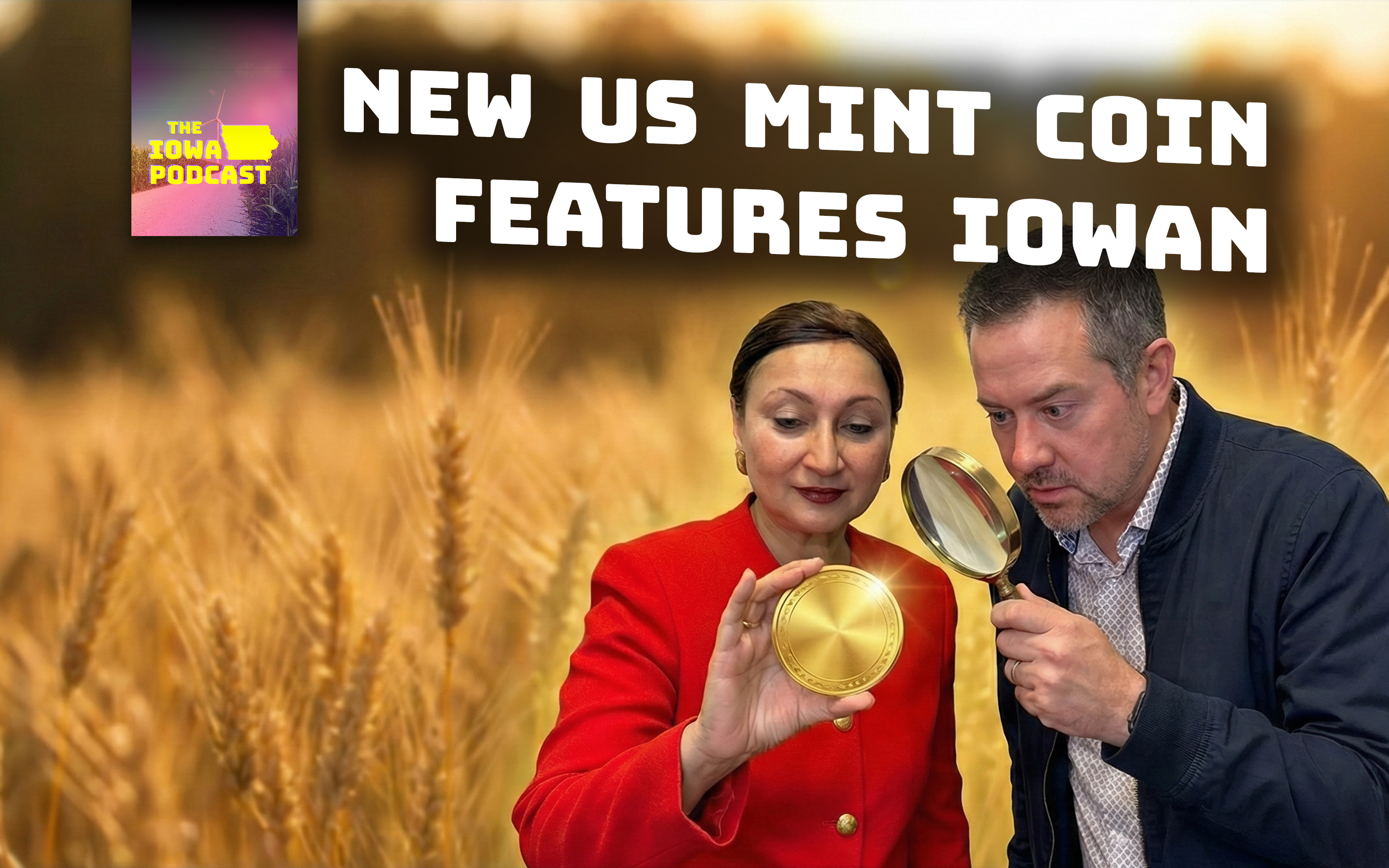


This week, the US Mint launched a new coin honoring Iowa and Dr. Norman Borlaug. Many Iowans have heard his name, but most still don’t know who he is, how he saved billions of people or how why his innovation won him recognition alongside Nelson Mandela. Mashal Husain, President of The World Food Prize Foundation tells the story.

Who was Norman E. Borlaug?

Norman E. Borlaug (1914–2009) was an American agronomist best known as the father of the Green Revolution. He was born in Cresco, Iowa, and grew up on a farm near Protivin, Iowa. Borlaug developed high-yield, disease-resistant wheat varieties and promoted modern farming techniques that dramatically increased food production, especially in Mexico, India, and Pakistan during the mid-20th century.
His work is credited with saving hundreds of millions of people from famine and transforming global agriculture. In recognition of his impact on world hunger and peace, Borlaug received the Nobel Peace Prize in 1970.
Interviews with Iowans in your inbox
Our Iowa-based hosts cover news, politics, manufacturing, tech, and small business without the bias or hidden agenda. Subscribe for free to get weekly news summaries and exclusive interviews.
Norman E. Borlaug’s achievements reshaped global agriculture and food security:
- Development of high-yield wheat varieties:
Borlaug bred semi-dwarf, disease-resistant wheat that could support heavier grain heads without collapsing. These varieties produced far more food per acre than traditional wheat. - Combatting crop disease:
He pioneered methods to fight wheat rust, a devastating fungal disease, by developing resistant strains and using innovative breeding techniques such as shuttle breeding (growing crops in different climates each year to speed adaptation). - Driving the Green Revolution:
His wheat, combined with fertilizers, irrigation, and modern farming practices, led to dramatic yield increases in Mexico, India, and Pakistan in the 1950s–60s. Countries once dependent on food aid became self-sufficient or food exporters. - Preventing mass famine:
Borlaug’s work is widely credited with saving hundreds of millions of lives by preventing large-scale starvation in rapidly growing populations. - Global agricultural leadership:
As a key figure at CIMMYT (International Maize and Wheat Improvement Center), he trained scientists from around the world, spreading agricultural innovation to developing countries. - International recognition:
In 1970, he received the Nobel Peace Prize, honoring his contribution to peace through food security—one of the few times the prize was awarded for scientific and humanitarian work combined.

What is the American Innovation $1 Coin?
The American Innovation $1 Coin is a modern U.S. dollar coin series created to recognize significant American innovations and innovators on a state-by-state basis. Unlike earlier circulating dollar coins that honored presidents or historical figures broadly, this program focuses specifically on innovation, ingenuity, and technological progress that originated in each U.S. state, the District of Columbia, and U.S. territories.
The coins are non-circulating legal tender, meaning they are produced mainly for collectors rather than everyday commerce.
The purpose of the American Innovation $1 Coin program aims to:
- Highlight scientific, industrial, cultural, and social innovations
- Encourage public interest in STEM, history, and entrepreneurship
- Continue the tradition of educational coinage programs
Innovations honored range from technological breakthroughs (e.g., medical devices, aerospace advancements) to processes and ideas that shaped American life.
Collectibility and Public Reception:
- Coins are sold directly by the U.S. Mint, often in rolls, bags, or annual sets
- Produced in Philadelphia and Denver
- Generally well-received by collectors, educators, and history enthusiasts
- Less mainstream visibility than State Quarters, but valued for their educational focus