

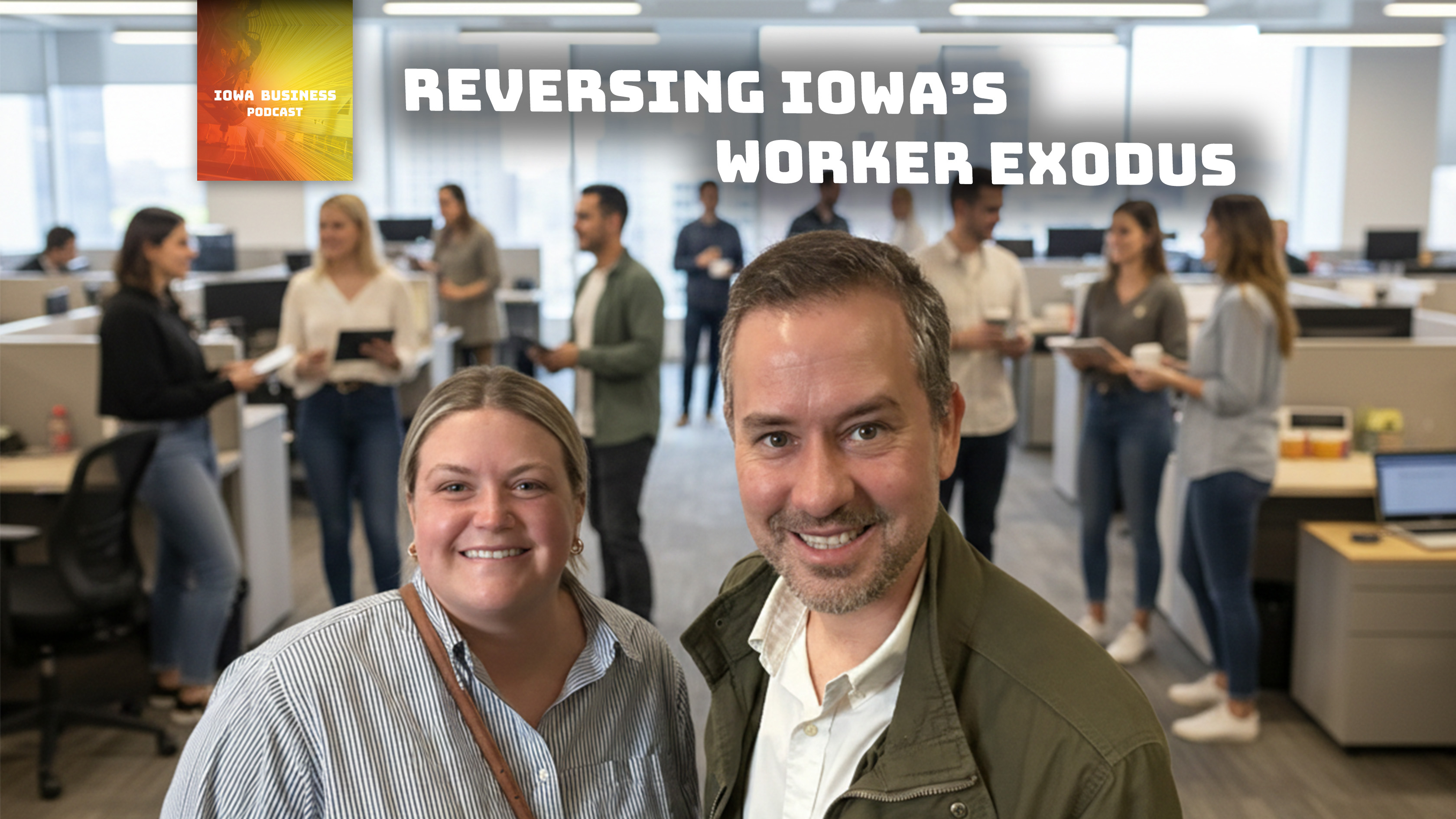


Iowa’s young talent has been leaving the state for decades, but the “baby boomerang” gave Iowa employers a sense of peace. Iowans know leaving students will return to start a family. But that’s no longer happening. Anna Mable, of Association of Business and Industry asks why Iowa employers are ignoring a proven solution.

Hear from Iowans directly. No algorithms.
Don’t let the algorithms choose your news. Enter your email address to hear directly from Iowans leading news in politics, community, agriculture and business. No editing. No clickbait. No rage. No agenda.
As ABI’s Workforce Programs & Engagement Coordinator, Mable leads a weeklong business camp here in Iowa called Business Horizons. You’ve probably heard of it before, but what you do know is the camp’s proven track record of keeping young talent in the state. Many employers actually recruit high school seniors directly into their future workforce from the camp itself. So why are some employers and communities overlooking them?
Learn more on Business Horizons:
Business Horizons is a premier weeklong summer program designed for Iowa high school students (grades 9-12) to immerse them in the world of entrepreneurship, leadership, and innovation.
It is organized by the Iowa Association of Business and Industry (ABI) Foundation and functions like a “business boot camp” where students from across the state collaborate to solve real-world problems.
What Happens at Business Horizons?
The program is built around an intensive Innovation Simulation. Students are divided into teams (called “industries”) and tasked with:
- Creating a Business: Developing an original product or service from scratch.
- Competitions: Pitching their ideas to a panel of “investors,” creating an infomercial, and presenting at a public trade show.
- Professional Mentoring: Working alongside Iowa business leaders and “Business Advisors” who guide them through the week.
- Skills Building: Attending workshops on financial literacy, marketing, AI, and project management.
- College Prep: Experiencing life on a college campus and, in many cases, earning transferable college credits just for participating.
When Did It Start?
Business Horizons held its inaugural year in 1984.
As of 2026, the program is celebrating its 43rd year of operation. Since its inception, more than 5,000 students have gone through the program, many of whom have returned as volunteers or become business leaders within the state of Iowa.
2026 Program Details
If you or someone you know is looking to participate this year, here are the current details:
- Dates: July 19–23, 2026.
- Location: Grand View University in Des Moines, Iowa.
Thanks to Dentons Davis Brown for collaborating with The Iowa Business Podcast to bring incredible value to our listeners! Collaborators compensate our hosts directly for their time and effort crafting exclusive content.

Interview Transcript
This transcript was created with help from Ai. Please report errors to us and always refer to the video as your primary source.
Justin Brady: And this is the Iowa Business Podcast. If you’re a business leader, it’s your source for all Iowa business information, small, medium sized business. And of course, we’re recorded in the Jethro’s Barbecue Studio. You’ve heard of the baby Boomerang, right? It’s, you know, the, the babies, the high schoolers leave or they go find work elsewhere, but we don’t worry about it because when they wanna come back and start a family, then it’s fine, and then we get them in the workforce. Guess what? That’s stopping. It’s slowing down. It’s not happening as much. And so if you’re a business owner, if you’re a business leader and you’re looking at your workforce and realizing it’s gonna get harder and harder to replace them, you’re not crazy. It’s happening. It is happening and we need to do something to stop that from happening, and we do have a solution. Anna Mabel, the ABIs Workforce Programs and Engagement Coordinator joins us today. They are working on and have been working on for decades, a program that reverses that. We’re gonna get into that. Anna, thank you so much for coming on the Iowa Business
Anna Mable: Thank you for having me. I’m excited to be
Justin Brady: You have a lot of tactical stuff we’re gonna go through. There are things people can do. Yes. This is not a hopeless situation. Before we get into that, thank you so much to Dentons Davis Brown for being a collaborator on the Iowa Business Podcast. We had Beth Koonin, one of their lawyers in the show. Talking about this exact issue, how to attract senior and top level talent to Iowa and how to keep it here. She’s an HR lawyer. She sees the disaster before it happens, and she gave us advice on how to not only attract talent, but how to retain it and keep great talent from leaving your company, which is definitely something we all need. Okay, so the baby Boomerang, I, I don’t know if it’s actually. Officially over yet, but it does look like it’s slowing down. I guess the first thing is, have you been hearing at a BI from business owners, entrepreneurs, founders, and executives at some of the larger organizations, are they worried about this?
Anna Mable: Absolutely. I think everyone’s worried about it. I think they start to see more and more people move away, and of course, you’re not seeing necessarily them come back. Uh, you’re also not seeing students go through the traditional, um, graduate high school. Go through college, find their career. You’re finding students find what they wanna do earlier in life and going with that. Maybe it’s not a college path, maybe it’s looking at training, um, maybe it’s traveling, maybe it’s, um, you know, joining the National Guard. So I think. Earlier and earlier you start to see students kind of look at their future path and figure out where they wanna go and what they wanna do. So I think it’s people starting to see the, um, that students are leaving and not coming back. And I think it’s, uh, workforce is a huge issue. Uh, and I think it’s being highlighted right now, especially now more than ever.
Justin Brady: Now are employees actually noticing this trend? Because sometimes I do feel like. The employers and executives are so heads down solving issues right now. They don’t see what’s coming in the next 10 years. So are they kind of noticing it, not worried about it, or are they noticing it and saying, oh my gosh, we’re really screwed?
Anna Mable: Absolutely. I think you see a little bit of both. I think you have some that are, um, noticing it now and some that are hearing about it and thinking, oh my goodness, what do I do in 10 years? What do I need to be doing now? Uh, but a lot of them just have no idea where to start. What do we do? We know this is going to come, uh, what do we have to do now? So I see a little bit of both.
Justin Brady: Yeah. Are now, are there any companies doing it well? Are there any companies that are getting ahead of this consistently and they are like, just, I’ll give you an example. I hear all the time about how it’s like, oh, if it’s in, if you’re hiring mostly hourly employees and like high schoolers or middle schoolers or like younger, you know, students, it’s like really hard to find labor force. Don’t exist. And then you go to like Chick-fil-A and they have all of them, you know, so clearly they’re not having a tough time. Yeah. So, um, are there employers in Iowa that are doing this really, really well?
Anna Mable: Absolutely. Um, especially, um, a lot of companies, uh, looked at getting college interns and that was their demographic, right? They’re looking at bringing in the students now, um, during college to figure out kind of what they wanna do, and honest, honestly to look at, are they gonna be a. Good future employer. And now you start to see some companies starting to tap into the high school area. And that’s where we start to see, okay, those high schoolers are going to remember you and remember that you are a good company here in Iowa to work for. So maybe if it is, they go out and intern at another company or leave Iowa, you see them come back and um, there are a few employers that have took. The deep dive to go into the high school and even middle school area, and they are starting to see that. Yes. Uh, middle school is starting to see the career exploration. Right. You’re, um, in high school, there’s a pressure to figure out what you wanna do in the future. For sure. So middle school, you start to see that, um, the career exploration, you have more opportunities to explore than just being a doctor, a teacher, Aden, you know, the Sure.
Justin Brady: Oh, sure.
Anna Mable: The norm. Talked about careers, you start to see that career exploration super early and um, diving into that. So starting to go early, getting your name out there, getting your business out there, getting the opportunities out there. Uh, we’ll start to see more and more.
Justin Brady: Okay, so in the N. Basically, students right now have this idea that their, their career paths are extremely limited. And there, there are, like you said, you can be a doctor or you can be
Anna Mable: Yep.
Justin Brady: there are four career paths
Anna Mable: Correct.
Justin Brady: and that’s your only dream. But what you’re saying is employers are working their way into schools through various programs. Earlier to say, actually there’s this career path and this career path and this career path. So that students kind of have an idea of, oh, there’s a little bit more here within this state than I realized. Correct. Yeah. So is this a big problem then in Iowa businesses whereas they want. I, I, lemme rephrase this, is this a big problem in Iowa businesses where students would like to stay here? Uh, they would like to build a career here, but the workplace has done a poor job explaining what that future even looks like.
Anna Mable: Yeah, I, I think there’s been that big shift of, even if they haven’t been doing a terrible job, they’ve been doing what they’ve been doing for years and it’s been working, but now you have the select few employers that are going the extra step of integrating themselves into the schools earlier and earlier. So then you’re gonna start to see the gap. And students, they might have the kind of misconception of, if I’m gonna go into. Podcasting or marketing, I have to go live somewhere that, um, where it’s booming right now. Right. Well, if they know about your podcast, if they know about your company, they know that they can have that career here in Iowa, they know that they, if they’re not interested in, um, a certain career field, if they’re not interested in, um. Medical supplies, if they’re not interested in agriculture. There are many career paths that support that specific industry that you’re not necessarily hands-on with that you can be in marketing, you can be in hr, you can be, um, anything you wanna be within those companies.
Justin Brady: Are there a lot of myths then Iowa employers are buying into about students? Because One, Correct me if I’m wrong, Anna, but one is that students have a good understanding of the jobs here because we, the employer, have made it obvious and so they’re choosing to leave because there aren’t jobs here for them. So is that basically a myth? Is it more that the students just don’t know and the employers are doing a poor job getting the information out there?
Anna Mable: Yeah, and I wouldn’t say it’s necessarily a poor job getting it out there. I would just say that there are highlighted companies that are doing it well and doing it early and are figuring out that if they wanna get ahead of it, they have to start early. So then it kind of leaves the rest of, oh my goodness, where do I start? Where do I need to start putting my foot in and saying, we’re here too. So,
Justin Brady: Yeah, so the, obviously there are myths on the student side as well, which is, I have to go to New York City or LA to do X, Y, and Z, and sure I’m not, I’m not one of the like drink the Kool-Aid. Everything can be done in Iowa. There are some things you have to leave the story state for, it’s fine. But are there students then, like are there a bunch of myths? Maybe you can name one or two that they do believe about the Iowa workforce or, or being an employee here in Iowa or building a career here in Iowa? Yeah.
Anna Mable: Yeah, absolutely. Um, I think one of the myth is that you need a college education.
Justin Brady: Oh,
Anna Mable: think that you start to see, um, even community colleges of diving into, we can provide you training in something that you wanna do. So I think that’s one of the myths of, um, and there are career paths where you need to go. Get a college education. So, but there are some students that that’s not their path and that’s okay. And getting that out there is one of the biggest things of, you can still have a very good job in Iowa, um, with specific training instead of a college career path.
Justin Brady: Yeah. And, and that’s definitely something I remember when I was younger, is that everyone goes to college. It’s, it’s the best path for everyone. Mm-hmm. And I remember adults even telling me, you gotta get that piece of paper. Yeah, of course. Now I know that’s. Bump kiss or whatever they say, or, or, or false is not, not true. It, it’s basically, you know, what’s the career path you think fits best and do you need a degree or certification to get there? Yeah. But we still see what you’re telling me is here in the Iowa workforce, we still have a problem, which is everyone just assumes you have to go get a degree.
Anna Mable: Absolutely, and I mean, college is a great option for many. It was the best option for me. Um, but. There’s probably half of the students that think I want to be X, Y, and Z and I don’t necessarily think that that path is right for me. So, um, getting the word out about the training opportunities and about the continued education that not, is not necessarily gonna get you that paper, but is gonna get you the right skills for, um, a well, um, deserved and a good job here in Iowa.
Justin Brady: Yeah, so it’s basically what I’m hearing, and correct me if I’m wrong, is that students, uh, future employers are willing to consider local options and stay close to family or stay in the state, and employers are willing to educate them about the opportunities. But this chasm in the middle here. Is a persistent challenge, like connecting the students that wanna stay here with the employers that wanna keep them here. Both parties are interested, but we kind of need like a marriage counselor or something to help them communicate. Is this the problem?
Anna Mable: I mean, many businesses we talk to, we know that they are worried about the future workforce. We know that they want to start and they see other companies do it as well. They see them starting to get in front of high school and even middle school students and they think, where do I even start? And so, um, kind of our efforts over at uh, a BI are. Bridging that gap. ’cause we’re starting to get relationships with, uh, the statewide high schools and, um, other kind of organizations that work with students. And then kind of bridging that gap of, Hey, employer, you said that you were interested in bringing in high school students. That’s a scary thought for many. You think about liability, you think about are their skills ready to join the workforce? Are they ready to job shadow? Who’s gonna supervise them? So kind of walking the employer step by step on high school students are not scary. Right. Get in front of them.
Justin Brady: some are,
Anna Mable: Some might be, but they’re ready. The students that are wanting to come into your workforce, they’re ready. They have the skills. Uh, we’re still developing the skills that’s part of the experience, but they are ready. You need to open your doors and take it one step at a time. Take in a student for a job shadow. Meet the student. They’re a lot less scary when you’re meeting ’em. They’re great. They’re wonderful. They bring in so many skills and opportunities. Bring one in and then take the next step. So it honestly is taking that kind of leap of, okay, I can open my doors to one, see where this leads me. So, um, yes, I think both sides, they’re both ready, but they do not know how to connect.
Justin Brady: So there’s really good data from David Allison, uh, Dr. Jessica Kriegel to name a few that basically show that everyone labels demographically, they label people demographically, and every generation thinks the previous gener or the generation under them is lazy and, and entitled, right? It’s so, it’s. The same complaints levied at baby boomers were the same complaints labeled, uh, levied at Gen X, same Gen ZI mean, it’s just gonna continue. And so the data does support, there are generational differences, but as far as work ethic, the data, I don’t think unless it’s been, unless there’s a new data set, uh, shows that like Gen Z is more entitled or anything like, now I know people are gonna say that. Yep.
Anna Mable: Yep. So
Justin Brady: do, are there those myths? Uh, and that concern that, um. I guess I should phrase this in a tighter question, which is in corporate, especially more of the larger organizations here in Iowa, do they still fear that young people are just entitled and don’t wanna work?
Anna Mable: Absolutely, especially with technology coming forward. They’re thinking, they’re on their phone phones, they’re not getting the social aspect, they’re not getting critical thinking. But, um, there are so many programs locally and statewide that are helping with that and proving that hey, students are, yes, they are. Apt to bring in the technology that can be of use to you as well. They are technologically savvy. Um, they create these social skills in other ways that generations haven’t seen in a while. So I think, I mean, every generation has their little niche, um, kind of skill set. Uh, and I think just being open to this new mindset that’s coming in is, um, a huge opportunity for businesses. Yeah. But. Oh, go ahead.
Justin Brady: I was just gonna say a cautionary tale to people, hiring students for technology. Just to add a punctuation or period on that is a lot of, uh, business owners do assume that young youngsters, younger people just know all about tech, which is true, but they know about certain. Tech. Yeah. And so I would caution people, yes, young people have a good understanding of some technology and mostly apps. They know about apps and how the ecosystems work. They’re starting to dig into ai, but you still need to be cautious on the training regimen because. Full disclosure, I have been, there’s no paid, there’s no paid thing with a BI with me. But I have been a industry advisor years ago, and I do remember students coming in the media track, which has since been dissolved, but probably me, I probably killed it, but
Anna Mable: um,
Justin Brady: the media track and some of the adults had assumed that they’re technologically savvy, so they know how to do this. They couldn’t type. Some could not type. So we had to train them like on typing skills. So just because you think students know about technology does not mean you just skip them ahead. You, you still need to make sure to gauge their skillset. Um, the. Employees. I wanna, I wanna talk about employee support. A BI has donors a BI has collaborators and partners that believe in these missions. Um, I think business horizons, I’ve done it before, is one of the most incredible programs in this state. Uh, and I mean that genuinely.
Anna Mable: Thank you.
Justin Brady: Thank you. Have you seen employee support stay constant? Has it increased or like locally? Are, are people kind of like not sure if they wanna support it anymore? As far as business horizons?
Anna Mable: Absolutely. We’re kind of seeing a decline in that. And um, one of the great things, but maybe not necessarily great things for us, is that there are local, um, opportunities like business horizons that are popping up everywhere, which is great for each community, right? Each community is seeing the need to train high schoolers on those critical thinking skills and bringing in, um, all of these things that employers want into a program where high schools, um, and high school students. We’ll have fun and want to do. Uh, that being said, business Horizons is a statewide program, so we cater to every single student, uh, across the state. However, we’re seeing that companies might choose to support volunteer fund. Their local, um, high school or their local organization that’s doing these programs, which again is fantastic that we’re seeing that pop up. ’cause there is a need for it. There’s a want for it, but then we kind of see it at a state level of we’re catering to all of these students across the state, um, and not necessarily to one region of Iowa.
Justin Brady: Yeah. So is there a risk, again, I think this is good, but these programs aren’t like week long business camps, right? They’re like they’re within the high school itself, correct. Or locally. So is there, I, I would argue that these business programs popping up across the state aren’t the same thing as business horizons. These are different, should be complimentary
Anna Mable: Yep. They’re absolutely, we think the same thing. We, uh, support all of the local, um, organizations and whenever we see a program, we applaud ’em. This is needed, this is wanted. Um, but then we kind of see it as a transition. Alright, now send ’em to Business Horizons. This is a five day program that this student now can be away from home. Uh, if they’re not from the Des Moines area, they get to kind of live independently for five days, which the growth from Sunday to Thursday when they graduate is. Amazing. I mean, you probably saw it as an advisor
Justin Brady: Yeah, we’re gonna dig into that, by the way.
Anna Mable: Yeah. It’s, uh, it’s a whole different experience. Plus the students, uh, at Business Horizons get to kind of see something that’s not necessarily in their hometown. So they get to see, okay, there’s these businesses in my hometown that support and I know I can, um, trust and rely in and look at a future employer there. But they also get to see a different part of the state and, um, in our business tours and, um. Different organizations that we visit throughout the week
Justin Brady: Yeah. It sounds like when you compare business horizons statewide to local things, um, that are, you know, not travel, I don’t know how to say this, but it sounds like when you compare business
Anna Mable: their
Justin Brady: Yeah. When you compare business horizons that you travel for, it’s a week long business camp and then you compare it to local things within these students’ communities, it sounds like employers. In Iowa, kind of think it’s an either or, like we need to fund the local ones that continue or we need to fund business horizons. Where’s the breakdown there? I, I think that sounds stupid. I, I’ll I’ll say it if you don’t want to, but I think if employers are thinking this is an either or, that’s really dumb. That’s short term thinking. But, you know, so maybe I, maybe people
Anna Mable: maybe it is short time. Yeah.
Justin Brady: me. But what, what is the, is that a breakdown you are seeing that people think it should be either or?
Anna Mable: I think a little bit, and I think it is a lot of short term thinking of we need to fix this now. Uh, thinking long term is okay. These students get to see everything in Iowa. They get to be with a di diverse group of students who we usually see one or two students per high school come. So the growth from that program is, um, huge. Uh, we’ve also seen local businesses support. One or two students from each high school to attend. So we do see a little bit of that, but less and less each year of we’ll have you support the local one, or things like that. So I think it is a little bit of short term. Oh my goodness, we have to do something now versus the more long term vision. You’re
Justin Brady: there’s value for a student to get outside their comfort zone and what’s familiar to them. Absolutely. There’s a lot of value to that. There’s a lot of science to back this too, but it sounds like perhaps there is a talent competition. Maybe are some of these communities nervous that if my, if our student leaves the community, they’re never gonna come back. Therefore, we’re gonna try to. Keep them here rather than thinking statewide. So do you have maybe pockets of Iowa that are starting to fight over talent within the state?
Anna Mable: Oh goodness. Uh, probably, uh, I’m not, I can’t give you exact examples, but, um, I mean, you see the local programs pop up everywhere and everyone looks at that shiny new object and is like, that is amazing what they’re doing. Could we do it in our community? Uh, so you do start to see that. But um, I think every community has. Uh, uh, reason for it and a need for it, and the students want it. So I think it should be less competition. I think they should all kind of intertwine with each other, um, of, if you liked this, you should attend this. If you wanna continue to growing, here’s your next step. Uh, and we’ve kind of been working on that a little bit, but, um, and creating, showing students all the opportunities. But it is hard, I mean. Employers are looking at their short term of we hear this workforce shortage is coming. It might be here. What do we do? We need to look at our students.
Justin Brady: It’s so funny because this concern, I have been hearing about this since I was in high school. And it seems like we’ve been kicking the can in this state for decades. We’ve been kicking the talent acquisition can for decades. And this is not a political thing at all. Uh, if it were a political thing, I could point fingers at both parties easily, but. It sounds like maybe after decades of kind of ignoring the issue, and this is a business community thing, I don’t know if there’s much the legislature can do, honestly. Yeah. This is a business thing. If you’re a company, you wanna keep talent, you gotta, you gotta do something about it. But it sounds like years of neglect over the talent pipeline in Iowa now. Maybe for reasons I don’t fully understand, but may finally be catching up to Iowa employers. And so, like I said at the beginning of this, there’s not a paid endorsement at all. I just know about a BI and it’s wild to me to see students come into the beginning of the week with very low expectations. Many of them do not want to be there to be honest, and they leave in tears. They leave with very specific concrete skills. They leave with a completely changed perspective. And they leave with this network of like, business. They’re, they’re high schoolers, but they’re in this business mindset, career mindset like that. Mm-hmm.
Anna Mable: that. Mm-hmm.
Justin Brady: Within three days this happens. And so please talk to everybody about what happens at Business Horizons. Like what, what specifically are you actually doing with these students?
Anna Mable: Absolutely, well, broad scope of everything. They’re doing kind of a mini Shark tank pitch idea. So they are creating a product or a business that is, um, supposed to help something in their real world, something that they’re facing, and then create it into a product or something to sell. So by the end of the week, they’ve worked with their teams. And they have created this business idea that they’re so thrilled about, um, that has not been done before. And they get to pitch it to a panel of judges, uh, and ask investors for help. Um, they get to film and edit an infomercial, so get to learn those marketing skills as well. So they, uh. Get to kind of develop this business idea of something that maybe they’ve wanted to dive into, maybe not. Um, and then throughout the week, of course, is sprinkled in lots of fun, um, team building activities. We go out and visit different businesses so that the students can kind of see this is manufacturing in Iowa. This is. HR in Iowa. This is a different company that you may have never heard about in Iowa. So it’s kind of, um, loosely based on business and entrepreneurship. Uh, but a lot of it is just growing as an individual and. Working with other people that you have never met, different skill sets. Um, and just learning about all the differences in Iowa, all the differences in the students. And, um, overall, you’re right. On Thursday, it’s amazing to see their growth and their, um, joy for business horizons because when their parents and guardians dropped ’em off on Sunday, they probably weren’t excited to come to a business camp. During the summer, right? There’s a lot of other things they could be doing in July, but truly it’s, it’s impactful to see them grow from Sunday to Thursday and not just their business skills and um, the soft skills that we’ve been kind of working them towards, but their friendships, their confidence. We have students that have never. Been a public speaker before they get up on stage and they give the the final graduation speech. So it’s just amazing their confidence when they’re kind of left alone in a new spot doing something with people they’ve never met before.
Justin Brady: Talk to me briefly just about employers, because I know that you need funding partners, duh. But, um, you kind of dropped a hint, which is at Business Horizons, of course, local business camp here in Iowa, and employers can financially help. But you mentioned that they’re al also very active in the programming itself. Uh, so tell us about that. What does it look like for an employer? To work with all these local students.
Anna Mable: So we have, uh, per team, we have about two to three volunteers who are with them from Sunday to Thursday that are kind of guiding them and coaching them and steering them in the right direction, uh, throughout the week. So we have a lot of business partners that send one or two volunteers throughout the week to kind of join in on that transformation. And uh, the people that are um, have been supporters for a long time and continue to support are always sending people ’cause they know the value in getting right in front of students. Um, and kind of. Showing that, uh, their skills can be used in their workplace. Uh, we also bring in, um, uh, entrepreneurs and marketing consultants to kind of do a deep dive with the student and their project to kind of give them a little bit of advice. Um, they get to give feedback to the students. So a lot of volunteers. Uh, it’s a shorter time commitment. It’s not all week, it’s usually an hour or two. Uh, and they like to also see the student projects. They like to see what are the problems that students are facing now that they are trying to change. Uh, and they like to kind of give feedback on that and then also bring that back to their company. Um, so we have volunteers come in all the time just to. See what the students are working on, see what the issues are right now, uh, and bring it back to their company. But also, we have a lot of volunteers that are willing to host, um, our business Horizon students for maybe a luncheon to bring them into their facility to just see the space and show it off. So we have helpers from across the state to come in and volunteer fund, um, sponsor students from everywhere.
Justin Brady: And the timeline isn’t really like, I think a lot of employers listening to this are probably like, we have problems now, Anna. We can’t be doing these six year timelines for your time. But that’s not really true because a lot of the people touring these facilities, uh, they’re touring manufacturing plants, they’re touring tech companies, they’re touring, um, a bunch of different, it’s not just one particular company, but some of them are seniors.
Anna Mable: Some
Justin Brady: of them are juniors and some of them are thinking, what am I gonna do next year? Correct. And so we’ve seen, uh, I, I think, I’m pretty sure I’ve talked to some a BI people who have told me this, but we see people that almost recruit right outta business horizons in some cases, which is the students are like doing, doing this tour and then they grab a job at that place like within six months. Right. I think, I’m pretty sure this has happened
Anna Mable: Yeah, absolutely. Yeah. Yeah. We have, um, a few parents and guardians will gimme a call and say, I want my students to do this. I just have to convince them to come to a business camp. Uh, but they have no idea what they wanna do. And they’re a senior. Yeah. How are you all gonna help? Um, and so a lot of business horizons. Uh, is based on business and entrepreneurship, but a lot of it is just exploring. I’ve never stepped foot into a manufacturing
Justin Brady: Mm-hmm.
Anna Mable: What does that look like? Um, so I think it’s, uh, a little bit of, you know, exploring for the business to see what’s coming up the pipeline. Uh, but a lot of students that are either or interested in staying on a college campus and kind of seeing what that is like and if that’s for them. Um, but it can kind of go both ways on that.
Justin Brady: I would say it is a pretty good balance. Um, I know it used to be heavy. This is probably, this is years ago, it used to be heavy entrepreneurship. Mm-hmm. And people are like, well, not everyone’s gonna be an entrepreneur, not everybody. And so it has adapted over the years to be pretty much focused on what I would call, like design thinking within an organization. You can apply that to a bigger organization, you can apply that to your own startup. But then as you said, it’s also, it also happens. On a college campus. Yep. And they are surrounded by educators as well. So it really does give them this big palette, uh, and it gives them the ability to try a bunch of different stuff and, uh, rather it gets ’em out of the classroom. Mm-hmm. And I think that’s important. There’s a spot, there’s a, there’s a need for the classroom and then there’s a need to get in the real world. But sometimes employers are like, yeah, we don’t really wanna be the Guinea pig. Yeah. And so you’re kind of the testing ground in Guinea pig and employers can essentially benefit off of the risk. Risk, the, the intellectual capital risk you’re taking. The um, I guess the last question I have for you would be, what are some of the real world success stories you’ve seen from these employers? Like, what’s that direct feedback? This is one of the top concerns, by the way. I did a lot of interviews and research before even starting this show, and the big concern is the talent pipeline. Like people are legit concerned about it, so. To get someone’s feet wet and tell them to get off their rear end and actually get involved. What are some of the success stories your sponsors? Your collaborators, these organizations that work with you have told you about?
Anna Mable: Yeah. Um, some of our top supporters, uh, they continue to support because they keep seeing that growth in the, um, kind of channel straight to them. So, uh, a lot of the students that come in will say, wow, I never knew this company existed. Yeah. Right. So they get to kind of. When they’re looking at whether they go to college or whether they’re looking for training, um, or continued education, they get to look back at that company and say, I remember that was a really cool company. I’m gonna look at internships there. So you kind of start to see the, um, the pathway of, okay, I know this exists. I know there’s an opportunity for me there. I could see myself there. So, um. Yeah, a lot of our top supporters will come back and say they interned with us, they were great. Or, uh, a lot of the advisors will keep in touch with their group of 10 to 12 students and their advisors end up being some of their career mentors, or, Hey, can you help me look for a job in this field? And the advisors can then connect them with either their company or someone else they know. So the relationships built between our volunteers and our sponsors and our students. Continue on for years and the students see benefit in it and the companies also start to see benefit in it.
Justin Brady: And I’ll, uh, I will say relationships. Uh, we, we say these things and people put low value in them, but the number one value for Americans, uh, as far as like financial security and relationships is a sense of belonging. That’s the number one thing here. Or it’s, I know it’s in the top two, at least, that drive behavioral action. And so. If you just get these students plugged into these programs, whether it’s a local thing or whether, whether it’s business horizons, like I said, I’m not paid for this, but I would definitely encourage employers and students to go to Business Horizons. Um, this is a good way to give them that sense of belonging, which will retain that talent and enable Abbi’s Workforce Programs and Engagement Coordinator. How can people reach out to you and either sponsor, collaborate, become an industry advisor, or send their student to Business Horizons?
Anna Mable: Yes. Uh, well follow us on socials, business Horizons is on all socials. Uh, or shoot me an email. Uh, I would love to connect, talk more about business horizons and how it can benefit you, um, and keep up with our socials.
Justin Brady: Absolutely. Thanks so much for coming on the Iowa Business Podcast.
Anna Mable: much. I appreciate it.