

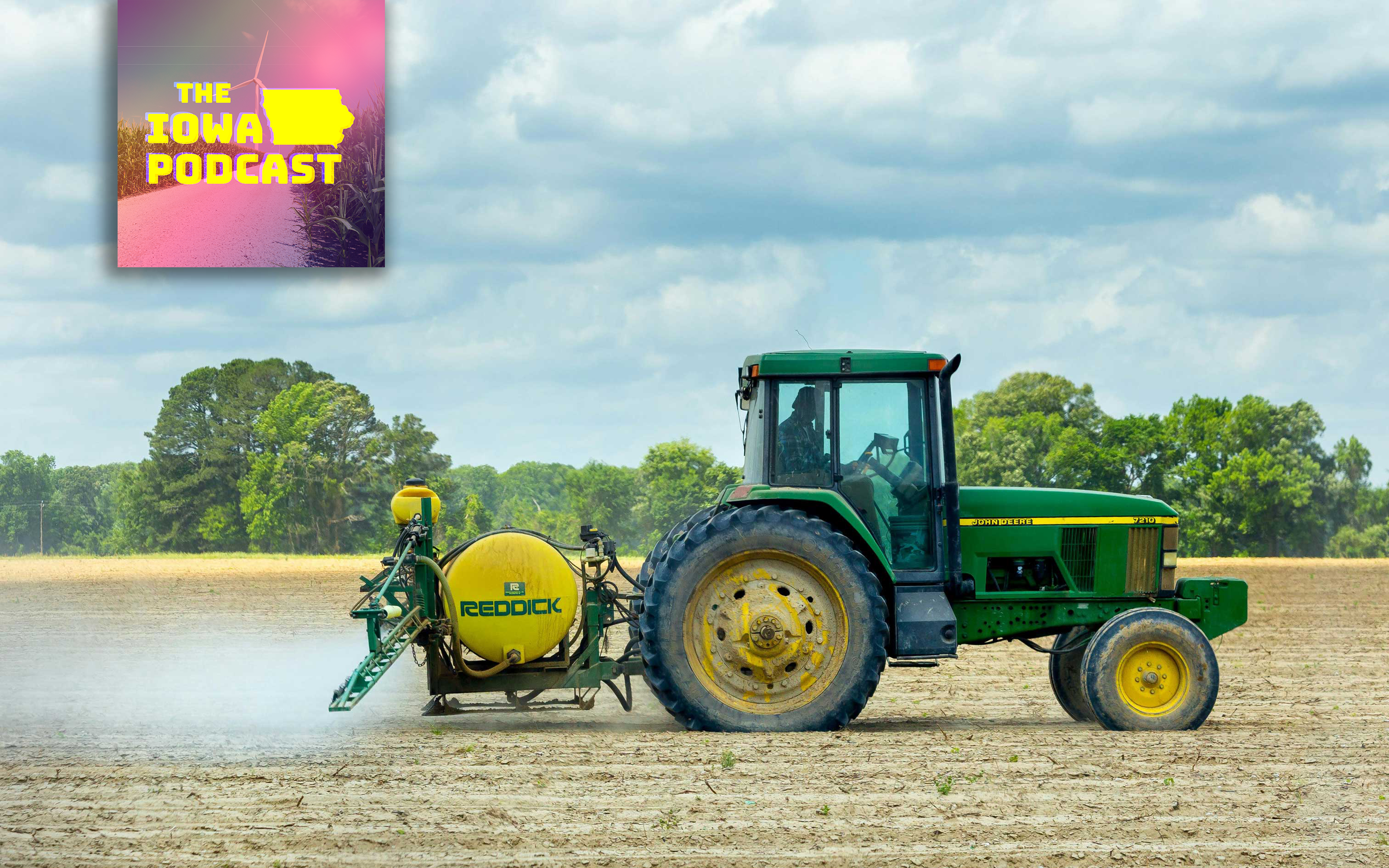


Discussion in recent weeks has centered around pesticides and toxins in the food we grow, much of it from Iowa. According to Professor Neil Hamilton, creator of The Iowa Nature Summit and Drake law professor, we apply pesticides to over 25 million acres of farmland each year, but what impact is that really having? Does that have something to do with our 2nd in the nation cancer rates? There’s no easy answer.
Hamilton explores the relationship between nature and health, emphasizing that this connection has always existed, though we may not have fully recognized it. “They were always connected. Of course. And whether or not we’ve recognized the dimensions of the connection,” he says. Hamilton notes that the COVID-19 pandemic brought this relationship into sharper focus, as more people turned to the outdoors for solace, adding, “people found a lot of solace and solitude and pleasure and… perhaps peace of mind by being outside in nature.”
Iowa Food Health Crisis?
Last week, Democrat Robert Kennedy Junior and Republican Senator Ron Johnson hosted a bi-partisan roundtable in Washington DC. The American Health Crisis Roundtable featured notable physicians and public health advocates. They openly criticize food companies and point the finger, in part, to agricultural practices as a culprit for chronic disease.
As Iowans should we fear the pesticides being sprayed around us? There’s no easy answer, but Prof. Hamilton agrees the issue warrants attention but also cautions there’s a fair degree of alarmism. “I sit on the side that it’s something we should be concerned about, and that we need to study more. And that we need to have options in terms of the choices that we make,” Hamilton said.
Pesticide Use in Iowa and Soil Erosion
Hamilton paints a clear picture of the strain placed on Iowa’s land by intensive farming practices. “There are a number of dimensions of Iowa’s land… that are increasingly stressed by agriculture—soil erosion, for example, increased production of corn to help fuel ethanol, wider spread use of pesticides,” he explains.
The issue of organic vs. non-organic farming and risk for consumers however is a personal choice he advocates. “There are certainly things that individual consumers can do to try to reduce their risk profile. And trying to support more research and information about it is one, but there’s a fair amount of alarmism,” he concluded.
Hear from Iowans directly. No algorithms.
Don’t let the algorithms choose your news. Enter your email address to hear directly from Iowans leading news in politics, community, agriculture and business. No editing. No clickbait. No rage. No agenda.
Hamilton addresses the complexity of the issue. “I think people would be surprised to know that, folks can use Roundup as a desiccant to actually dry down wheat and oats before they’re combined.” He acknowledges that while there are safety measures in place, public concern over long-term exposure is valid. “We’ve had a fairly cavalier attitude towards these products,” he adds.
Iowa’s High Cancer Rates? Are they related?
One of the most pressing concerns discussed is Iowa’s high cancer rates. Hamilton points out the alarming statistic: “Why would Iowa have the second highest cancer incident rate in the nation, behind Kentucky?” He stresses the need for more curiosity and investigation into the causes, asking, “why are there so many kids in the cancer ward? And what are we doing to either cause that or what might we do to remediate it?”
The conversation shifts to practical solutions, with Hamilton discussing the upcoming Iowa Nature Summit, a gathering aimed at addressing these environmental issues. He emphasizes the importance of soil health, explaining that it is not only vital for agriculture but also for combating climate change by storing carbon and water. “If we aren’t taking care of the soil, both quantity, which is what we’ve talked about with erosion, but also soil health… we’re compromising our future,” Hamilton asserts.
Iowa Nature Summit
The Iowa Nature Summit is at Drake University October 9-10. Although a nature summit may have previously been for the “crunchy granola” folks, the connection between nature and human health is becoming more obvious with both political parties showing renewed interest in the degrading environment around us.
Hamilton ends on a hopeful note, urging Iowans to become more engaged in conservation efforts. He encourages supporting policies that prioritize environmental health and suggests voting for nature-friendly initiatives. The Iowa Nature Summit, scheduled for October 9-10, 2024, will bring together experts and the public to explore these issues further.