

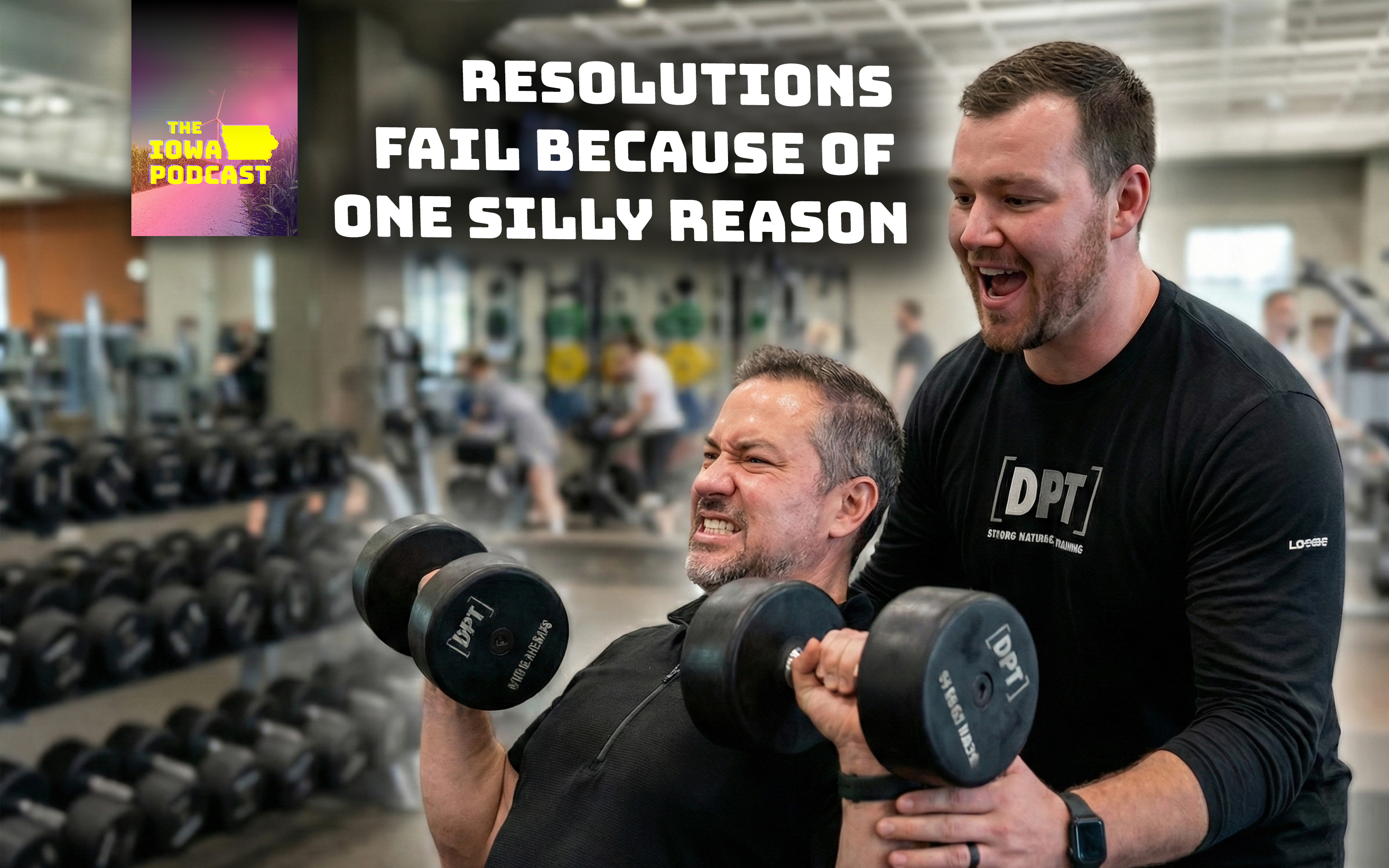


Why do New Year’s fitness resolutions so often fail? Nearly 80% of people abandon their goals within the first few months, while only about 9% manage to sustain long-term success. Iowa personal trainer and doctoral student in kinesiology, Nick Fey, who offers research-backed and practical insights into building lasting fitness habits.

Fey emphasizes that success begins with setting realistic, individualized goals rather than relying on vague or overly ambitious resolutions. He explains the importance of having a clear plan—one that accounts for current fitness levels, time constraints, and personal motivation—rather than simply “showing up” at the gym without direction. The conversation also addresses common barriers for beginners, including fear and intimidation around gym culture, and provides reassurance that effective fitness does not require perfection or extreme routines.
The episode goes beyond general fitness advice by examining how exercise can play a critical role in managing chronic diseases, particularly Parkinson’s disease. Fey discusses how tailored exercise programs can help improve mobility, balance, and overall quality of life for individuals with Parkinson’s, highlighting the importance of personalized training and professional consultation when working with specific health conditions.
Hear from Iowans directly. No algorithms.
Don’t let the algorithms choose your news. Enter your email address to hear directly from Iowans leading news in politics, community, agriculture and business. No editing. No clickbait. No rage. No agenda.
For experienced gym-goers, Fey stresses the need for ongoing adaptation—varying routines, addressing nagging injuries, and avoiding plateaus through thoughtful progression. Across all fitness levels, consistency emerges as the most important factor for success, with early habit formation and personalized support significantly increasing the likelihood of long-term adherence.
Overall, the episode underscores that sustainable fitness is not about quick fixes or motivation alone, but about thoughtful planning, individualized approaches, and viewing exercise as a long-term investment in health and quality of life.
What Is Parkinson’s Disease?
Parkinson’s disease (PD) is a progressive neurological disorder that primarily affects movement. It occurs when dopamine-producing neurons in the brain—particularly in the substantia nigra—gradually degenerate. Dopamine plays a critical role in coordinating smooth, purposeful movement.
Common motor symptoms include:
- Tremors (often starting on one side of the body)
- Muscle rigidity
- Slowness of movement (bradykinesia)
- Impaired balance and coordination
Non-motor symptoms are also common and may include:
- Fatigue
- Depression or anxiety
- Cognitive changes
- Sleep disturbances
Parkinson’s affects each person differently, which is why individualized treatment—and exercise programming—is so important.
How Exercise Helps People with Parkinson’s
Research consistently shows that exercise is one of the most effective non-pharmacological interventions for Parkinson’s disease. While it does not cure the condition, regular physical activity can significantly slow functional decline and improve quality of life.
1. Improves Motor Function
Exercise helps maintain:
- Strength and muscle control
- Gait speed and stride length
- Balance and postural stability
Activities that challenge coordination and movement patterns help reinforce neural pathways involved in motor control.
2. Enhances Brain Health and Neuroplasticity
Physical activity promotes neuroplasticity, the brain’s ability to adapt and form new connections. Exercise increases levels of brain-derived neurotrophic factor (BDNF), which supports neuron survival and function—particularly important in a dopamine-deficient condition like Parkinson’s.
3. Reduces Fall Risk
Balance training, strength work, and functional movement exercises can:
- Improve reaction time
- Enhance postural control
- Reduce the likelihood of falls, a major concern for people with PD
4. Helps Manage Non-Motor Symptoms
Regular exercise has been shown to:
- Improve mood and reduce depression and anxiety
- Enhance sleep quality
- Support cognitive function and mental clarity
5. May Slow Symptom Progression
Studies suggest that early and consistent exercise may slow the progression of physical symptoms. High-intensity and task-specific training (when appropriate and supervised) appears particularly beneficial.
If you need more support
Every third Thursday, Lifetime Fitness has a Parkinson’s support group, open to members and non-members.every single month at 12 o’clock. They bringing in speakers and having open forum discussion.