

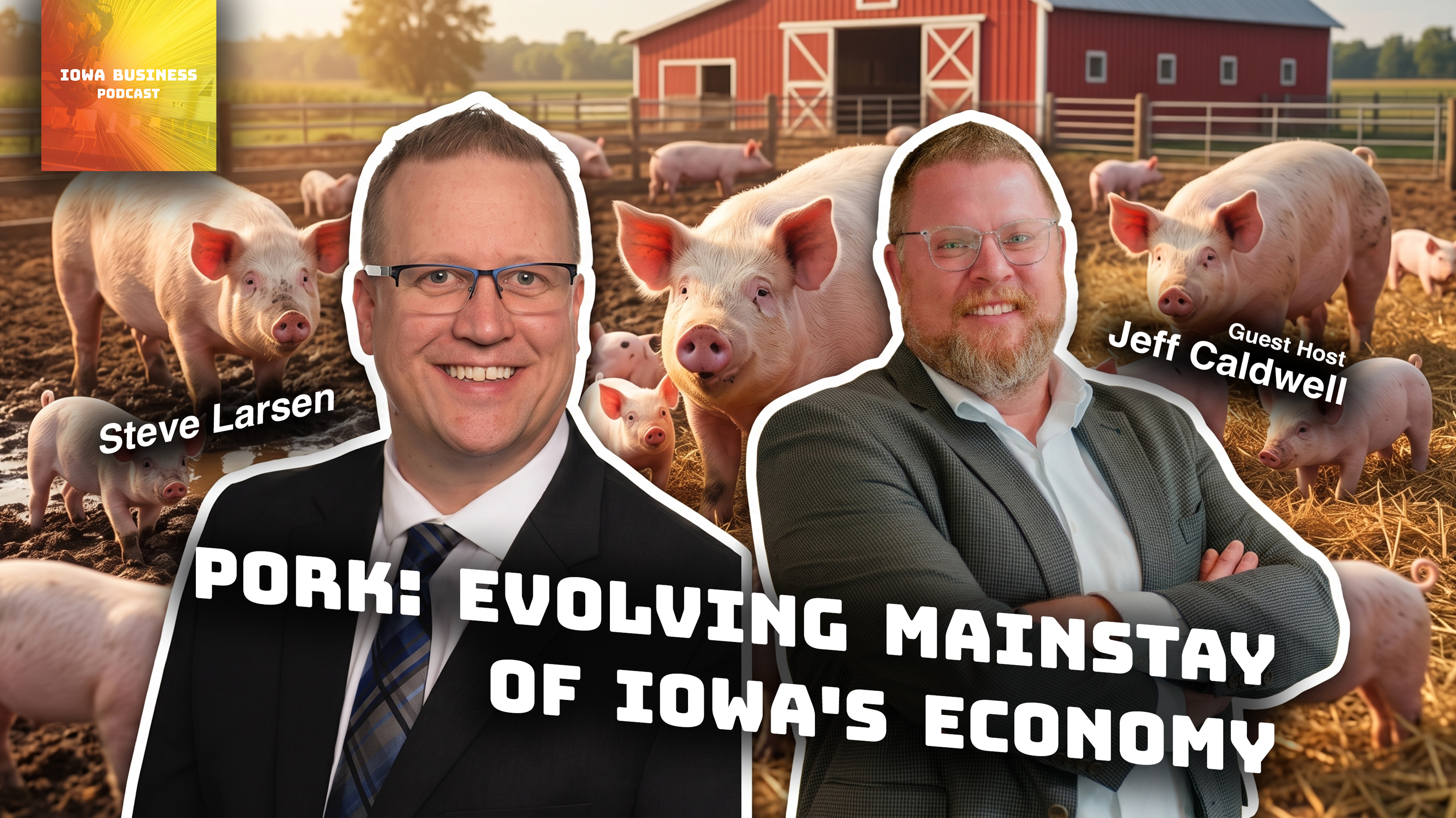


The pork industry’s facing major challenges, but therein lie some new opportunities. Jeff Caldwell fills in for Justin Brady in his discussion with Dr. Steve Larsen of R3 Consulting. New business models help, but it takes a concerted effort to understand what’s behind those challenges and the ways the industry’s best poised to overcome them.
Iowa’s hog industry represents a massive economic engine, generating $15.5 billion in economic activity, $40 billion in annual sales, and $2.7 billion in state taxes while supporting 120,000 jobs. However, widespread swine health challenges like PRRS and PED viruses continue to test producers across the state. Larsen emphasizes that mitigating these threats requires a multifaceted, research-backed approach spanning biosecurity, transport sanitation, and daily farm management. “National Pork Board or the checkoff does a great job at addressing research needs that get that information into producer hands,” Larson explains, adding that even minor daily interactions—such as uncleaned boots at a local coffee shop—can carry disease risks.
Hear from Iowans directly. No algorithms.
Don’t let the algorithms choose your news. Enter your email address to hear directly from Iowans leading news in politics, community, agriculture and business. No editing. No clickbait. No rage. No agenda.
Elevating Meat Quality Through Innovation
To capture extra value amidst tight market margins, Larsen partnered with Dwight Mogler of Mogler Family Farms to establish Iowa Craft Meats, a coordinated supply chain venture. Rather than competing directly with industrial processors on commodity hams and loins, the business leverages specialized genetics, local processing, and unique shoulder cuts like pork briskets and Delmonico steaks. “Within Iowa Craft Meats, the last 6 to 10 weeks we do feed a canola and flaxseed-based diet to increase our elevated eating experience,” Larsen notes, highlighting how this feeding strategy creates a distinct flavor profile and bright white fat that consumers crave.
Strategic Agribusiness Lessons
Operating a direct-to-market supply chain requires flexibility, routine business plan audits, and knowing when to say no to non-core activities like catering. By partnering with local processors and retailers like Fieldside Mercantile, Iowa Craft Meats stays focused on its core market. For producers considering similar niche enterprises, Larsen cautions against scaling up without established distribution. “I think one of the lessons I’ve learned is to make sure that you have a place for your product before you start getting the product out there,” Larsen advises, urging agricultural entrepreneurs to ensure their offerings fill a proven gap in the market.