

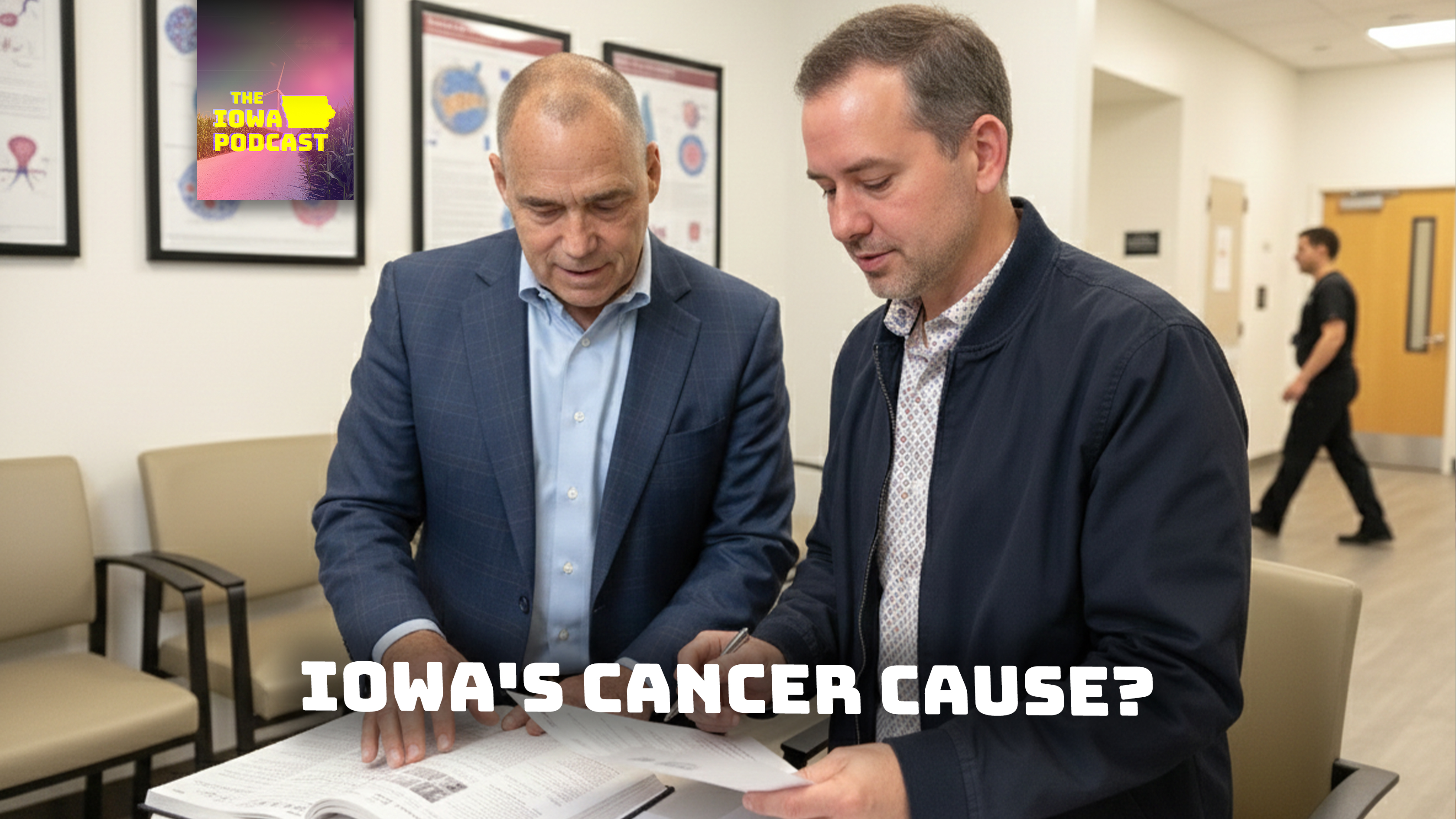


The Florida surgeon general has labeled glyphosate a “contaminant” and the International Agency for Research on Cancer (IARC) considers it carcinogenic. So, why is it used on over 70% of Iowa fields? Dr. Richard Deming director of MercyOne Richard Deming Cancer Center explains why Iowa is #2 in cancer rates and what can be done.

Deming is an oncologist and director of the Richard Deming Cancer Center at MercyOne. He explains why almost 50% of cancer causes are preventable, but rates climb anyway. He goes into vivid detail on what causes cancer, including some of the very treatments that are supposed to fight it. He also explains why eating healthy food, lowering obesity, and perhaps even some yoga are stronger cancer fighters than we initially thought.
Hear from Iowans directly. No algorithms.
Don’t let the algorithms choose your news. Enter your email address to hear directly from Iowans leading news in politics, community, agriculture and business. No editing. No clickbait. No rage. No agenda.
HOW TO BE PREVENTATIVE IN YOUR DAILY LIFE:
While there is no way to guarantee 100% prevention, health organizations like the CDC and American Cancer Society suggest that up to 40% of cancer cases could be prevented through lifestyle changes.
1. The “Big Three” Lifestyle Habits
These are the most impactful changes you can make, as they affect the widest range of cancer types.
- Quit Tobacco: This is the single most preventable cause of cancer. It’s linked to at least 20 different types, not just lung cancer.
- Maintain a Healthy Weight: Obesity causes chronic inflammation and hormonal imbalances that can lead to DNA damage. It is linked to 13 types of cancer.
- Limit Alcohol: Recent guidelines are shifting toward “zero is best.” Alcohol is a Group 1 carcinogen (like tobacco) and is linked to breast, liver, and colorectal cancers. If you do drink, limit it to 1 drink/day for women or 2 for men.
2. Defensive Eating & Activity
It’s less about “superfoods” and more about consistent patterns.
- The “Two-Thirds” Rule: Aim for a plate that is 2/3 plant-based (vegetables, fruits, whole grains, and beans).
- Cut Processed Meats: Bacon, deli meats, and hot dogs contain nitrates/nitrites that are directly linked to colorectal cancer.
- Moderate Red Meat: Limit beef, pork, and lamb to less than 18 ounces per week (about the size of two softballs).
- Get Moving: Aim for 150–300 minutes of moderate activity (like brisk walking) per week. Exercise helps regulate hormones and strengthens your immune system.
3. Environmental & Medical Protection
- Sun Safety: Use SPF 30+ and avoid tanning beds. Most skin cancers are caused by UV damage that builds up over time.
- Get Vaccinated: * HPV Vaccine: Prevents six types of cancer (including cervical and throat cancer).
- Hepatitis B Vaccine: Reduces the risk of liver cancer.
- Test for Radon: Radon is an odorless gas that can leak into homes and is the second leading cause of lung cancer. You can buy a simple test kit at most hardware stores.
4. Don’t Skip the “Early Warning” System
Screening doesn’t always prevent cancer, but it catches it when it’s most treatable.
- Key Screenings: Follow your doctor’s schedule for Colonoscopies, Mammograms, and Pap tests.
- Know Your Body: Perform monthly skin checks for moles that change shape, color, or bleed.